"The task for Southeast Asian countries is to understand the trajectory of drone and counter-drone technologies and to keep adapting faster." — The Diplomat
Across Southeast Asia, recent conflicts and demonstrations of unmanned systems have pushed governments to move quickly from discussion to deployment. From Malaysia’s locally developed interceptor drone to Singapore’s decision to teach every recruit drone operations, states in the region are rethinking doctrine, training, and procurement to meet a changing aerial threat environment.
Malaysia’s "The Ghost" and Singapore’s institutional shift
Malaysia has publicly unveiled a locally developed interceptor drone called “The Ghost,” marking a domestic move into kinetic counter-drone capabilities. Singapore, by contrast, is changing the human side of defence: the country announced that every recruit entering basic military training will learn how to operate drones and counter-drone threats, and it has established the Singapore Armed Forces Counter-Unmanned Aerial System (UAS) Development and Operations group. Those parallel tracks — homegrown hardware in Malaysia and institutional training and organization in Singapore — signal complementary national responses.
Thailand–Cambodia clashes, Indonesia’s outreach, and regional exhibitions
The recent border clashes between Thailand and Cambodia provided stark operational lessons. Cambodia used fiber-optic drones in the conflict, and Thailand subsequently created a UAS warfare center and a UAS battalion to "direct, plan, control, oversee and integrate the army’s drone operations." Elsewhere, Indonesia is pursuing defense collaborations with China Aerospace Long-March International Trade Co Ltd (ALIT), a potential partnership that could focus on drones. Interest in counter-drone technology was also visible on the trade floor: the Defense Services Asia (DSA) and Milipol TechX (MTX) exhibitions, which concluded in Kuala Lumpur and Singapore in April, reflected heightened buyer and vendor attention.

Audit-ready is a season. It shouldn't be.
Evidence in spreadsheets, controls drifting between audits, frameworks multiplying on flat headcount. Nubivance runs continuous compliance on Rapid7 Cyber GRC - SOC 2, HIPAA, ISO 27001, PCI, CMMC.
End the scrambleMultilayered defense: sensors, AI identification, and non-kinetic measures
Analysts advise a multilayered defense architecture. The first layer is detection: a mix of sensors — radio frequency (RF), acoustic, radar — and cameras (electro-optical and infrared). Identification is the next critical step; artificial intelligence decision-support systems (AI DSS) such as Lavender and Maven Smart System are noted for reported use in target identification during armed conflicts in Gaza and Iran, and can be applied to fuse sensor and camera data, analyze RF signals, and help distinguish friendly from hostile drones while prioritizing targets by distance and flight time.
Non-kinetic mitigation includes GNSS jamming, which broadcasts on Global Navigation Satellite System bands to deny positioning and timing to drones, and spoofing, where false GPS signals mislead a drone’s computed position. The source notes that some spoofed Russian drones were reportedly “redirected” either to their points of origin or into Belarusian territory. But jamming and spoofing carry civilian risks — increased aviation hazards and disruptions to shipping and telecommunications — and so cyber takeover techniques that hijack control signals and force drones to a controlled landing zone are also discussed as alternatives.
High-power microwaves, interceptor drones, and the economics of effect
High-energy non-kinetic weapons are already part of the conversation. Laser weapons burn or disable drone components; high-power microwaves (HPM) emit directed electromagnetic bursts to disrupt electronics. The Hurricane 3000 — developed by the Chinese state-owned enterprise Norinco — can disable drones at ranges exceeding 3 kilometers and "is already being deployed in the field." Its operational costs can be "as low as a few yuan per shot," a notable advantage in attritional drone combat.
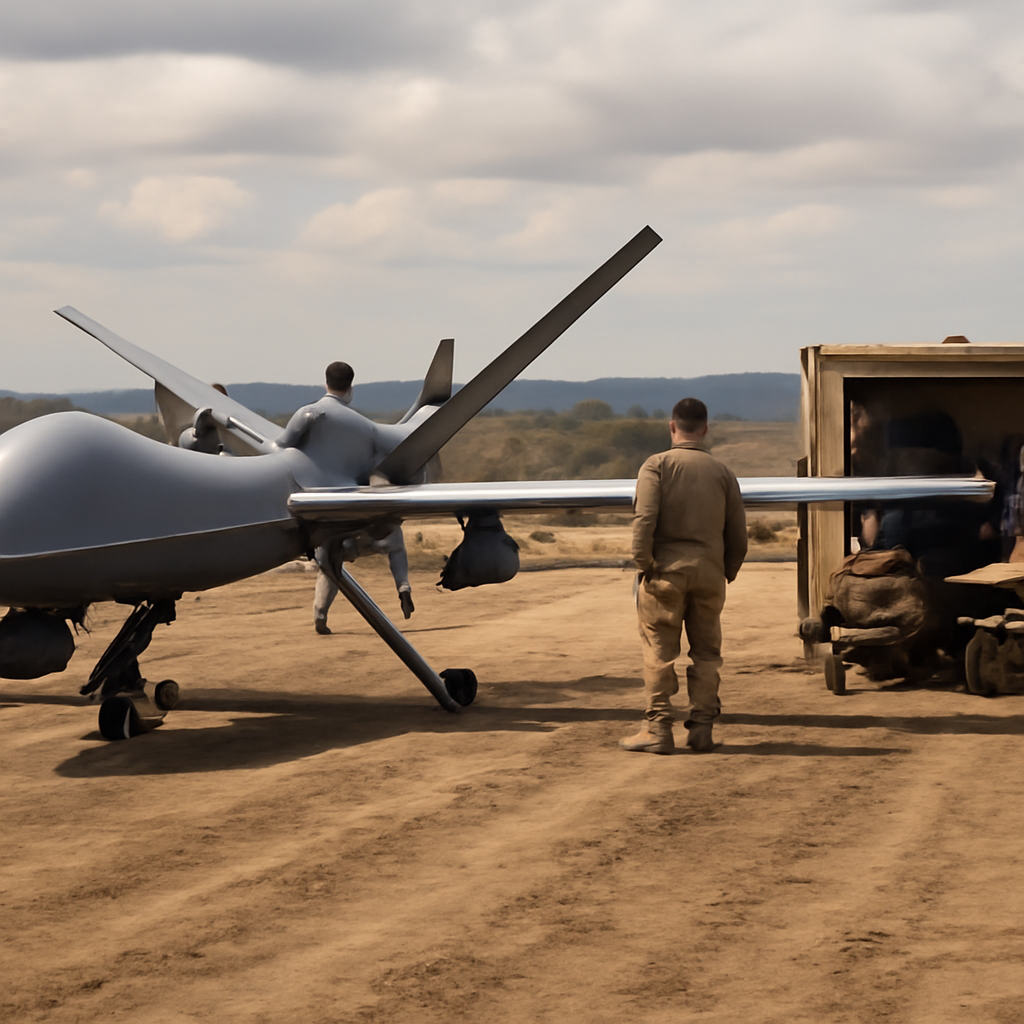
Kinetic responses range from interceptor drones and nets to conventional missiles. Footage cited from Ukraine shows an interceptor drone launched from an unmanned surface vehicle (USV) to engage a Russian Shahed aerial drone — an example of maritime and aerial systems operating together. Autonomous systems such as the DroneHunter F700, developed by Fortem Technologies, have been used to intercept Shahed-131 and Shahed-136 kamikaze drones and to employ nets for capture. Conventional missiles remain an option but create a stark cost calculus: a Patriot missile costs approximately $4 million, while a Shahed drone may cost between $20,000 and $50,000. Experts have called for low-cost, smart missiles as Russian drones fitted with turbojet engines fly faster and higher, challenges that can render some interceptor concepts obsolete.
What this means for technologists, policymakers, and militaries
- Technologists and start-ups: Southeast Asian states are being urged to engage early with companies and start-ups to adopt emerging drone and counter-drone technologies quickly, because off-the-shelf measures can be outpaced.
- Policymakers and procurement leaders: The region faces a trade-off between expensive, conventional interceptors and lower-cost alternatives; the Hurricane 3000’s low per-shot cost and the high cost ratio between missiles and drones highlight fiscal pressures on procurement choices.
- Militaries and trainers: Singapore’s integration of drone curricula into basic training and Thailand’s creation of a UAS warfare center and battalion illustrate organizational changes that prioritize persistent training, command integration, and doctrinal adaptation.
Adapting faster, not just buying faster, is the central lesson. Systems that detect, identify, and then choose between non-kinetic and kinetic effects — and that are updated as adversary drones evolve — will determine whether Southeast Asian forces can keep pace. The Diplomat’s admonition remains clear: "The task for Southeast Asian countries is to understand the trajectory of drone and counter-drone technologies and to keep adapting faster."