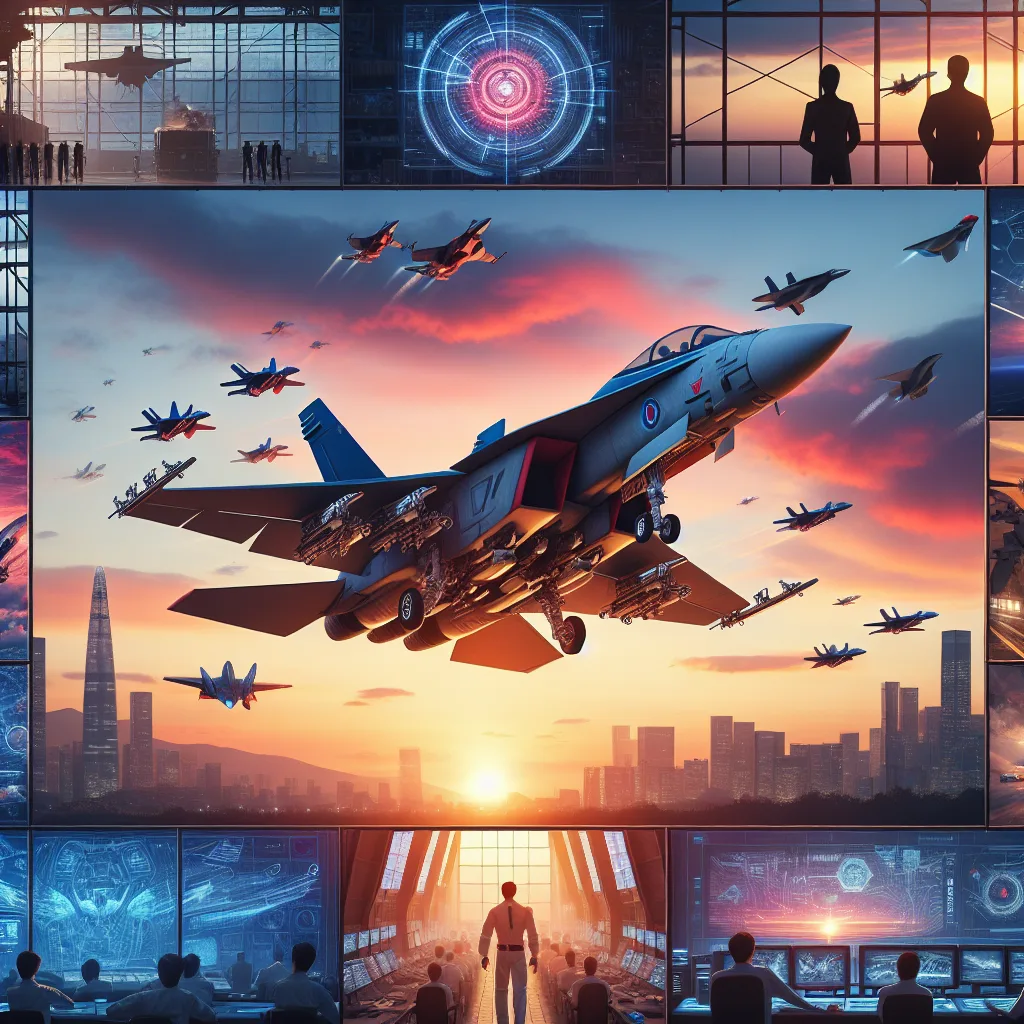
South Korean Company Launches Revolutionary “Transformer Fighter Jet”
Overview
The recent unveiling of a “transformer fighter jet” by South Korean defense firm WooriByul marks a significant milestone in military technology and defense strategy. This innovative mobile decoy system, capable of transforming from a trailer into a full-scale aircraft replica, has the potential to reshape aerial warfare tactics and defense mechanisms. The implications of this development extend beyond mere technological advancement; they touch upon national security, military strategy, and the evolving landscape of global defense industries. Stakeholders, including military operators, policymakers, and defense contractors, must navigate the complexities introduced by such innovations.
Background & Context
The concept of decoy systems in military operations is not new. Historically, militaries have employed various tactics to mislead adversaries, from inflatable tanks to electronic jamming. However, the integration of advanced technology into these systems has been limited. WooriByul’s transformer fighter jet represents a leap forward, combining mobility, realism, and technological sophistication. This development comes at a time when regional tensions in East Asia are escalating, particularly concerning North Korea’s military ambitions and China’s assertive posture in the South China Sea. The need for innovative defense solutions has never been more pressing, making this unveiling particularly timely.

This site is the portfolio.
OSINTSights runs on Cloudflare Workers, D1, R2, and Vectorize, with an AI pipeline on Hetzner ARM. Nubivance designed, built, and operates it. We do the same for clients.
See what we buildCurrent Landscape
The current state of military technology is characterized by rapid advancements in unmanned systems, artificial intelligence, and cyber warfare capabilities. The global defense market is projected to reach $2 trillion by 2025, driven by increasing defense budgets and the need for modernization. WooriByul’s transformer fighter jet is positioned within this context, as nations seek to enhance their deterrence capabilities without escalating tensions through overt military buildups.
Key features of the transformer fighter jet include:
- Realistic Appearance: The system is designed to closely resemble actual fighter jets, making it difficult for adversaries to distinguish between real and decoy aircraft.
- Mobility: The ability to transform from a trailer into an aircraft replica allows for rapid deployment and repositioning, enhancing tactical flexibility.
- Technological Integration: The system likely incorporates advanced materials and technologies, such as lightweight composites and possibly even electronic warfare capabilities.
As nations invest in similar technologies, the competitive landscape is shifting, with countries like the United States, Russia, and China also exploring advanced decoy systems and countermeasures.
Strategic Implications
The introduction of WooriByul’s transformer fighter jet carries significant strategic implications for military operations and international relations. Firstly, it enhances South Korea’s defensive posture against potential threats from North Korea and other regional adversaries. By deploying such advanced decoy systems, South Korea can complicate the targeting process for enemy forces, thereby increasing the survivability of its actual aircraft and assets.
Moreover, this innovation could influence the broader geopolitical dynamics in East Asia. As countries like China and Japan observe South Korea’s advancements, they may feel compelled to accelerate their own military modernization efforts, potentially leading to an arms race in the region. The transformer fighter jet could also serve as a bargaining chip in diplomatic negotiations, showcasing South Korea’s technological prowess and commitment to national defense.
Expert Analysis
From an analytical perspective, the transformer fighter jet represents a paradigm shift in how militaries approach aerial warfare. Traditional strategies often relied on sheer numbers and firepower; however, the integration of decoy systems introduces a layer of deception that can alter the calculus of military engagements. This shift could lead to a re-evaluation of existing military doctrines, emphasizing the importance of technology and innovation in achieving strategic objectives.
Furthermore, the potential for such systems to be integrated with artificial intelligence (AI) raises intriguing possibilities. AI could enhance the effectiveness of decoy systems by enabling them to adapt in real-time to enemy tactics, thereby increasing their survivability and effectiveness. This integration could also lead to the development of autonomous systems capable of operating independently, further complicating the battlefield landscape.
Recommendations or Outlook
As WooriByul’s transformer fighter jet gains attention, several actionable steps can be considered by stakeholders:
- Investment in R&D: Continued investment in research and development is crucial for maintaining a competitive edge in military technology. South Korea should prioritize funding for innovative defense solutions that complement the transformer fighter jet.
- International Collaboration: Engaging in partnerships with allied nations can facilitate knowledge sharing and technological advancements. Collaborative efforts could lead to the development of more sophisticated defense systems.
- Policy Frameworks: Policymakers must establish clear guidelines regarding the deployment and use of advanced decoy systems to ensure compliance with international norms and prevent escalation of tensions.
Looking ahead, the transformer fighter jet could pave the way for a new era of military technology, where deception and innovation play pivotal roles in defense strategies. As nations adapt to these changes, the landscape of global security will continue to evolve, presenting both challenges and opportunities.
Conclusion
The unveiling of WooriByul’s transformer fighter jet is more than just a technological achievement; it is a reflection of the changing dynamics in military strategy and international relations. As countries grapple with the implications of such innovations, the need for thoughtful analysis and strategic foresight becomes paramount. The question remains: how will nations adapt to this new reality, and what measures will they take to ensure their security in an increasingly complex world?



