"The KF-21, born after overcoming countless challenges and obstacles, has been delivered to the Air Force today and has begun its flight operations," said ROKAF Chief of Staff Gen. Son Seok-rak.
The handover flight: Saechon to Yechon
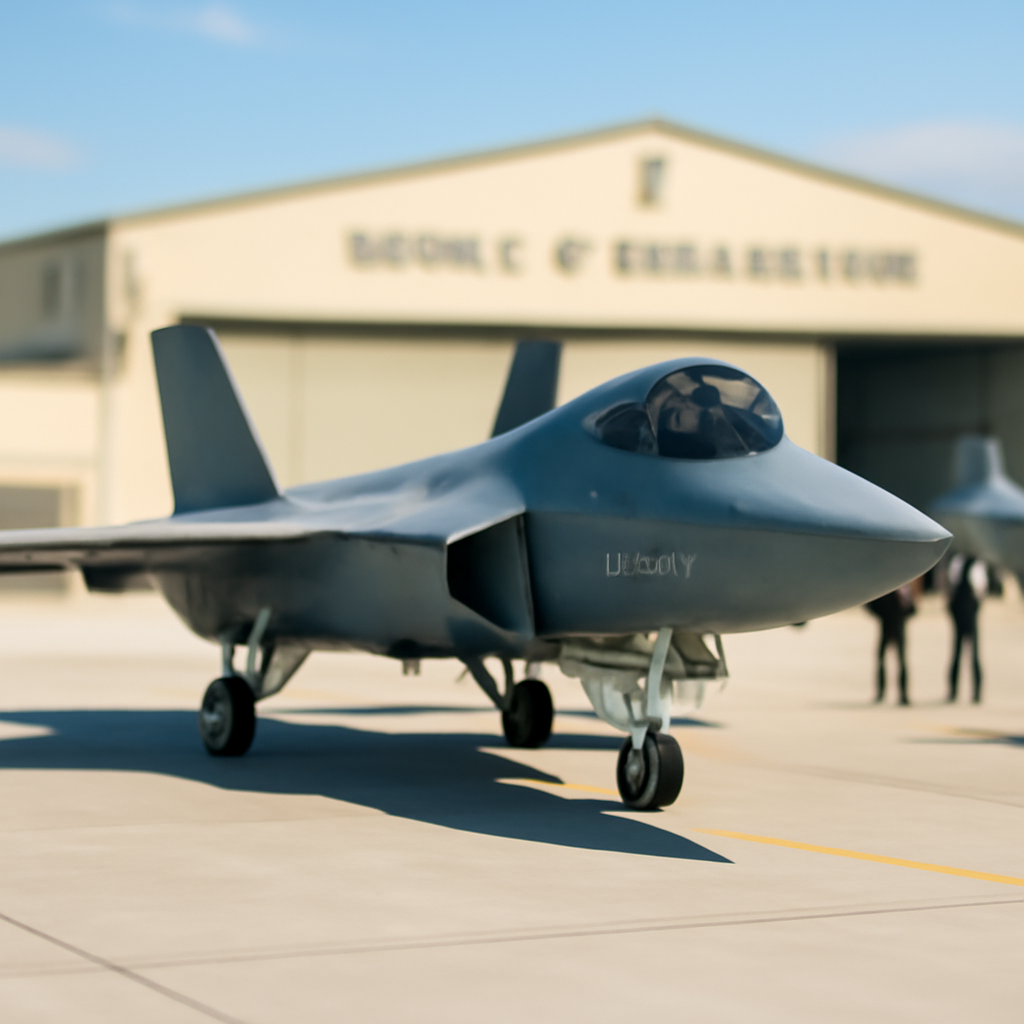
South Korea’s first locally developed fighter jet, the Korea Aerospace Industries (KAI) KF-21, completed a handover flight from KAI’s Saechon facilities to the Republic of Korea Air Force (ROKAF) base at Yechon. The service announced the transfer Wednesday, saying the aircraft was handed over to ROKAF on Tuesday and has already begun flight operations.
The event follows a public rollout in March at KAI’s Saechon facility and the completion of the jet’s flight test program in January, milestones cited in the announcement accompanying the delivery.
156th Fighter Squadron to take the lead
ROKAF’s 156th Fighter Squadron, reestablished earlier this year after having been disbanded in 2012, will be the first unit to operate the KF-21. The choice signals an intent to place the jet into operational service rather than keep it solely in test or limited evaluation status.
Gen. Son Seok-rak’s statement that the jet “has begun its flight operations” underscores that the aircraft will transition to squadron-level activity at Yechon rather than remain confined to manufacturer or test ranges.

Audit-ready is a season. It shouldn't be.
Evidence in spreadsheets, controls drifting between audits, frameworks multiplying on flat headcount. Nubivance runs continuous compliance on Rapid7 Cyber GRC - SOC 2, HIPAA, ISO 27001, PCI, CMMC.
End the scrambleProcurement plan: Block 1 orders and Block 2 ambitions
South Korea has placed an order for 40 KF-21s in the Block 1 configuration, which the announcement said will be used mainly in the air-to-air role. The Defense Acquisition Program Administration — led in the announcement by Lee Yong-cheol — framed the delivery as the first mass-produced unit and a “historic milestone in achieving self-reliant national defense.”
Separately, the country is developing a Block 2 variant intended to expand air-to-ground capabilities. South Korean media reports cited in the announcement say ROKAF is reportedly eyeing another 80 Block 2 aircraft, although the formal purchase status of those additional airframes was not stated in the release itself.
Capabilities and armament: 4.5-generation platform with mixed sensors and weapons
The KF-21 is described in the announcement as a 4.5-generation fighter jet. It will be equipped with a mix of indigenous and Western sensors and weapons, specific examples named in the announcement include the KGGB precision glide bomb and the European MBDA Meteor air-to-air missile.
That combination reflects the program’s dual emphasis: integrating domestic systems while also fielding mature foreign weaponry to meet operational needs. The announcement linked the aircraft’s delivery to taking “the first step toward full-scale operational deployment.”
What this means for ROKAF, regional buyers, and KAI
- ROKAF: The immediate effect is operationalization. With the 156th Fighter Squadron receiving the jet and flight operations under way at Yechon, the air force is positioned to begin incorporating the KF-21 into unit-level training and missions in its Block 1 air-to-air role.
- Regional buyers (Indonesia, Malaysia, the Philippines): KAI is actively pursuing exports. Indonesia is reportedly looking to buy the KF-21 directly from South Korea after abandoning plans to manufacture locally; Malaysia is reportedly evaluating the aircraft; and the Philippines has shown interest, according to the announcement.
- KAI and South Korean defense procurement officials: The handover marks a transition from development and testing to mass production and initial operational deployment — a step the Defense Acquisition Program Administration described as proof of an “independent capability to develop and mass-produce advanced fighter jets.” For KAI, that narrative supports both domestic procurement follow-on orders (Block 2) and export marketing ambitions.
Lee Yong-cheol framed the delivery as both a national milestone and a concrete programmatic transition: “The delivery of this first mass-produced unit is a historic milestone in achieving self-reliant national defense; it signifies that the Republic of Korea has proven its independent capability to develop and mass-produce advanced fighter jets and has taken the first step toward full-scale operational deployment.”
The facts released in the announcement set clear, near-term markers: one KF-21 has been delivered to Yechon and begun flight operations with the 156th Fighter Squadron; South Korea has ordered 40 Block 1 jets; Block 2 development is ongoing with reports of interest in an additional 80 aircraft; and KAI is pursuing export customers including Indonesia, Malaysia, and the Philippines. Together, those elements define the program’s current phase — moving from testing into production, squadron-level use, and export outreach — and leave the next concrete steps inside the program to be the further deliveries, Block 2 development, and ongoing export negotiations.