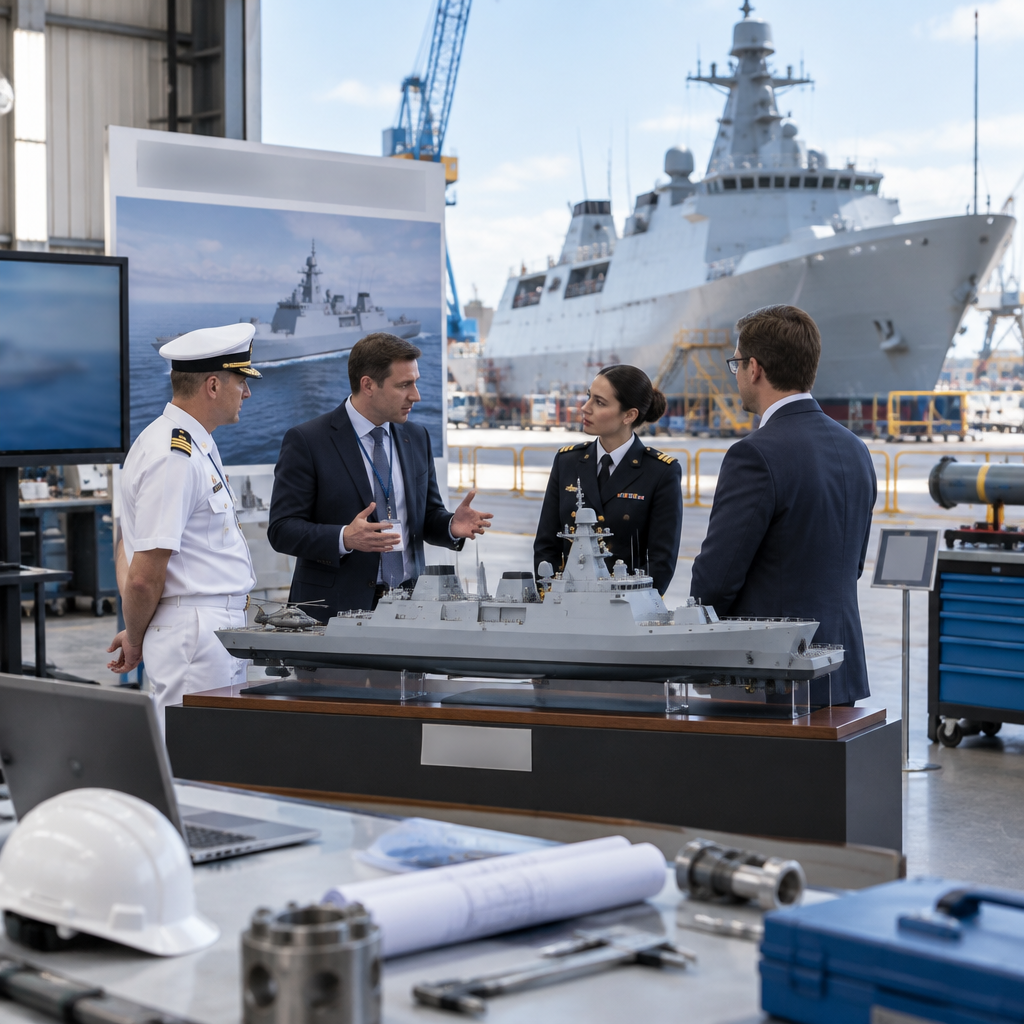
Who owns the software in a warplane — and who controls the keys to change it — is no longer a theoretical policy dispute. It is a practical dilemma at the center of modern alliance politics: nations that bought the U.S.-made F-35 now rely on American-controlled software maintenance and updates, and some officials are openly asking whether they should be able to take that control back.
The challenge is straightforward and urgent. The F-35 is not a conventional airframe with a bolt-on engine and aftermarket radios; it is a tightly integrated system of sensors, mission systems, avionics and software. Routine fixes, diagnostics, and upgrades often require proprietary access, secure telemetry and trained specialists—capabilities typically routed through U.S. sustainment channels. That dependence creates logistic and political friction for partner nations, who must weigh sovereign operational freedom against the risks of altering a highly complex, safety-critical system. Independent forensic and maintenance work on the F-35 tends to demand “specialized maintenance crews with secure access to proprietary systems and telemetry data,” raising real operational costs when things go wrong or when national priorities diverge .
That tension moved into public view when a senior Dutch defense official suggested his country could “jailbreak” its jets to accept third‑party software. The remark crystallized two competing impulses. On one hand, allies want the assurance that their jets will keep flying, that fixes can be implemented quickly in wartime, and that their forces will not be hamstrung by political disagreement. On the other, the F-35 program’s security model was intentionally constructed to centralize lifecycle control to preserve classification, integrity and interoperability among partners. Bypassing those controls would alter more than a maintenance contract; it would change the aircraft’s threat surface and the legal and diplomatic relationships that govern its use.
Technical realities complicate any policy solution. The aircraft’s integrated design means that software anomalies can cascade into mechanical or avionics failures, and diagnosing such faults often requires a mix of patch management, module updates and physical maintenance. Investigations routinely examine not just code but airframe, hydraulics and human factors—work that can require parts, documentation and personnel shipped from partner nations or manufacturers, and time-consuming coordination across militaries and industry .
- Operational risk: Altering an F-35’s software could introduce new failure modes in flight control, weapons employment or sensor fusion—issues that are difficult to test exhaustively outside the program’s authorized framework .
- Logistics and sustainment: Independent fixes may shorten some supply chains but can also create parallel logistics requirements—specialized tools, bespoke documentation, and locally trained technicians—undermining economies of scale that sustainment agreements were intended to provide .
- Security and classification: The F-35’s software holds sensitive capabilities and countermeasures. Modifying code outside authorized channels increases the risk of exposing classified techniques or creating compatibility problems across allied fleets.
- Interoperability: Allies that diverge on software baselines risk degrading multinational operations where data fusion and shared situational awareness depend on predictable, certified behavior across platforms.
Different stakeholders see the situation through different lenses. Technologists and independent defense engineers point out that open architectures and modular software stacks can reduce vendor lock-in if designed from the outset; they argue that greater transparency would improve resilience, enable quicker local fixes, and foster innovation. Policymakers in purchasing nations counter that such openness may come at the cost of exposing sensitive capabilities and undermining the unified doctrine that underpins coalition warfighting.
Operators—the pilots and maintainers on the tarmac—are primarily concerned with readiness. For a squadron forward-deployed in a contested region, a weeks-long wait for a software patch or a part can meaningfully reduce sortie generation and mission assurance. Conversely, a hastily implemented local patch that has not been flight-certified could ground more aircraft than it saves, or worse, create safety hazards that endanger crews and civilians alike .
From the vantage of potential adversaries, allied dependence on a single supplier for sustainment is an exploitable vulnerability. Jamming, cyber intrusions, or diplomatic pressure could be used to deny updates, degrade readiness, or create political leverage. For that reason, investments in resilient navigation, anti-jam receivers, and layered defenses have been prioritized in parallel—even as sustainment politics simmer behind the scenes .
There are policy paths forward, each with tradeoffs. Nations can press for revised sustainment agreements that grant wider maintenance rights and clearer rapid-response authorities while retaining safeguards for classified elements. They can invest in “dual-track” sustainment: certified vendor updates for sensitive subsystems paired with permissive access for non-sensitive, user-facing modules. They can also pursue cooperative frameworks with other industrial partners to build alternative supply chains—efforts that are costly and time-consuming but reduce single-point dependencies.
Yet every route entails friction. Broadening access risks exposing classified capabilities; centralizing control risks operational dependence and strategic coercion. Technical workarounds—such as sandboxed third‑party modules or hardened APIs—can mitigate some risks, but they require rigorous certification regimes and trust among partners that the sealed parts of the stack will remain secure.
The question raised by the Dutch official is not merely tactical bravado. It forces a hard choice: accept a sustainment model that prioritizes classified protection and allied interoperability, or decentralize control to increase national operational autonomy at the possible cost of safety, security and coalition cohesion. Neither outcome is risk‑free.
In a strategic era where software increasingly determines battlefield advantage, the debate over “jailbreaking” the F-35 is a case study in modern deterrence and alliance management. Will partners find an institutional middle ground that preserves both security and sovereignty, or will the impulse for independence drive fragile, ad‑hoc solutions that invite more danger than they solve? The answer will shape not only the wings of individual jets but the resilience of the alliances that fly them.
Source: https://www.schneier.com/blog/archives/2026/03/jailbreaking-the-f-35-fighter-jet.html