AUKUS still stirs controversy five years after the tripartite initiative was announced.
AUKUS and Australia’s AUKUS-dependent acquisition pathway
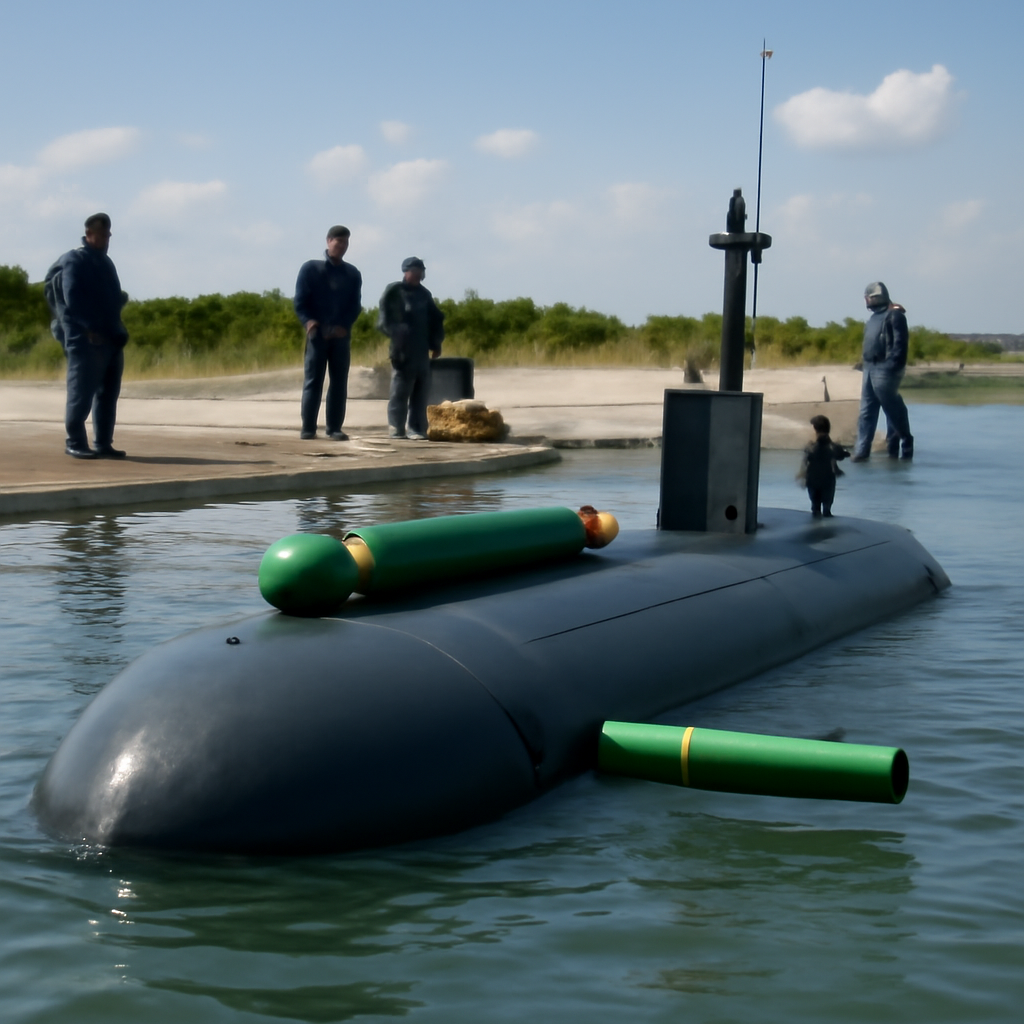
Australia is acquiring two different types of nuclear-powered attack submarines in close partnership with the United States and Britain, a shift that has given Canberra leverage it lacked but also made Australia dependent on allied capacity. The SSN-AUKUS submarines are meant to enter service from around 2040, and the AUKUS partners have committed to transfer three used Virginia-class attack submarines to Australia in the 2030s. That interdependence is Canberra’s principal advantage over Seoul, but it has also become a political vulnerability: critics use AUKUS to shift blame to US and British partners for Australia’s long-recognised failure to recapitalise its ageing submarine fleet. The initiative has “slipped from being a whole-of-government endeavour, to one owned and resourced by Defence,” the source notes, even as both major Australian parties continue to back AUKUS as a defence cornerstone (the Greens oppose it).
South Korea’s largely made-in-Korea approach under President Lee Jae Myung
South Korea is pursuing a different route. President Lee Jae Myung’s administration has framed the acquisition of nuclear-powered submarines as a largely domestic endeavour, a pragmatic pivot after a surprise announcement by US President Donald Trump — on the sidelines of last October’s APEC summit in Gyeongju — that Korea’s future nuclear submarines would be built in Philadelphia. Seoul obtained Trump’s consent to develop nuclear propulsion for naval purposes, but the administration has repositioned the program to minimise reliance on external suppliers.
That repositioning is driven in part by harsh realities: the US submarine industry is “currently struggling to fulfil the US Navy’s order book,” and any remaining industrial bandwidth for allies is likely to be taken up by AUKUS. As a result, Washington’s material assistance to Korea’s program is expected to be limited — likely restricted to provision of low-enriched uranium fuel to minimise weapons-proliferation risks — leaving South Korea to design and build its own naval reactors and propulsion systems.

The cyber insurance questionnaire just landed. Now what?
SOC 2, HIPAA, insurance renewals - someone has to own security strategy. Nubivance provides fractional CISO leadership without the full-time salary.
Get a security leadIndustrial, fiscal and timeline realities: reactors, shipyards and competing demand
Even with a civil nuclear sector and a sizeable conventional submarine industry as a foundation, the task of designing naval reactors and propulsion is a multi-decade undertaking that will stretch South Korea’s scientific, industrial and fiscal capacities. Seoul has embraced this challenge on a timeline that roughly parallels Australia’s SSN-AUKUS pathway — and although Australia enjoys a five-year head start, the article notes that “Seoul could even get there first.” The scale of the technical work — reactor design and maritime integration — combined with competing demand on US industrial capacity, helps explain why Seoul insists on a largely domestic solution.
What this means for Seoul, Canberra, and the IAEA
- Seoul — Politically fragile support could be the program’s greatest weakness. The article stresses that the Lee administration must build bipartisan backing during the remainder of its single term: the ambition has been “associated mainly with the left,” while conservative administrations have shown less interest, and the government blueprint conspicuously lacks any projected cost. Without broader political ownership, the program risks atrophy or cancellation, with serious reputational and financial costs.
- Canberra — Australia can offer a model of bipartisan endurance. AUKUS has survived one change of government because both major parties supported it; that domestic consensus is the lesson Seoul needs to import if it hopes the program will outlast electoral cycles.
- The IAEA and regional audiences — Australia’s diplomatic precedent has already helped Seoul start to develop non‑proliferation safeguards with the International Atomic Energy Agency. Given North Korea’s increasing nuclear threat and China’s strategic buildup, South Korea must reassure other countries that its naval nuclear program will not lead to weapons development; coordinated assurances to nuclear‑sceptical Pacific and Southeast Asian states are a shared opportunity for Canberra and Seoul.
Military cooperation: submarines, anti-submarine warfare and regional deterrence
The article argues Canberra and Seoul should step up practical military cooperation in submarine operations and anti‑submarine warfare. While the two countries do not share identical threat perceptions, there is enough operational overlap for mutually beneficial cooperation. Ultimately, the piece states, “only the aggregation of advanced allied and partner military capabilities can maintain regional stability and deterrence.” Japan, the article adds, will be watching South Korea’s progress closely and is described as the country most likely to follow suit with its own nuclear‑propulsion plans in due course.
Both projects—Australia’s AUKUS-dependent build and South Korea’s domestic push—are large wagers on multi-decade industrial and political durability. One offers the leverage of allied capacity; the other, the control of domestic ownership. The immediate test for Seoul is political: can President Lee Jae Myung translate a bold technical aspiration into a bipartisan national programme before the stresses of cost, capability and time make that choice for him?