"As satellites generate more and more data, the old mindset of relying primarily on large-scale, Earth-based data-center processing isn’t just impractical; it’s increasingly unnecessary," wrote Dr. Darren Pulsipher, Chief Solutions Architect at BigBear.ai.
Radiation-tolerant chipsets and onboard inference
Modern satellites are increasingly able to process data where it is created. Advances in radiation-tolerant chipsets mean platforms in orbit can run significant inference and perform meaningful processing within strict power, storage, and memory limits. That capability reduces the need to transmit every raw sensor stream back to Earth and creates the technical possibility of real-time, autonomous decision-making in space.
Ground stations reimagined as orchestration centers
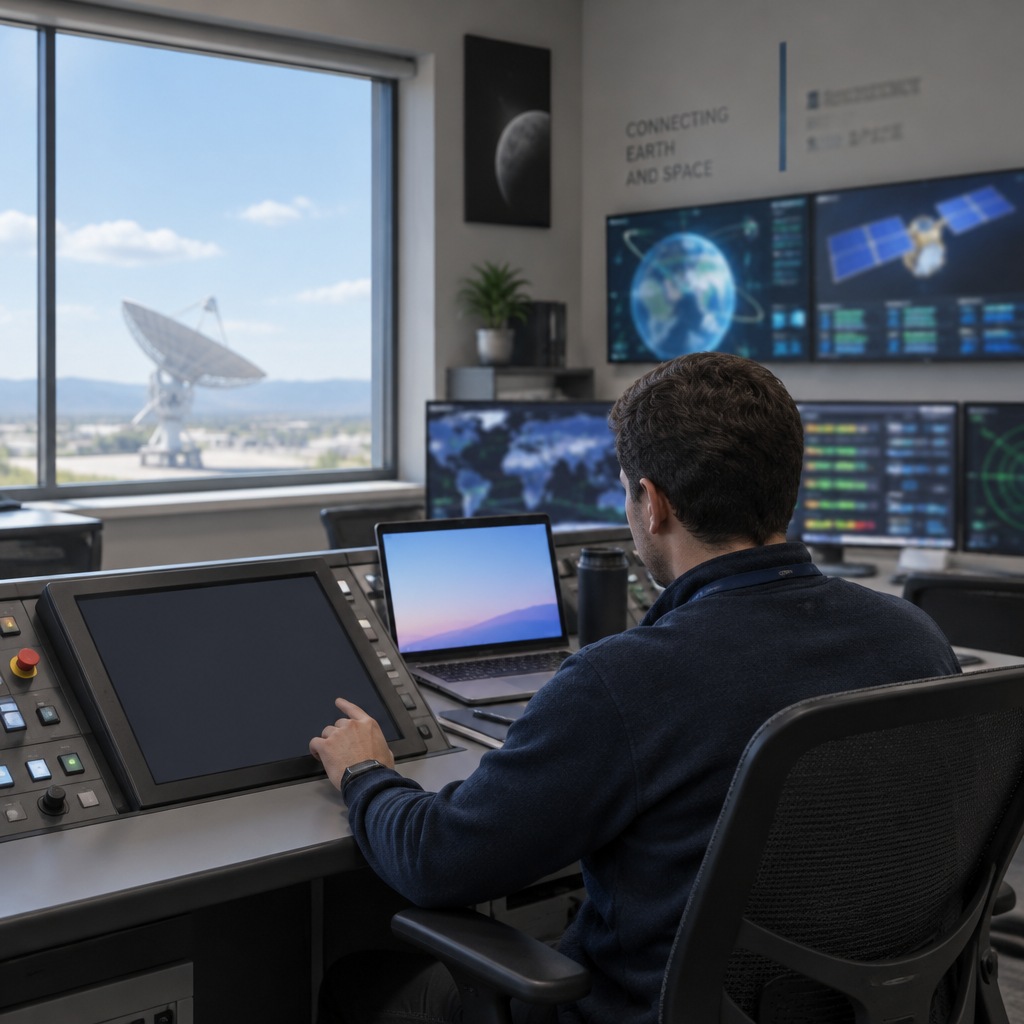
The role of the ground station is shifting from raw-data receiver to an orchestration center. Instead of centralizing every dataset for Earth-based processing, ground stations can control how applications are deployed across a constellation, coordinate distributed processing, enforce security policies, and forward key results to analysts. In this model, most heavy lifting in deployment and orchestration still happens on Earth, but the consequential decisions and actions are performed in orbit.

Audit-ready is a season. It shouldn't be.
Evidence in spreadsheets, controls drifting between audits, frameworks multiplying on flat headcount. Nubivance runs continuous compliance on Rapid7 Cyber GRC - SOC 2, HIPAA, ISO 27001, PCI, CMMC.
End the scrambleTwo operational problems: latency and DDIL connectivity
The traditional satellite model—collect data, send to ground, process, return instructions—creates two core operational problems. First, latency: certain time-sensitive tasks, such as collision alerts, may not allow for the round-trip delay of transmitting raw radar data to Earth and waiting for instructions back. Second, connectivity: space is a Denied, Degraded, Intermittent, and Limited (DDIL) environment, so dependable communications are never guaranteed and ground contact can be lost because of solar storms or other unpredictable events. Onboard processing alleviates both constraints by enabling local detection and action.
Collision-alerts and dynamic, targeted deployments
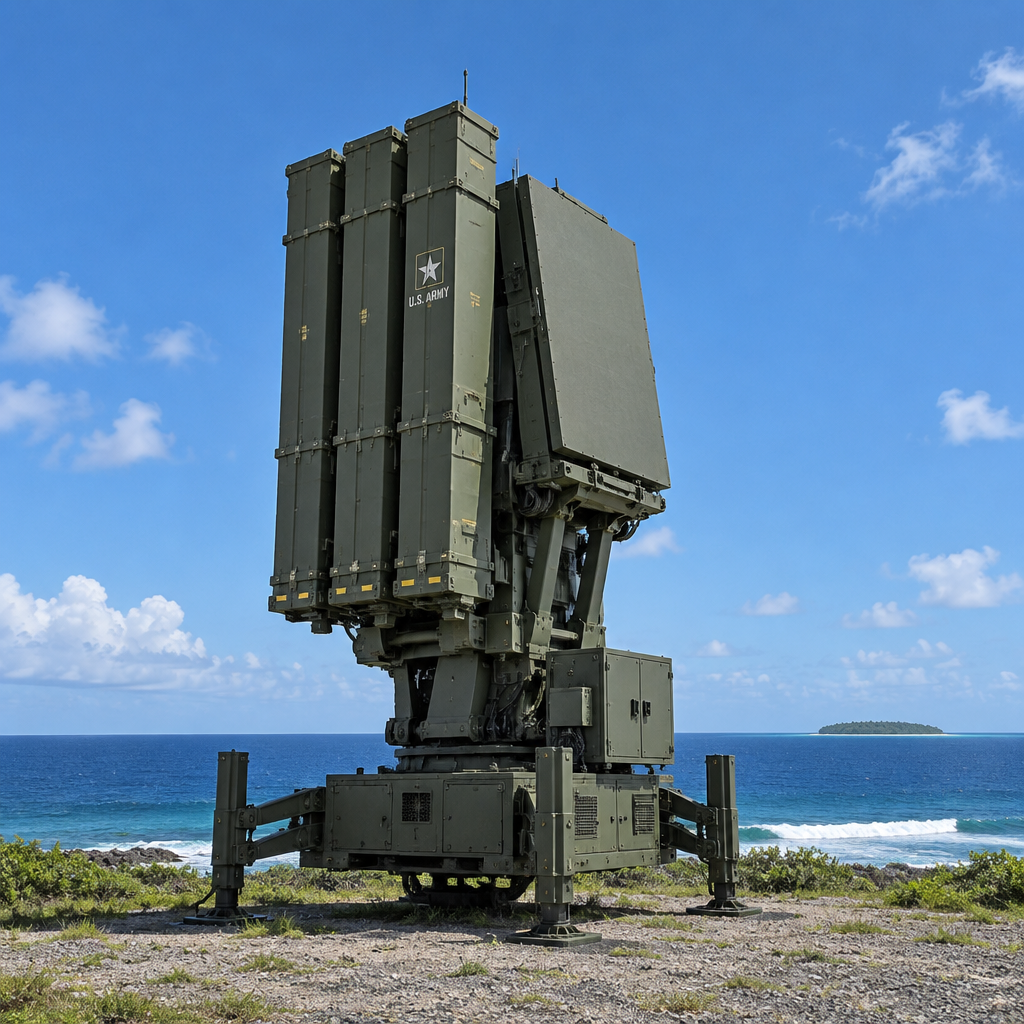
The report uses collision-alerts as a concrete example of how the new model works. Under the traditional approach, satellites send raw radar data down to a ground station, which consolidates inputs, determines risk, and issues maneuver orders. In the modern model, satellites perform local object detection with onboard AI, sending only the object's movement data to the ground station. The ground station then aggregates these compact reports across the constellation and issues targeted responses.
That orchestration can be even more dynamic: the ground station could push a detection application only to satellites in the threatened area rather than to the entire constellation. Those satellites, operating under ground-set policies, would share information and execute coordinated maneuvers even if contact with the ground station is later lost.
System architecture: microservices, portability, and minimal hardware
Making distributed, in-orbit processing work requires appropriate software and hardware design. Microservices-based applications are usually small and therefore easier to push through DDIL connections than full sensor streams. Once installed, these apps demand little in the way of resources—often a two-core Atom processor, a few gigabytes of RAM, and a few hundred gigabytes of storage running on low power are sufficient.
To keep workloads portable across different processors and generations of hardware, agencies should add an abstraction layer that separates application algorithms from the underlying hardware. That approach avoids redesign or recompilation for each new processor and enables the ground station to steer workloads toward satellites with special processing capabilities, moving computation closer to the data without major redesigns on the ground.
What this means for agencies, ground stations, and analysts
- Agencies: will need flexible system architectures and to plan for portability—adding abstraction layers and designing for deployment of small, microservices-based apps rather than relying solely on Earth-based centers.
- Ground stations: must evolve operationally from data receivers to orchestration centers that manage application deployment, enforce policies, and combine concise in-orbit results for human analysts.
- Analysts and mission operators: will receive more distilled, event-oriented information (for example, object movement data rather than raw radar streams) and will depend on ground-directed policies and satellite cooperation for time-sensitive responses.
Voyager's designers in 1977 had to choose what to send back under severe power and bandwidth constraints; modern systems require the same discipline at far greater scale, but with far greater in-orbit processing capability. The architecture Dr. Darren Pulsipher outlines turns that capability into an operational model: treat satellites and ground stations as a single connected ecosystem, push small, portable apps through DDIL channels, and let on-orbit systems do the time-sensitive work closest to the data.
The move does not remove the ground station from the loop; it redefines the loop. The question the facts leave open is whether agencies and operators will adopt the necessary abstraction layers, deploy microservices consistently, and reorganize ground-station roles quickly enough to realize autonomous, constellation-level responses in practice.