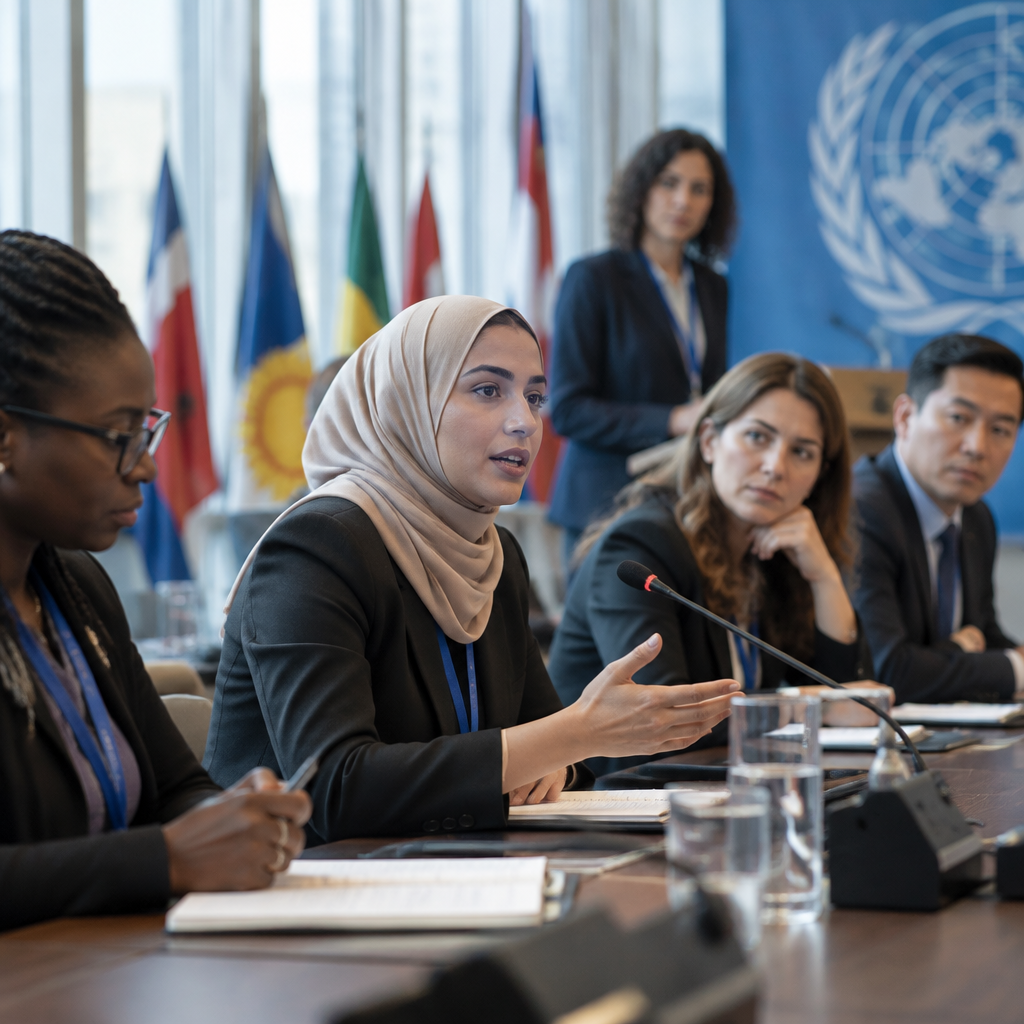
UN Security Council Resolution 1325, adopted in 2000, created the United Nations Women, Peace and Security (WPS) agenda now entering its 27th year. The measure was never intended simply to increase the number of women in peace and security institutions; it was meant to integrate gender perspectives and women’s meaningful participation into decision-making, transform how security is understood, and challenge unequal power relations.
UN Security Council Resolution 1325 (2000): the original mandate
Resolution 1325 established WPS with aims beyond representation. According to the source material, the resolution sought to integrate gender perspectives and women’s meaningful participation in decision-making, challenge unequal power relations and transform how security is understood, prioritised and practised. That original mandate frames the central benchmark for judging progress: not activity alone, but whether women and gender commitments shape priorities and authority.
Presence without power: how inclusion became disconnected from authority
Over 26 years, security institutions have improved at including gender and women’s perspectives, yet “presence doesn’t automatically translate to influence.” Researchers and the author note that WPS commitments are often absorbed into institutional practices without changing power or decision-making structures. The result is visible integration — policies, engagement and representation — that nonetheless falls short of reshaping planning assumptions or leadership priorities.

Audit-ready is a season. It shouldn't be.
Evidence in spreadsheets, controls drifting between audits, frameworks multiplying on flat headcount. Nubivance runs continuous compliance on Rapid7 Cyber GRC - SOC 2, HIPAA, ISO 27001, PCI, CMMC.
End the scrambleFive conditions that enable influence
Rather than treating transformation as a binary, the source argues for “conditional transformation”: change as a progression that requires multiple enabling conditions to align. Across UN and NATO data, five conditions repeatedly emerge as decisive.
- Participation as decision‑relevant knowledge: Women affected by conflict often possess insights into local security dynamics, community tensions and emerging risks. When institutions recognise those insights as expertise, participation begins to change how security problems are understood rather than merely how responses are managed.
- Location of expertise: Gender advisers and specialists are frequently positioned alongside decision-making structures rather than within them. Influence increases when gender expertise is embedded in planning processes, operational assessments and leadership discussions, and when it is treated as a professional competency distributed across institutions rather than concentrated in specialist roles.
- Scope of influence: Too often, participatory perspectives are limited to engagement activities or program delivery. Greater influence follows when participation helps define problems, identify priorities and shape institutional understandings of security itself.
- Timing of engagement: Gender commitments often enter processes after key assumptions are fixed. Engagement becomes consequential when it occurs early enough to shape planning assumptions before decisions are made.
- Accountability for influence: Organisations commonly measure activity — consultations held, personnel trained, compliance met — but are much less effective at assessing whether participation changed decisions or altered priorities. If influence matters, accountability systems must evaluate the effect of participatory knowledge rather than activity alone.
None of these conditions alone guarantees transformation; the source emphasises that outcomes depend on how institutional arrangements connect commitments to authority.
What this means for defence and security institutions, gender advisers, and UN/NATO planners
- Defence and security institutions: Should shift assessment from counting activities to asking whether gender commitments have shaped planning assumptions and decision-making authority. Creating space for early participation and embedding expertise in core processes are concrete levers.
- Gender advisers and specialists: Gain influence when positioned within planning and leadership forums and when gender expertise is presented and recognised as a routine professional competency rather than a siloed specialty.
- UN and NATO planners: Can increase the likelihood of transformation by widening the scope of participatory input to include conflict analysis and strategic planning, and by building accountability measures that track influence on priorities, not just procedural compliance.
Measuring transformation and the task ahead
The central test at 27 is not whether women are in the room, or whether policies exist, but whether women and their perspectives are shaping what organisations take to be security problems and how they decide to act. The article’s concept of “conditional transformation” reframes the debate: institutions are neither wholly transformative nor wholly resistant — they enable influence in some circumstances and constrain it in others. The practical challenge, then, is to align the conditions the source identifies so that gender commitments move from visible integration to genuine authority in planning and decision-making.