“I think it would be a natural further development of the Gripen system to have a loyal [unmanned] wingman component that can perform deep operations together with the mother platform,” Pål Jonson told Breaking Defense on the sidelines of the air show here outside the city of Linköping.
Saab's A1, A2 and A3 roadmap
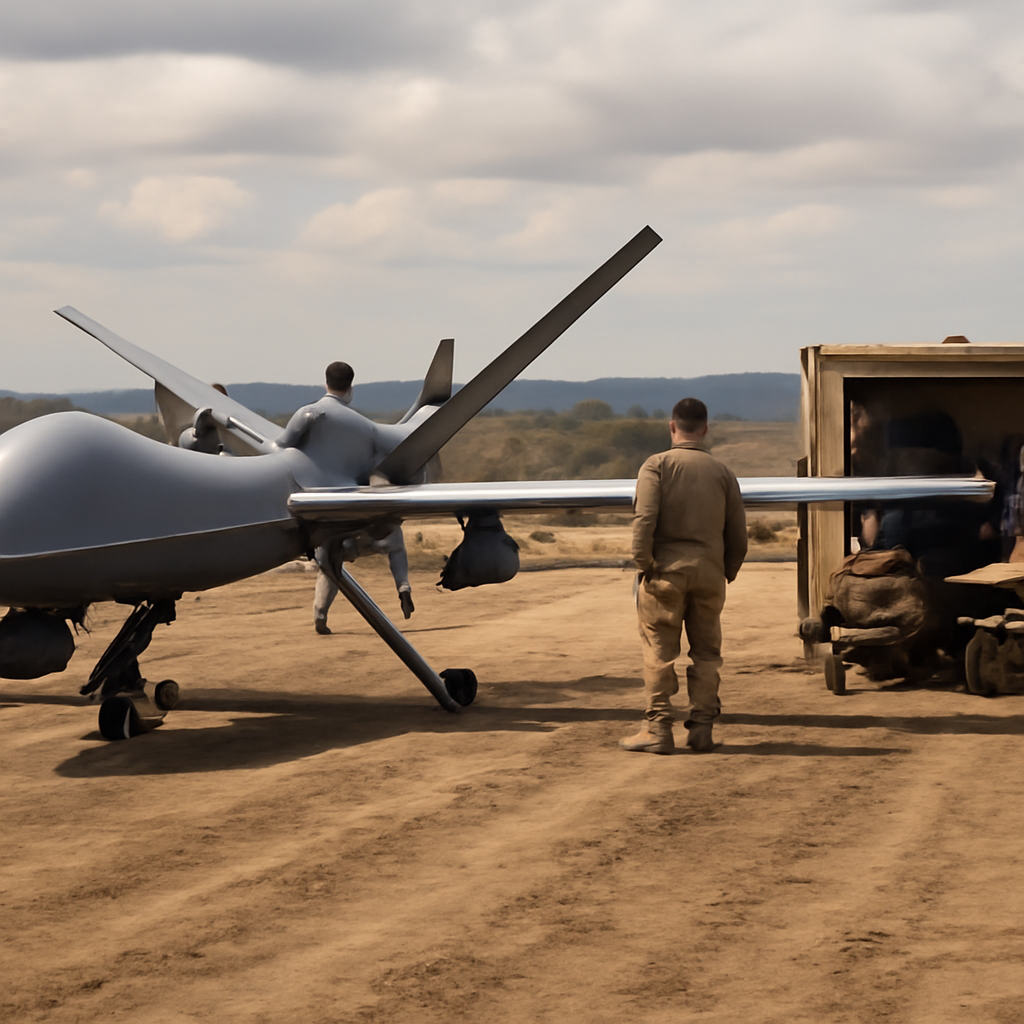
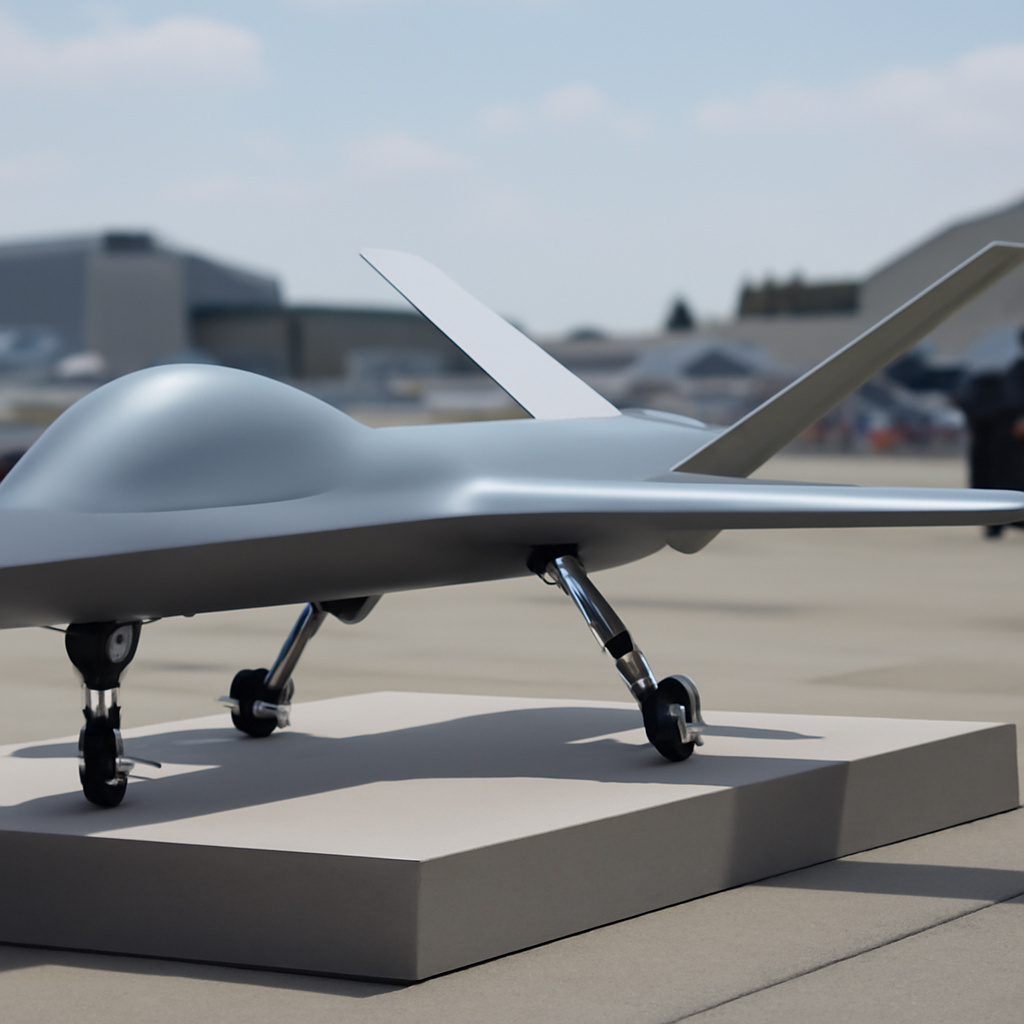
At the Swedish Air Force centennial air show Saab unveiled a three-step unmanned-aircraft effort it hopes will mature into a loyal wingman capability. The company described three platforms: the A1, a supersonic demonstrator; the A2, a platform with an internal weapons bay; and the A3, which Saab says may become the eventual sales product. A full-scale A3 model was displayed outside Saab’s hangar at the show.
Saab uses the term Autonomous Collaborative Platform (ACP) for the family, distinguishing its language from the U.S. Air Force’s Collaborative Combat Aircraft (CCA) nomenclature cited in reporting. The A1 will be powered by an artificial intelligence-driven GE F414 engine — the same engine used in the Gripen E/F, Saab said.
Performance, cost and timelines for the A3 versus the Gripen E
Saab gave specific cost and timeline markers for the A-series. The A1 and A2 are both expected to fly within four years, with the first of them due within 15 months, the company said. The A3, which Saab positions as the potential production offering, could enter service within ten years if the government decides to proceed.
On cost, Saab estimated one A3 would be roughly one-third of a Gripen E on a lifecycle basis, and about half the initial acquisition cost of a Gripen E, the company told reporters during a media briefing. Saab presented the A3 as a lower-cost unmanned complement to manned fighters, aimed at mixed operations alongside “mother” platforms such as the Gripen.

The cyber insurance questionnaire just landed. Now what?
SOC 2, HIPAA, insurance renewals - someone has to own security strategy. Nubivance provides fractional CISO leadership without the full-time salary.
Get a security leadGovernment process: Vägval stridsflyg, budgets and the decision window
The A-series development sits inside a broader Swedish procurement process. In 2024 the Swedish Defense Materiel Administration awarded contracts to Saab and GKN Aerospace under the “Combat Aircraft Path Selection” (Vägval stridsflyg) program, covering studies, technology development and demonstrator preparations to support decisions on Sweden’s fighter capability after 2040 — the date Saab framed as when the Gripen E will need to be replaced or supplemented.
Jonson described a sequence of inputs that will shape any government choice: a budget proposal from the Swedish Armed Forces and the Defense Materiel Administration due “next March,” a state inquiry into industrial and defense policy, and input from a parliamentary reference group expected in September 2027. He told reporters the Riksdag is expected to decide between 2028 and 2030.
Saab’s backlog, recent orders and NATO membership
Saab’s executives framed the ACP work against a surge in orders that the company attributes in part to Sweden’s NATO accession. CEO Micael Johansson told reporters Saab now holds a backlog of orders worth 318 billion kronor ($33.6 billion), and named examples: three A26 submarines for Poland, 16 Gripen E jets for Ukraine, Canada’s and NATO’s selection of up to ten GlobalEye Airborne Early Warning and Control aircraft, and equipment for Germany’s new frigates including combat systems, composite structures and sensors.
Johansson added that last month Saab received an order for two GlobalEye aircraft from “a new country” in the Middle East, valued at 10.1 billion kronor ($1 billion) with deliveries scheduled for 2030. Johan Segertoft, head of business unit Gripen, further underlined Saab’s long-running interoperability with NATO, saying: “In 2002, the Gripen C came out — NATO interoperable, fully NATO compliant — more than 20 years before Sweden joined the alliance.”
What this means for the Swedish Air Force, Saab, and the Swedish Defense Materiel Administration
- Swedish Air Force: Brig. Gen. Niclas Magnusson described a future with “some sort of mix” between manned and unmanned assets, saying, “I think we need both. And I think we need them also combined... mixed squadrons with both manned and unmanned.” The Air Force will therefore be watching A-series demonstrators for integration and force-mix planning.
- Saab: The company is advancing demonstrators (A1 and A2) on a short timeline while pitching the A3 as a lower-cost production option. Saab is positioning ACP development alongside a growing backlog of export orders it says has been bolstered by NATO membership.
- Swedish Defense Materiel Administration: The agency’s 2024 Vägval stridsflyg awards already fund studies and demonstrator preparations. It will feed technical work, cost estimates and industrial-policy inputs into the decision process that the Riksdag is to conclude between 2028 and 2030.
Saab’s three-tier approach ties near-term demonstrators to a longer-term production pitch and an explicit political decision calendar. The immediate technical milestone is the planned first flight within 15 months and demonstrators flying within four years; the political milestone is a parliamentary choice in the 2028–2030 window informed by budget proposals, a state inquiry and a reference group report. Whether that sequence produces an operational A3 — and a mixed manned-unmanned force structure — will be decided in those timeframes.