"go from concept to first flight within 36 months," the Swedish Ministry of Defense told Saab — a demand Peter Nilsson described as "quite challenging." The instruction, and the company’s response, set the tempo for a program Saab says could produce a stealthy, supersonic uncrewed combat aircraft in the 2030s.
Saab's ACP program and the A3 mockup
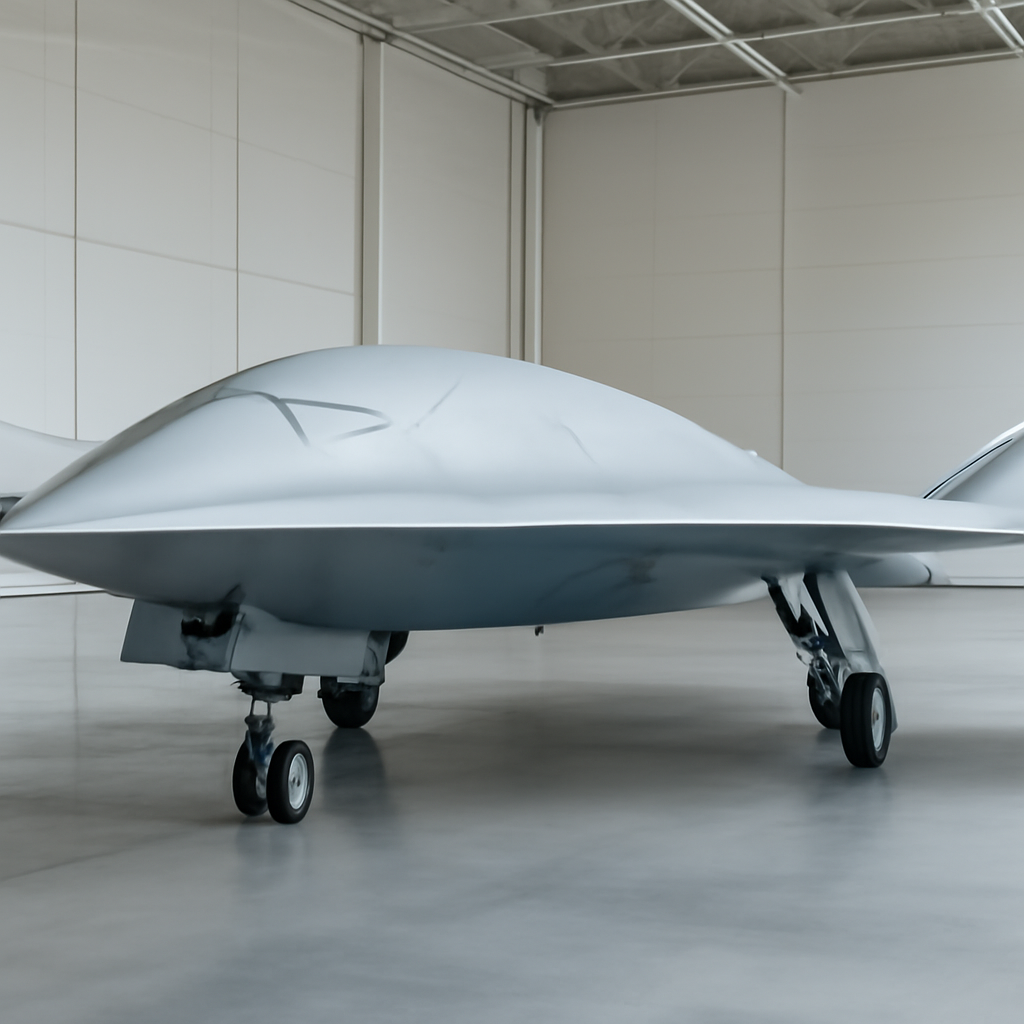
Saab’s Autonomous Collaborative Platform (ACP) roadmap centers on a full-scale mock-up dubbed aircraft A3, presented during an event at Malmen Air Base celebrating the Swedish Air Force’s 100th anniversary. Saab positions A3 as a higher-end, larger and more capable counterpart to other collaborative combat aircraft programs, and says the demonstrators already under development will inform the A3 design if the company is awarded a follow-on development contract.
The ACP sits under Sweden’s Koncept för Framtida Stridsflygplan (KFS) project. Saab describes the A3 mockup as tailless and stealthy, with significant internal capacity for fuel and stores, and says the company may use internal funds for early A3 work “pending investment from the Swedish government.” A formal development contract, Saab says, could be expected around 2030.
A1 and A2 demonstrators: engines, purpose, and schedule
Saab is contracted until 2030 to develop two uncrewed technology demonstrators, aircraft A1 and A2, funded by the Swedish Ministry of Defense. Peter Nilsson told journalists that the first demonstrator, A1, “is expected to fly within the next 15 months.” A1 and A2 are both powered by the GE Aerospace F414 turbofan, selected for its availability and Saab’s Gripen E/F experience with the engine.
Saab describes A1 as a supersonic, low-observable demonstrator with internal weapons-bay capacity; however, A1 will not be used for stores release tests. A2 will include an internal weapons bay and is expected to be used for ordnance testing as well as trials of new materials and sensors. What happens after the A1/A2 phase depends on a follow-on decision by the Swedish Ministry of Defense; there is currently no agreement to advance to a production-oriented prototype like A3.

Audit-ready is a season. It shouldn't be.
Evidence in spreadsheets, controls drifting between audits, frameworks multiplying on flat headcount. Nubivance runs continuous compliance on Rapid7 Cyber GRC - SOC 2, HIPAA, ISO 27001, PCI, CMMC.
End the scrambleDesign features: stealth, supersonic performance, and internal capacity
The A3 concept retains the blended wing/body, cropped wings and prominent chines shown in earlier Saab concepts. Saab highlighted stealth features including chisel-type divergent (DSI) air intakes on each fuselage side and a serrated engine nozzle visible on the mockup. Saab says the design emphasizes internal fuel and store capacity to preserve low observability while enabling missions described as “high-risk” in heavily defended airspace.
Functionally, Saab expects ACPs to undertake air-to-air combat, electronic warfare, suppression of enemy air defenses and deep precision strike. The company envisions the crewed Gripen E operating as a tactical mission commander for multiple ACPs, supported by the GlobalEye airborne early warning and control aircraft — though Nilsson cautioned that “right now there is no commitment” from Sweden for such an operational structure.
How the Swedish Air Force, Saab, and Gripen operators are positioned
- Swedish Air Force leaders: Brigadier-General Niclas Magnusson urged closer collaboration between service and industry as Sweden defines future air combat requirements, and said he expects the future force to field both crewed and uncrewed platforms. The service is still deciding whether to pursue a crewed Gripen successor, abandon crewed fighters, or join a foreign sixth-generation program; that decision is likely between 2028 and 2030.
- Saab: The company is positioning ACP as a potential “first-mover” in high-end loyal-wingman aircraft and as a technological base for a future crewed fighter. Saab says the ACP spiral development could feed into a crewed Gripen successor, which the Swedish Air Force would require sometime after 2055, and Saab claims it could start such development in the mid-2030s if demand exists.
- Other Gripen E/F operators: Saab has prioritized offering ACP to other Gripen operators, noting engine commonality advantages — especially for maintenance at remote airbases — if the F414 continues to be used or if other logistics commonality is retained.
Costs, sustainment, and procurement pathway
Saab told reporters that ACP life-cycle cost could be “around a third” that of the Gripen, though acquisition cost would not be as low. Nilsson suggested a single ACP could cost roughly half as much as a Gripen and said that an ACP offering “high-end survival” might allow operators to field two to three ACPs for each Gripen. Open-source reports cited by Saab place a typical Gripen E flyaway cost at roughly $70–80 million.
Nilsson also warned that program progression will hinge on customer commitment: “if a customer does not come along I don’t know when my CEO will stop me spending — you need a customer to buy into this.” The company maintains that engine commonality with Gripen logistics and the ability to perform field maintenance at remote bases are driving factors in powerplant selection for operational ACPs.
Saab’s ACP work is therefore both a near-term technology push — with A1 expected to fly within months and A2 to follow under a contract through 2030 — and a strategic bet on shaping Sweden’s force structure and export offerings through the 2030s and beyond. Whether Stockholm commits to an ACP-led mix of crewed and uncrewed aircraft, pursues a new crewed fighter, or joins an international sixth-generation program will be a decision to watch in the coming four years.