"The direct cycle is very likely to result in a large quantity of radioactive material in the exhaust," Jake Hecla contends.
Jake Hecla and R. Scott Kemp’s findings
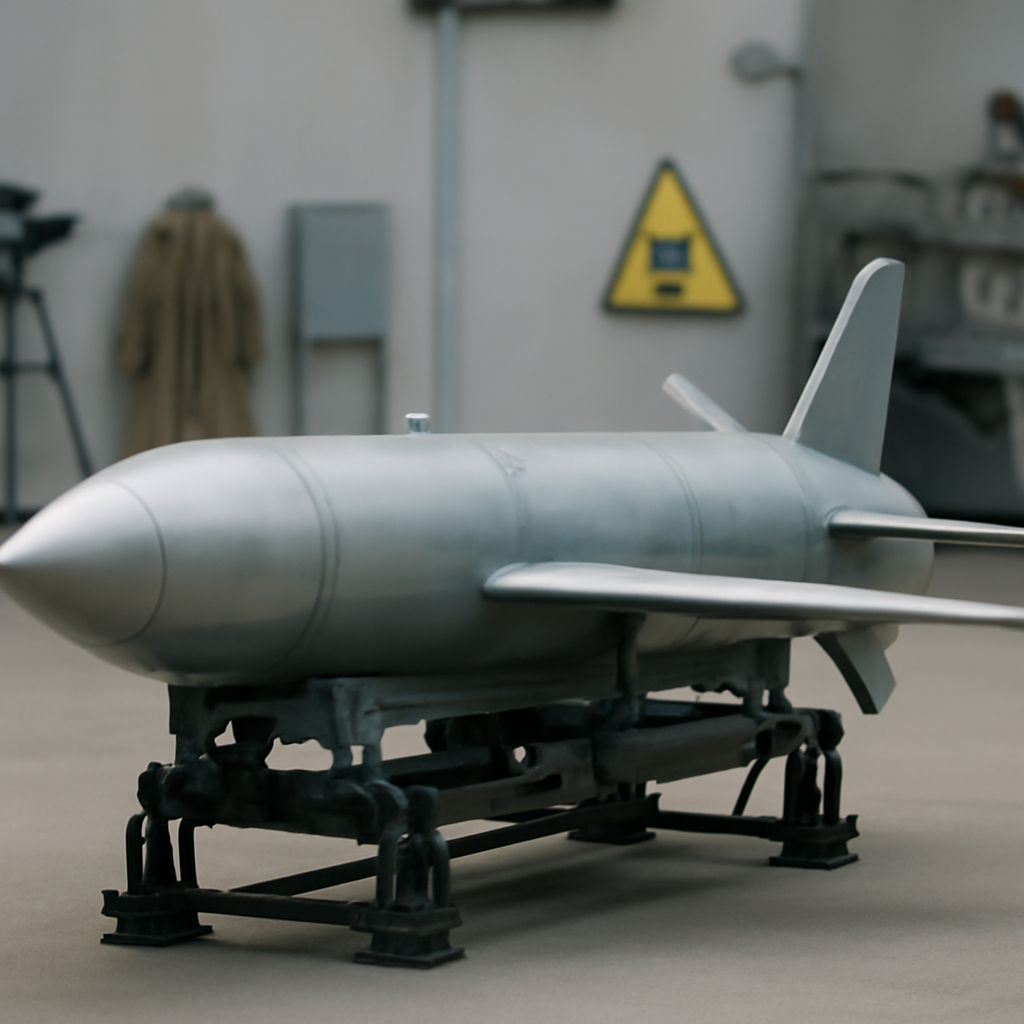
Two Massachusetts Institute of Technology researchers, Jake Hecla and R. Scott Kemp, published a detailed analysis concluding that Russia’s Burevestnik (NATO: SSC‑X‑9 Skyfall) cruise missile likely uses a nuclear reactor that vents radioactive material into the atmosphere. Using open-source imagery and performance modeling, they estimate the missile is roughly 31 feet (9.5 meters) long with an 18‑foot (5.6 meter) wingspan and likely cruises at about Mach 0.75. From those dimensions and performance parameters the researchers conclude the propulsion is “almost certain” to be a direct‑cycle, air‑breathing nuclear system that probably drives a turbojet.
How a direct‑cycle nuclear turbojet works — and why it’s “dirty”
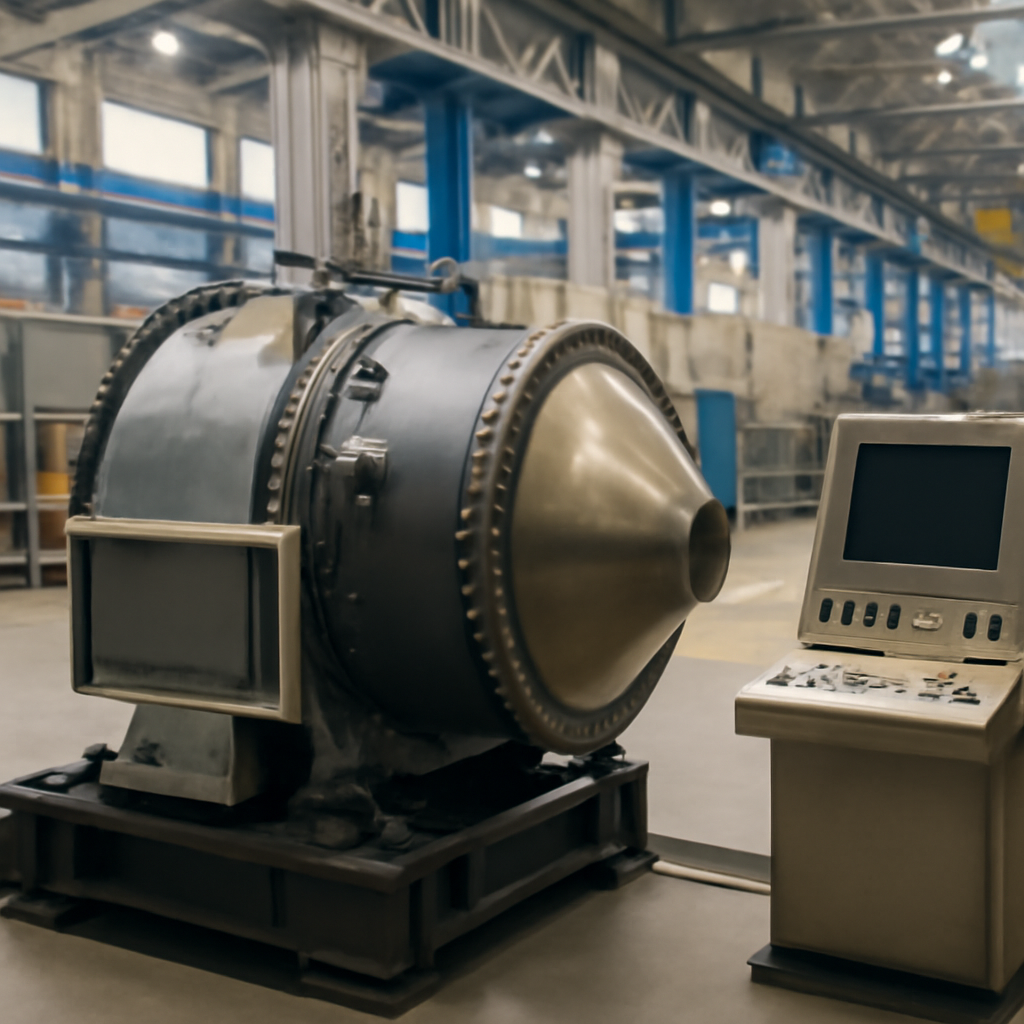
Hecla and Kemp explain that in a direct‑cycle design ambient air is compressed and forced through thousands of narrow channels that surround nuclear fuel. Nuclear fission heats the air directly; that hot air expands and is expelled out the rear to produce thrust. This stands in contrast to the indirect, closed‑loop reactors commonly used to keep radioactive material contained. The direct approach is more compact and simpler for fitting inside a missile, but it has a consequential drawback: as ambient air flows through and around fuel elements it becomes irradiated and carries fission decay products.
The researchers name the likely contaminants: radioactive isotopes of argon, krypton, and carbon would be present in the exhaust and dispersed downwind. They also warn that prolonged operation accelerates corrosion and degradation of reactor components, producing additional radioactive particulates.

Audit-ready is a season. It shouldn't be.
Evidence in spreadsheets, controls drifting between audits, frameworks multiplying on flat headcount. Nubivance runs continuous compliance on Rapid7 Cyber GRC - SOC 2, HIPAA, ISO 27001, PCI, CMMC.
End the scrambleTest history and accidents cited as evidence
The Burevestnik program’s development appears to have been punctuated by accidents and unusual radiation events. In 2017, a U.S. intelligence report described the loss at sea of a Russian nuclear‑powered missile. Bellona, a Norway‑based environmental group, pointed to an Arctic radiation spike in the winter of 2018 as possibly tied to testing. In August 2019 an explosion aboard a barge near Nenoksa on the White Sea killed five Rosatom scientists and produced a radiation spike in Severodvinsk; Hecla and Kemp consider that blast likely resulted from a failed attempt to recover a prototype Burevestnik reactor that may have restarted while being raised from the seabed.
More recently, Russia’s Chief of the General Staff, Valery Gerasimov, announced in October 2025 that a successful, roughly 15‑hour Burevestnik flight test had been conducted above the Arctic Circle. Hecla and Kemp treat that October 2025 event as the first long‑endurance test and conclude it marks the first sustained flight of an aircraft powered by a nuclear reactor.
Military value, limitations, and stated motivations
Hecla and Kemp and other analysts summarized the missile’s strategic trade‑offs. Their key conclusions include that Burevestnik does not represent a decisive change in strategic warfighting capability but functions as a hedge against missile defenses, adding complexity to warning, tracking, and defense planning. William Alberque, formerly of the International Institute for Strategic Studies, told TWZ: “It leaks radiation, making it easy to track; it’s slow and un‑stealthy, making it easy to shoot down; and the inside of the missile degrades during reactor operation, calling into question its ‘unlimited’ range.”
Additional practical limits cited in public assessments: the system appears subsonic and relatively slow once detected, Russia has described the missile in the context of a nuclear warhead, and the size and weight constraints make conventional warheads a questionable payload given the radioactive exhaust the vehicle would leave behind. Analysts also note the missile’s principal military advantage — near‑unlimited range and an unpredictable flight path — is what likely motivated development despite the operational downsides.
Hecla and Kemp suggest another explanation: Burevestnik may be intended less as a practical field weapon than as a technology demonstrator to advance nuclear‑propulsion know‑how for future applications, such as nuclear‑powered surveillance drones or space‑based systems. Others have suggested the program may also reflect a political or symbolic priority.
What this means for technologists, policymakers, and the public
- Technologists and security teams: the direct‑cycle design implies a persistent, radioactive trail that could be used to detect and track flights; engineers assessing nuclear‑propulsion concepts will face the technical problem of corrosion and particulate generation during extended operation.
- Policymakers and defense planners: the missile’s claimed endurance and unpredictable vectors complicate warning and tracking; the source notes that space‑based tracking layers, including sensors for low‑flying aircraft, are increasingly relevant to countering such capabilities.
- The public and environmental monitors: prior radiation spikes tied to tests and the risk of dispersed isotopes from sustained flight or accidents underline acute safety and environmental concerns around handling, testing, and recovery of nuclear‑propelled systems.
The October 2025 flight may represent a historic first — the first sustained flight of a nuclear‑powered aircraft — but that milestone is tempered by the researchers’ and analysts’ conclusions: the propulsion approach almost certainly produces a radioactive exhaust, corrodes its own reactor hardware during operation, and delivers limited battlefield advantage relative to its hazards and cost. As Hecla and Kemp’s work stresses, Burevestnik is both a technological demonstration and a hazardous emblem of a possible broader nuclear‑propulsion race.
Source: The War Zone — Here Is How Russia’s Skyfall Nuclear-Powered Cruise Missile Actually Works