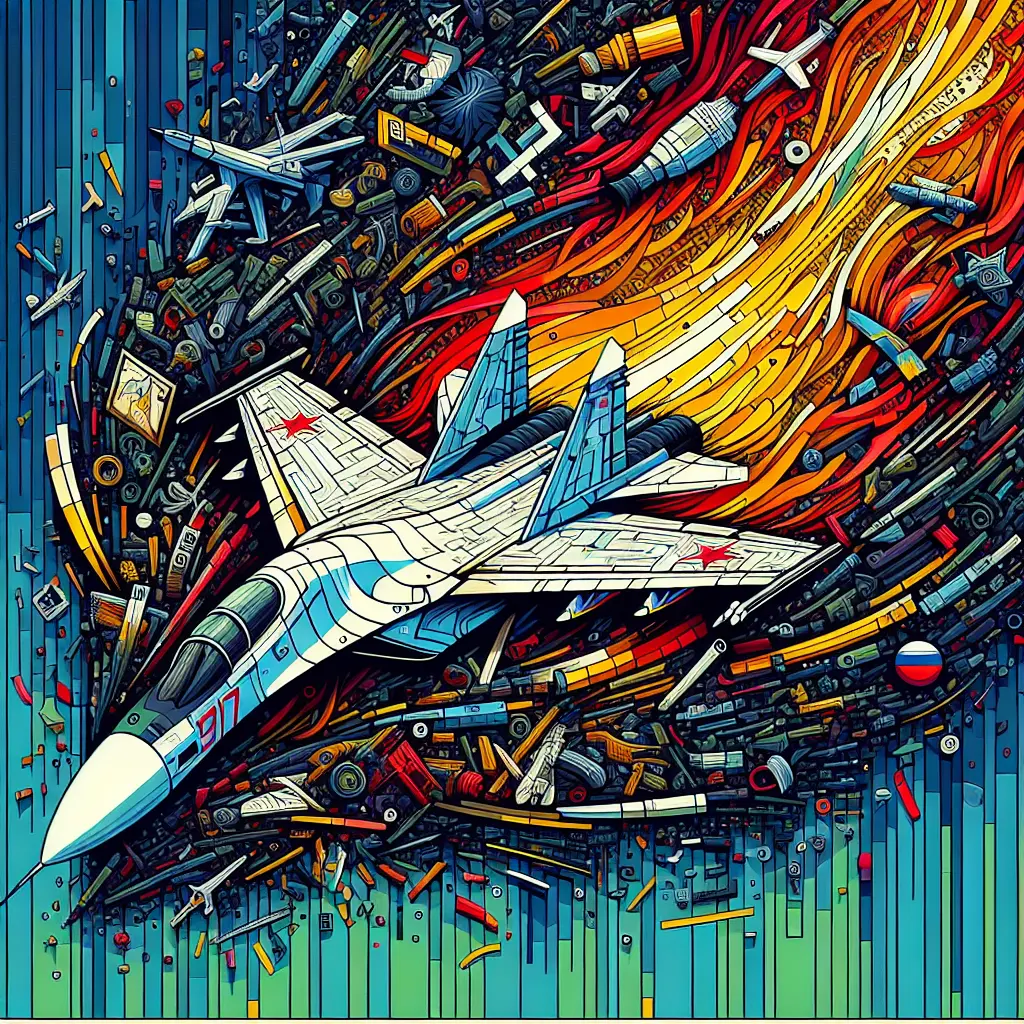
Grounded in Controversy: The Crash of the Russian Su-34 Fighter Jet
In an unsettling turn of events that underscores the fragility of military operations, a Russian Su-34 fighter jet recently crashed during a training flight in the southern region of the country. As the debris smolders and investigations commence, a pressing question looms: what does this incident reveal about the current state of Russian military aviation and the broader implications for national security?
The Su-34, a twin-seat fighter-bomber designed for precision strikes, has become a cornerstone of Russia’s air force capabilities since its introduction in 2014. Yet, as with any complex machinery subject to human error and environmental conditions, accidents can occur. The Ministry of Defense confirmed that the crash happened during a routine training exercise but offered few details regarding potential causes or casualties. This lack of transparency is not unusual within military circles where operational security often trumps public knowledge.
To fully grasp the significance of this crash, one must consider the historical context surrounding Russia’s military modernization efforts. Following its annexation of Crimea in 2014 and subsequent involvement in Syria, Russia has heavily invested in enhancing its aerial capabilities. The Su-34 was developed to replace aging bombers, intending to project power both regionally and globally. However, incidents such as this raise questions about the reliability and safety of these modernized fleets amid ongoing geopolitical tensions.
At present, sources indicate that the crash site is being combed for evidence to ascertain what went wrong. Eyewitness accounts suggest that the aircraft experienced mechanical failure before it went down. While this aligns with concerns raised about aging equipment in other parts of the Russian arsenal, official statements are sparse. Analysts have noted that incidents like these could foster skepticism regarding Moscow’s military strength just as it seeks to assert dominance on multiple fronts.
The implications are manifold: not only does this incident potentially endanger personnel and hinder operational readiness, but it also poses questions about public trust in military communications during crises. In a digital age where information travels at lightning speed, how effectively can authorities manage narratives surrounding operational mishaps? For adversaries observing from afar, such failures can be interpreted as weaknesses that invite scrutiny or even opportunism.
According to retired Major General Andrei Kovalchuk, who has closely monitored advancements in Russian military hardware, “Each incident erodes confidence among troops and highlights systemic issues within maintenance protocols.” His insights echo concerns from various defense analysts who argue that sustained negligence toward aging fleet management may eventually lead to wider repercussions beyond mere accidents.
The road ahead appears rocky for Russia’s air force as it grapples with not only technical challenges but also diminishing pilot morale amid increasing scrutiny from both domestic and international observers. The balance between maintaining an image of formidable strength while addressing significant shortcomings may prove difficult as time unfolds.
As we navigate this complex scenario, several outcomes merit attention: Will there be a renewed focus on aviation safety protocols? Could this incident catalyze broader discussions on military oversight? Furthermore, how might allied nations adjust their strategies based on perceived vulnerabilities within Russia’s aerial combat capabilities? These questions remain unanswered but warrant close observation as they unfold.
Ultimately, while this crash serves as a poignant reminder of human vulnerability amidst high-stakes operations, it also highlights a pivotal truth: maintaining air superiority is not solely about advanced technology; it encompasses rigorous training standards and maintenance rigor underpinned by transparency and accountability. As nations watch closely, each incident reverberates well beyond its immediate aftermath—reshaping narratives and strategies within an ever-evolving geopolitical landscape.



