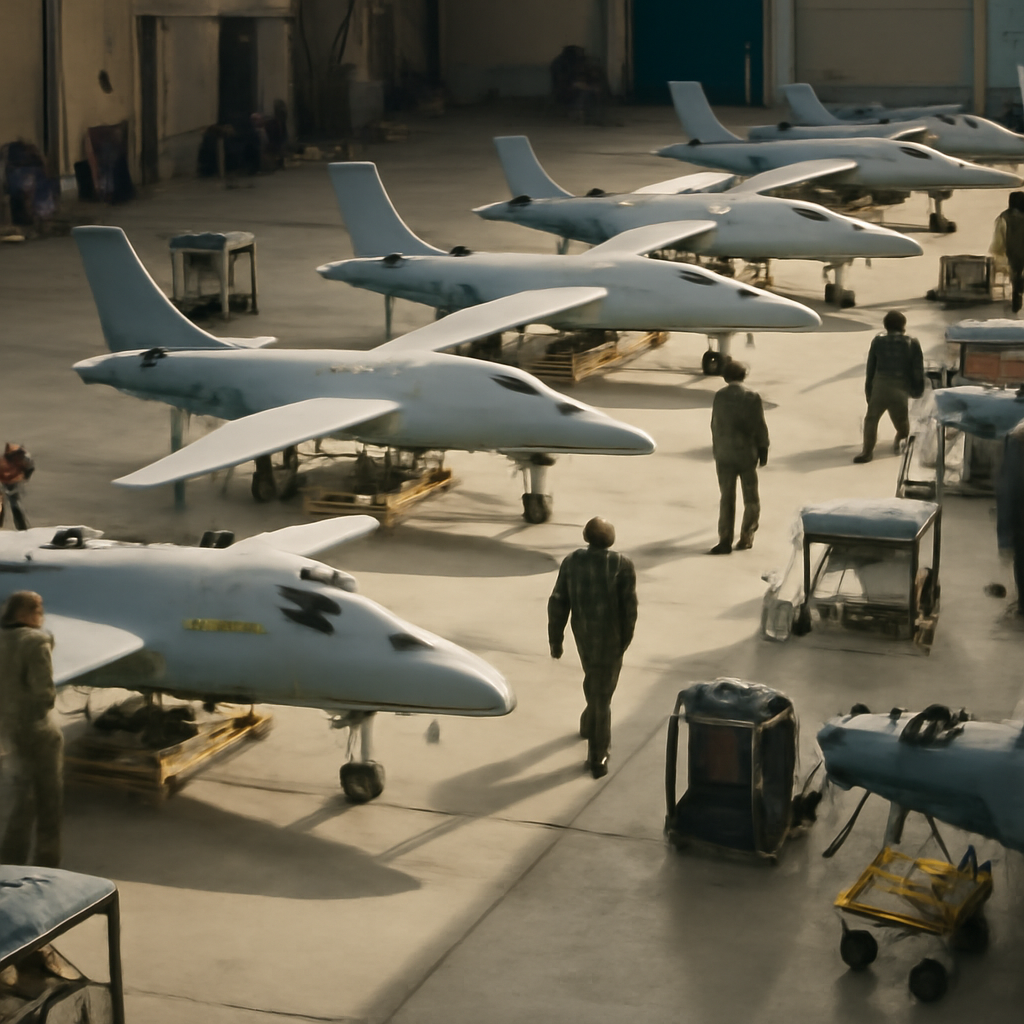
"Sometimes, two-thirds of all drones launched during the day are jet-powered," Colonel Yurii Ihnat of the Ukrainian Air Force said, encapsulating a rapid shift in the composition of Russia's loitering-munition strikes.
Russian Geran-4 and Geran-5 jet production and launch volumes
Ukrainian tracking of launch volumes and factory activity shows Russian production of jet-powered Geran one-way attack (OWA) munitions overtook piston-engined variants in August 2026. Ukrainian estimates place jet production at roughly 3,000 units per month, against a stated Russian goal of a 50% jet share—an objective the August figures suggest has already been passed. Serhii Beskrestnov, a presidential technical adviser, estimated roughly 2,500 Russian jet-drone launches in August compared with about 1,500 in July.
At the same time, piston Geran launches fell sharply: nearly 7,500 in May, under 6,000 in June, under 5,000 in July, and under 2,500 by mid‑August. Jet launches rose roughly fivefold from June to July, and the daytime mix has shifted noticeably toward the faster models.
Speed, unit cost, and the Telefly microturbine attribution
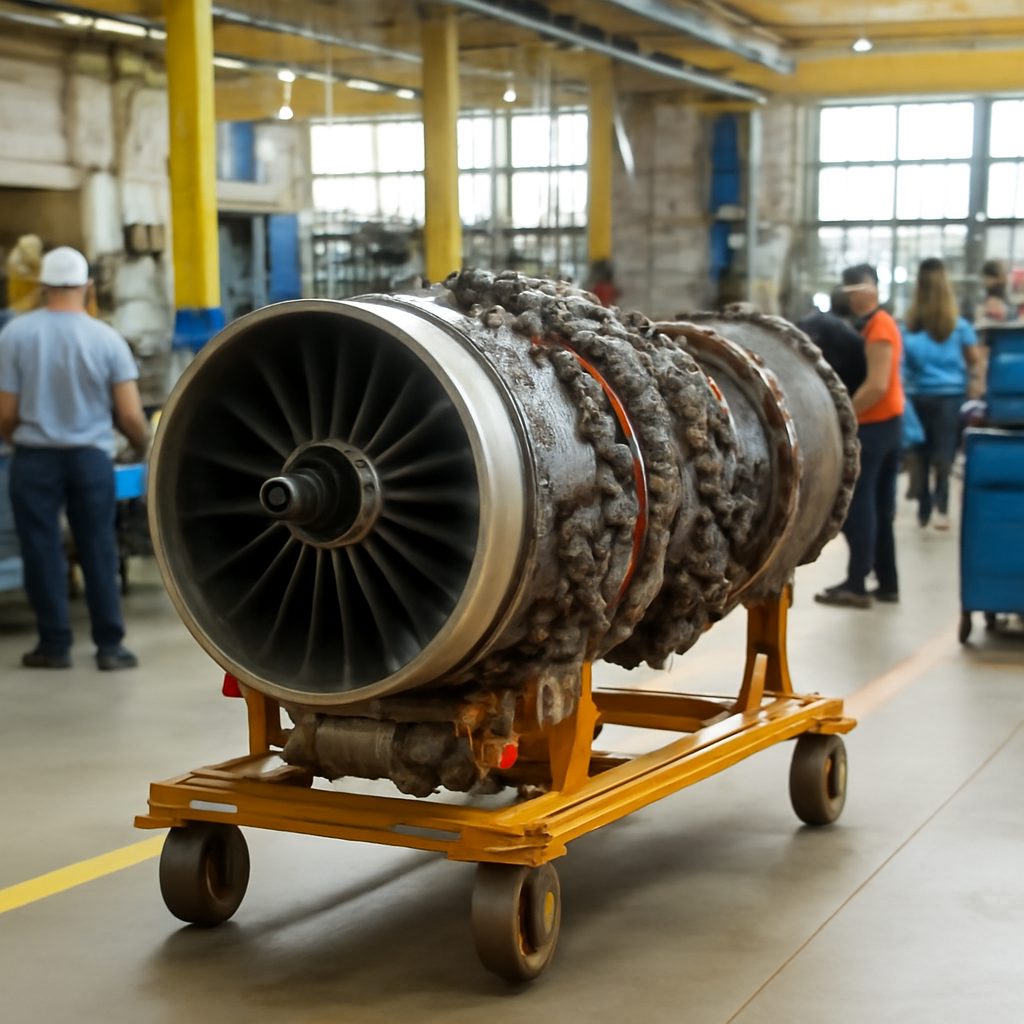
Ukrainian officials report Geran-4 and Geran-5 speeds above 600 km/h. Separately, reporting on the Chinese-supplied microturbines identifies an alternate figure of roughly 483 km/h—about three times piston speed—tied to Telefly Telecommunications Equipment of Shenzhen. The company reportedly removed turbojet material from its English-language website after Ukraine identified the engines in captured airframes, while retaining the same material in Chinese.
The Geran-4’s unit cost is assessed at something over USD 100,000—roughly twice the cost of a Geran-2—and the faster airframes trade away a substantial share of the piston variant’s range. What Russia buys with that money, Ukrainian analysts argue, is a degraded interception rate because the jet models reduce the utility of the cheapest mobile fire-group defences.

Audit-ready is a season. It shouldn't be.
Evidence in spreadsheets, controls drifting between audits, frameworks multiplying on flat headcount. Nubivance runs continuous compliance on Rapid7 Cyber GRC - SOC 2, HIPAA, ISO 27001, PCI, CMMC.
End the scrambleUkrainian interception performance and the evolving operational pattern
Ukrainian interception performance against Geran-type munitions fell from roughly 92% in June to about 87% in July as the jet models scaled. Mobile fire groups—the cheapest layer of Ukrainian air defences—lose most of their utility against targets moving at those speeds, which pushes engagements onto interceptor drones and missiles that cost considerably more per shot.
Operational data through late August supports a shift to more sustained, daytime launching. From about 18:00 on 26 August, Russia launched 258 drones plus two Oniks anti-ship missiles and Iskander-M ballistic missiles; the Air Force stated roughly one third of those strike munitions were jet-powered. Across 28–29 August, more than 550 Banderol, Shahed and Gerbera types were launched alongside decoys, with Ukrainian forces claiming roughly 86% interception across strike packages running more than 28 hours. Ukraine reported 233 drones downed or suppressed overnight into 29 August, then a further 224 launched between 06:30 and 18:00 that day with 199 claimed intercepted—evidence, Ukrainian reporting says, of a move toward sustained daytime raids rather than concentrated night attacks.
Ukraine's countermeasures: Alexa Spatium, F7 Litavr, and P1-SUN
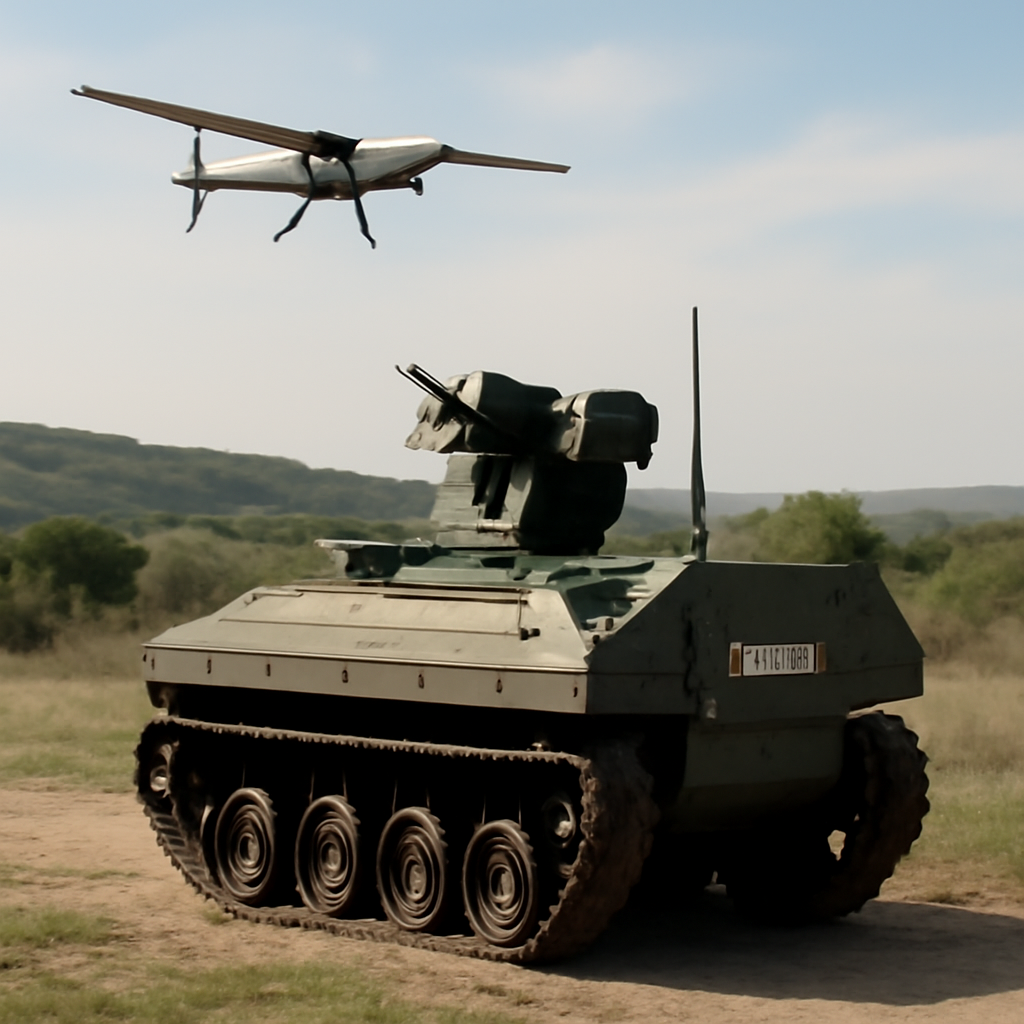
Ukraine is responding by fielding interceptors that can match jet speeds. The Alexa Spatium, a catapult-launched turbojet interceptor quoted at 600 km/h and recoverable when it does not engage, was codified into service on 21 August with Geran-3, Geran-4 and Geran-5 named as its targets. Mi-8 helicopters have been fitted to carry up to 12 F7 Litavr interceptor drones on external pylons, a configuration intended to keep the helicopter clear of air-to-air missiles carried by some armed Geran-4 variants.
Ukrainian defence industry developments include SkyFall’s P1-SUN JetKiller family (unveiled 20–21 July 2026) and other candidate interceptors. Defence Minister Yevhen Khmara said on 29 August that four candidate interceptors have completed field testing against jet Shaheds and that the next task is to "scale up production to thousands of units."
How the Ukrainian Air Force, Russian planners, and defence manufacturers are affected
- Ukrainian Air Force: faces a reduced effectiveness of cheaper mobile fire groups and must scale high-speed interceptors and delivery methods (Alexa Spatium, Mi-8 with F7 Litavr) to preserve interception rates and protect infrastructure.
- Russian planners: have shifted industrial output toward jet variants (Geran-4/5), accepting higher per-unit costs (Geran-4 above USD 100,000) to increase survivability and daytime strike options; August production and launch figures indicate the intended jet share has been achieved.
- Defence manufacturers and suppliers: are under pressure to move from prototypes to mass production—Ukrainian officials note a need to scale interceptors "to thousands"—and to refine interception systems capable of repeated high-speed engagements.
The balance between range, cost and speed now defines the tactical calculus on both sides: faster Geran variants reduce the utility of low-cost air-defence layers and force pricier responses, while Ukraine races to produce recoverable, high-speed interceptors and airborne launch options to blunt sustained daytime raids. The immediate contest is technical and industrial as much as it is tactical; whether production lines and logistics can keep pace will determine how durable the shift to jet-powered loitering munitions proves.