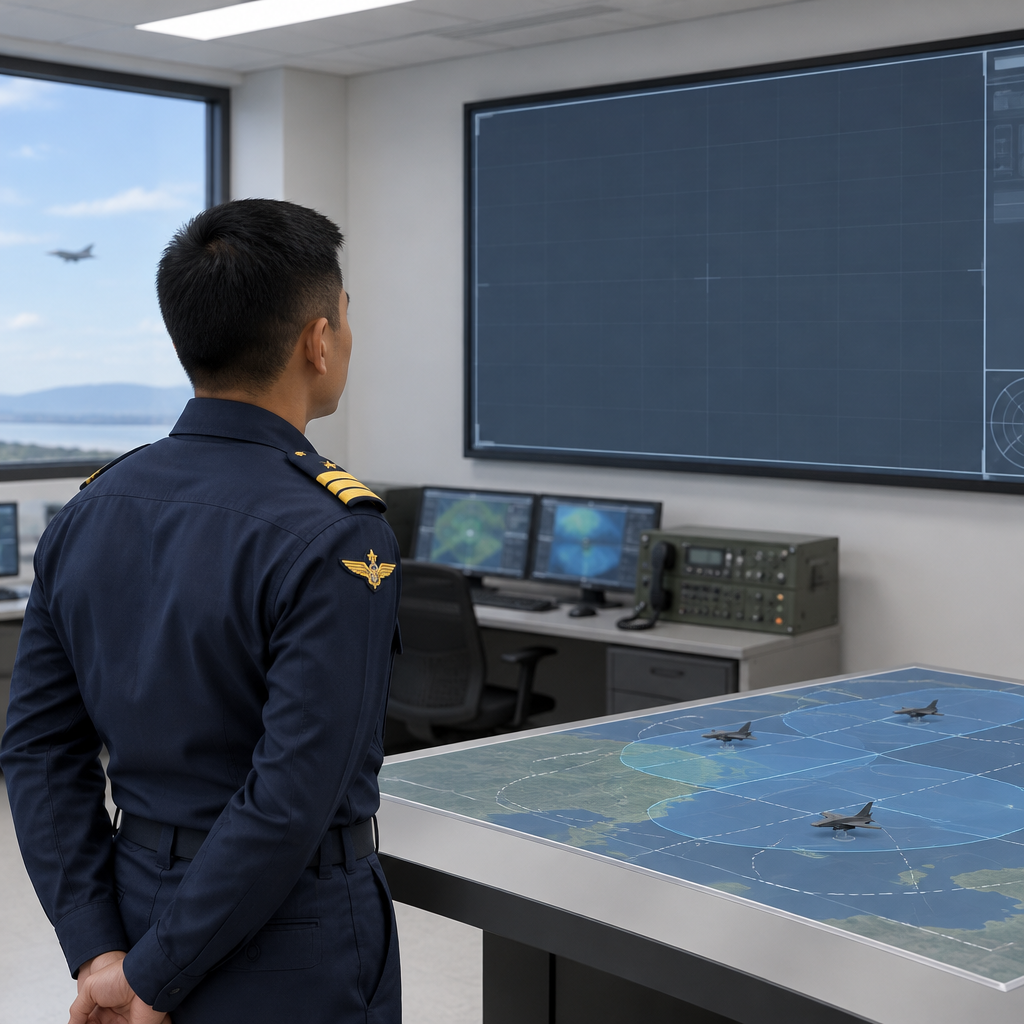
"reviewing and revising doctrine, improving training, and the management, control and countering of unmanned aircraft." — Air Chief Marshal Seksan Kantha.
Doctrine and training refocused after the 2025 border clash
The Royal Thai Air Force (RTAF) has placed doctrine revision and improved training at the center of its updated 10-year roadmap, a White Paper issued last month says. Training modernization already in motion includes procurement of the T-6 Harvard II turboprop trainer and the TA-50TH advanced jet trainer, plus associated simulators from the United States and South Korea. The service plans to replace the ageing CT/4 Airtrainer (known in the RTAF as the B.F16) with a new elementary trainer to close foundational skill gaps.
Lessons from the 2025 border clashes are also baked into 2026 exercises and curricula: air-to-ground coordination, forward air controller tactics, close air support, suppression of enemy air defenses, and counter-uncrewed aerial system (C-UAS) techniques are now explicit priorities.
Gripen E/F adoption and the F-16 transition
Following the official selection of SAAB’s Gripen E/F in August 2024, the RTAF committed to a phased acquisition to replace the 1 Wing’s ageing F-16 fleet through the 2030s. The first three Gripen E/F jets are slated for delivery to 1 Wing in 2028; the air force is seeking government funding for a second batch of eight aircraft to complete a 12-aircraft squadron as soon as possible.
Separately, 7 Wing’s legacy Gripen C/D fleet was upgraded to the MS20 standard in the early 2020s, enabling compatibility with the MBDA Meteor very-long-range air-to-air missile. The White Paper cites long-range air-to-air capability as a key focus, a lesson drawn from the 2025 India-Pakistan border conflict, the Ukraine War, and the Sino-U.S. race to develop ever-longer range air-to-air missiles.

Audit-ready is a season. It shouldn't be.
Evidence in spreadsheets, controls drifting between audits, frameworks multiplying on flat headcount. Nubivance runs continuous compliance on Rapid7 Cyber GRC - SOC 2, HIPAA, ISO 27001, PCI, CMMC.
End the scrambleStandoff strike: Rampage, MPR-500, LIZARD-III and Safran AASM consideration
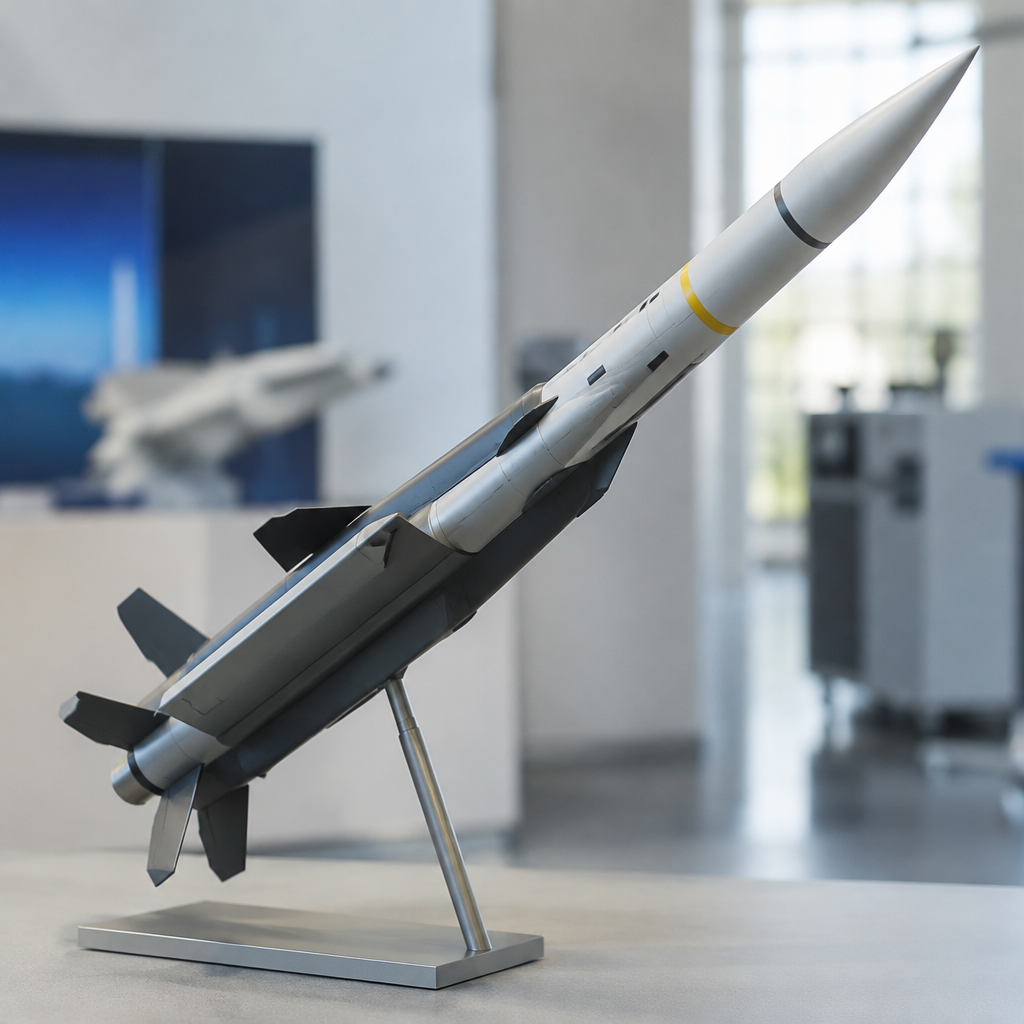
To extend reach while keeping combat aircraft inside Thai territory, the RTAF has moved to field standoff weapons. In September 2026 Bangkok announced acquisition of 20 Rampage air-launched ballistic missiles (ALBM) derived from the EXTRA artillery rocket, alongside 100 MPR-500 bunker-buster munitions and additional LIZARD-III guidance kits — a package worth $33 million from Israel.
The Rampage ALBM will be integrated on 4 Wing’s F-16 fleet to provide a significant standoff strike capability, while the LIZARD-III kits replenish expended stocks and improve effectiveness against hardened targets. The White Paper also notes consideration of French Safran 250 XLR and 1000 XLR AASM rocket-powered precision-guided bombs for the Gripen fleet; SAAB and Safran are reported to be working on integration for Ukraine’s upcoming Gripen fighters, a partnership the RTAF is watching as it seeks service-wide standoff precision strike options.
Networked operations: Link‑T, Erieye upgrades, and indigenous C2 ambitions
Since acquiring the legacy Gripen and SAAB 340 Erieye AEW aircraft from 2008 onward, the RTAF and Thai defense industry — with SAAB technology transfer — developed a domestic datalink, Link‑T. Link‑T was tested during the 2025 border clash and proved effective: it allowed seamless exchange of the air picture and command-and-control between the Erieye airborne platform, the ground air operations center, and compatible combat aircraft such as the Gripen and F‑5TH.
The Gripen E/F technology-transfer package included intellectual property rights enabling the RTAF and domestic industry to modify Link‑T to service needs and to pursue joint integration. That work feeds a broader plan to link air, sea, and land forces into a single command-and-control network — the future Joint Capabilities Command. Technology transfers also yielded Erieye improvements: the two Erieye aircraft will receive upgrades to add the 'C' for command to the AEW&C designation, enabling them to direct fighters or ground-based air defenses without routing commands through a ground station and thereby shortening the air-to-air kill-chain.
Integrated air defenses, C‑UAS, and the turn to space
The RTAF has historically fielded mostly very short- and short-range ground-based air defenses; the White Paper makes long-range coverage a priority. The announced acquisition of the Israeli IAI Barak‑MX system — with a nominal range of 150 kilometers — marks the first phase of a multiphase procurement to provide long-range protection for air bases. The Barak‑MX will defend against tactical ballistic missiles, artillery rockets, and air-breathing targets including combat aircraft, UASs, and cruise missiles; the first Barak‑MX system will arrive in 2029.
Counter-uncrewed aerial system capability is a complementary priority: the RTAF plans layered C‑UAS defenses at main and support air bases ranging from handheld jammers to kinetic effects, a lesson reinforced by heavy drone use in the 2025 clashes. Radar upgrades are underway too: Thailand has introduced two Indra LANZA 3D radars at Hat Yai and Koh Samui, with a third to be delivered to Phuket, improving detection of low RCS aircraft, ballistic missiles, and slow-moving UASs.
Space-based ISR is explicitly part of the roadmap. The RTAF launched Napa‑1 in 2020 and Napa‑2 in 2021; the service intends to collaborate with Thai industry on a homegrown nanosatellite, Thai Universe‑1, and to rebrand as the Royal Thai Air and Space Force by 2028 under a new National Air and Space Interests Coordination Center.
What this means for the Thai defense industry, procurement officials, and pilots
- Thai defense industry and SAAB: technology-transfer provisions and IP rights for Link‑T modification position Thai firms to lead integration work and to tailor national C2 systems for joint operations.
- Policymakers and procurement leaders: the RTAF is seeking additional government funding to complete a 12-aircraft Gripen squadron and will need to resource phased Barak‑MX deliveries and munitions buys announced in September 2026.
- Pilots and training commands: the replacement of the CT/4 Airtrainer, new elementary trainers, and the arrival of T‑6 and TA‑50TH platforms plus simulators will change the pipeline for aircrew training and readiness over the coming years.
The White Paper sketches a tightly sequenced modernization: Gripen E/F arrival beginning in 2028, first Barak‑MX in 2029, a rebrand to an Air and Space Service by 2028, and an explicit pivot toward uncrewed teaming and indigenous datalink control. The architecture is coherent and interlocking — but it rests on timely funding, successful integrations (Link‑T, Erieye C2, Rampage on F‑16s), and the capacity of domestic industry to absorb transferred technology. Those technical and fiscal steps will determine whether the RTAF becomes the leaner, more networked force its planners describe.