"Building on these results, the HYDEF follow-on consortium is ready to continue development under EATMI and deliver this critical capability for Europe," a Diehl Defence spokesperson said after the program's first phase closed at the end of October.
Nov. 30 decision point and program timeline
The European Commission faces a hard deadline on Nov. 30 to select one consortium — HYDEF or HYDIS — to advance into Phase 2 of the Endo-Atmospheric Interceptor (EATMI) program. Both teams completed the first phase, with preliminary requirements reviews in August and the official close of Phase 1 at the end of October.
Phase 2 is scheduled to begin in 2027 and will focus on maturing interceptor technologies and advancing the preliminary design of a complete weapon system. The commission's technical target is a system-level demonstrator at technology readiness level 6 by 2030, followed by development and industrialization aiming for an in-service date around 2035.
HYDEF: foundational technologies, member states, and industrial leads
HYDEF emphasizes foundational technologies for a highly maneuverable interceptor. The consortium includes government participation from Spain, Germany, Poland, Belgium and Norway and is led industrially by Spanish Missile Systems (SMS) with Diehl Defence acting as technical coordinator. Other named industrial participants are Nammo, Navantia and GMV.
Diehl Defence told Breaking Defense that HYDEF completed its first development phase on schedule and that August’s preliminary requirements review and the end-of-October milestone confirmed "all subsystems had exceeded their initial technical maturity targets."

This site is the portfolio.
OSINTSights runs on Cloudflare Workers, D1, R2, and Vectorize, with an AI pipeline on Hetzner ARM. Nubivance designed, built, and operates it. We do the same for clients.
See what we buildHYDIS (Aquila): an articulated interceptor design and operational claims
HYDIS has advanced a more defined missile design called Aquila. The consortium as currently constituted includes France, Italy, the Netherlands and Germany, and industrial partners MBDA, Saab, Thales and Leonardo, plus the Netherlands’ TNO and Sweden’s FOI research agencies.
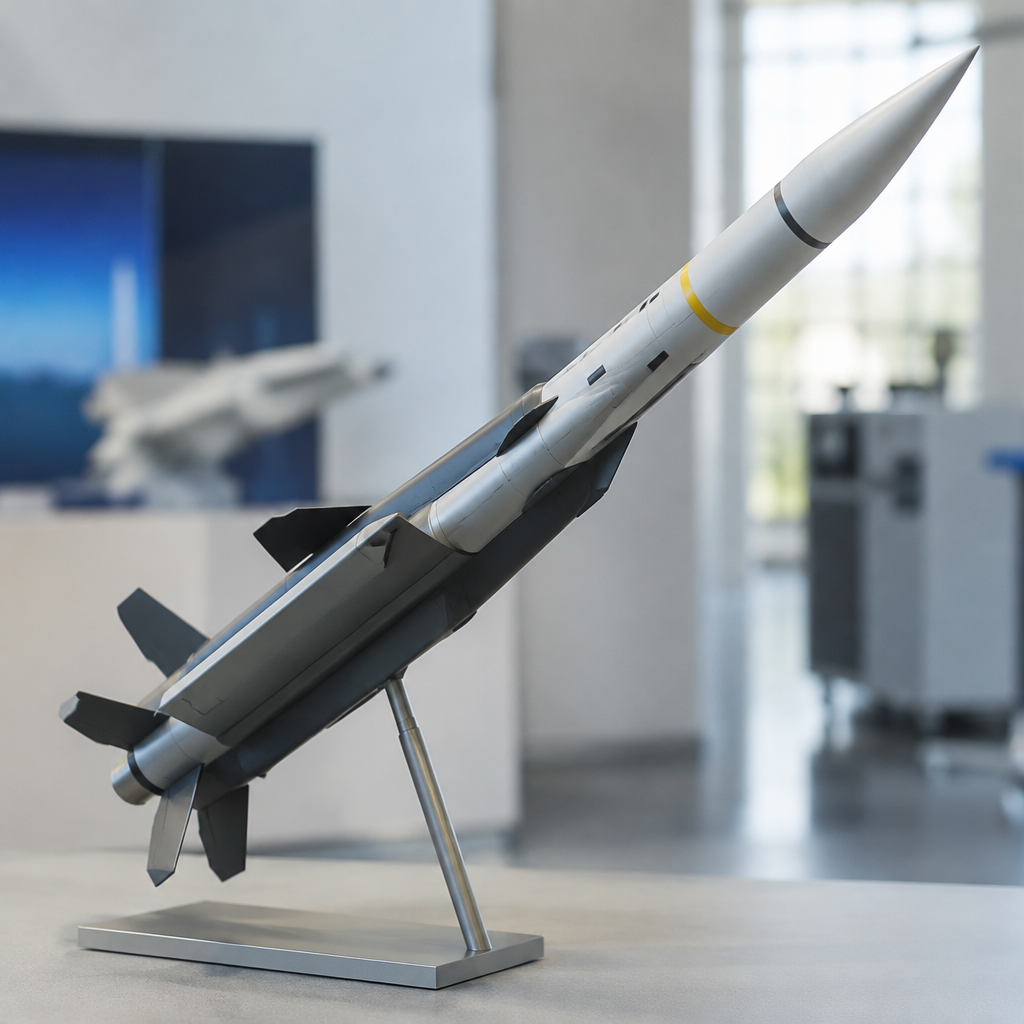
An MBDA official at the Euronaval expo said Phase 2 work will push concepts beyond technology readiness level 3 toward a “full system demonstrator by the end of the decade.” HYDIS plans to continue designing Aquila as a four-stage hypersonic stratospheric interceptor capable of intercepting threats travelling up to Mach 17 at high altitudes and with the ability to launch from surface vessels using the MK41 vertical launch system.
MBDA's Lionel Mazenq compared Aquila’s remit to the United States’ Glide Phase Interceptor program (GPI) — led by Northrop Grumman and developed in cooperation with Japan — and claimed, “The European solution will be the only one to deal with both threats.” He also said the interceptor will be part of a wider integrated air and missile defence network, and that MBDA envisions cooperation with the European Space Strategy to use satellite constellations to detect and track missiles from space.
Operational and performance claims: range, networking, and launch concepts
MBDA described operational concepts for HYDIS that include a “regional shield protection” area from a single launcher covering a 100‑kilometer (62‑mile) radius. The company suggested one launcher could be sufficient to protect the whole of the Netherlands, and outlined the idea of a “continental barrier against hypersonic threats” built from a network of launchers. MBDA also stated that launchers will need to be networked to a single radar.
Funding, expanded membership, and industrial contributions
The European Defence Fund (EDF) has pledged €100 million (approximately $112 million USD) for Phase 2 of EATMI. MBDA’s Lionel Mazenq confirmed that 11 nations from the HYDIS 2 DP consortium will contribute an additional €133 million (approximately $149 million USD).
HYDIS has also sought broader political backing: as of September, an additional 13 nations had signed letters of intent or support as part of HYDIS’s bid process, including Belgium, Denmark, Norway, Sweden, Finland, Estonia, Lithuania, Poland, Czechia, Slovakia, Romania and Croatia.
What this means for HYDIS nations, HYDEF nations, and the European Defence Fund
- HYDIS nations and industrial partners: If selected, HYDIS will continue development of Aquila, expand participating countries, and pursue affordability and scalable production while pushing toward a TRL‑6 demonstrator by 2030.
- HYDEF nations and industrial partners: HYDEF intends to build on completed subsystem maturity and carry forward foundational maneuverability technologies as the consortium stands ready to “continue development under EATMI.”
- The European Defence Fund and contributing states: EDF funding and the promised national contributions will shape industrial scope and timelines; the €100 million EDF pledge plus consortium contributions form the initial financial envelope for Phase 2 work.
Europe's choice on Nov. 30 will determine whether the commission prioritizes a program focused on foundational maneuverability technologies and the HYDEF industrial grouping, or the more detailed Aquila design and the broader HYDIS partnership with its naval-launch, networking and satellite-detection concepts. The decision will set the technical path toward a demonstrator by 2030 and an expected in-service capability around 2035.