Excalibur Sets Sail: The Royal Navy’s Bold Step into Autonomous Underwater Operations
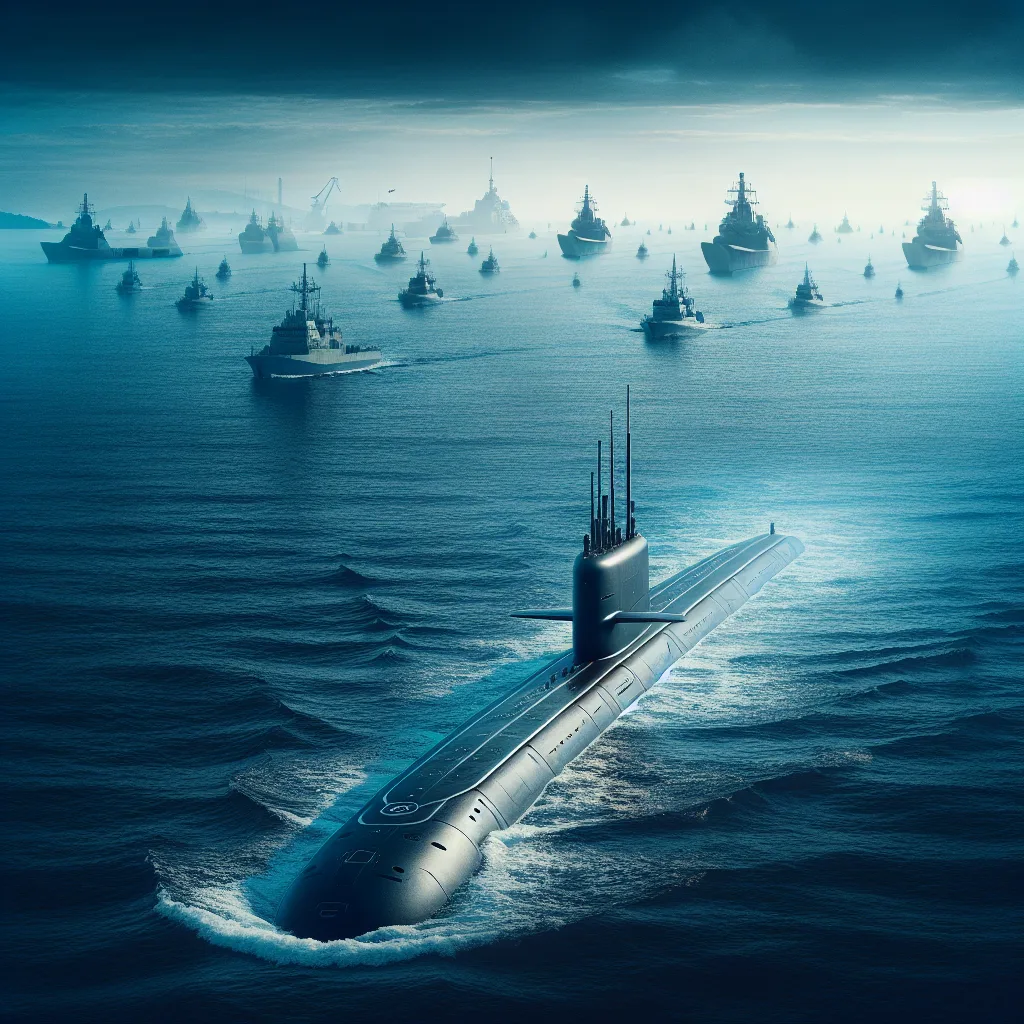
The Atlantic winds at HMNB Devonport carried not only the salt of the sea but also a clear signal of transformation on May 15, as the Royal Navy unveiled its first-ever uncrewed submarine, Excalibur. Developed under the ambitious three-year Project Cetus, the 12-meter, 19-tonne vessel marks a watershed moment in maritime innovation. Rear Admiral James Parkin, Navy Director Develop, led the ceremony, attended by more than 200 dignitaries, including representatives from key AUKUS partner nations, underscoring the strategic significance of this launch in the broader context of international naval collaboration.
The unveiling was more than just the introduction of another naval asset—it was a clear pivot towards a future where unmanned systems complement traditional fleets. With advances in artificial intelligence and robotics rapidly reshaping military hardware, Excalibur arrives at a moment when autonomous technology is redefining the parameters of maritime operations and strategic deterrence. At a time when geopolitical competition is intensifying, the Royal Navy’s decision to invest in this nascent technology is a calculated step meant to both enhance operational capability and address emerging security challenges.
Project Cetus, a name subtly evoking mythic legends of the deep, was conceived as a direct response to shifting defense paradigms. Historically, the Royal Navy has been at the forefront of both manned and unmanned naval innovation, yet Excalibur is its first leap into fully autonomous underwater operation. The new platform is engineered to conduct surveillance, gather intelligence, and offer an agile response to underwater threats without putting crew at risk. The rationale is as pragmatic as it is futuristic—for missions deemed too hazardous for human divers or crewed vessels, autonomous submersibles provide a safer, cost-effective alternative while maintaining operational readiness.
During the formal presentation at Devonport, the focus was on delivering hard facts: the vessel weights 19 tonnes and spans 12 meters in length, and though uncrewed, it is packed with a suite of advanced sensors, communication systems, and propulsion technologies designed to operate in contested environments. This technological blend ensures that Excalibur can navigate, collect vital underwater data, and seamlessly integrate with other naval platforms, effectively acting as an eyes-and-ears extension for the fleet.
But what makes this development particularly noteworthy is its timing. As naval powers around the world, including the United States and its allies, increasingly lean towards autonomous systems, Excalibur is emblematic of a broader shift towards networked, unmanned platforms in maritime defense. In an era where cyber and electronic warfare are as critical as physical capabilities, marrying autonomous operations with robust cybersecurity is imperative. The integration of Excalibur within the Royal Navy’s wider operational doctrine suggests that the armed forces not only recognize these trends but also seek to harness them in real-time, providing a tactical advantage in both peacetime and conflict scenarios.
Beyond the immediate technological implications, the launch of Excalibur reflects a carefully considered policy response to modern challenges. The Royal Navy, known for its storied heritage, faces the dual task of preserving tradition while embracing innovation. With budget pressures, evolving international threats, and the pressing need to maintain technological superiority, uncrewed systems offer a means to extend capabilities without proportionally increasing risk or cost. Observers note that the development of such systems is part of a broader defense strategy where versatility, speed, and reduced vulnerability are paramount.
Industry analysts see strategic and operational benefits in the Royal Navy’s move. As noted by experts at the International Institute for Strategic Studies (IISS), the trend towards autonomous systems isn’t solely about technology—it’s about transforming how naval operations are executed in the 21st century. Rear Admiral Parkin’s involvement in the unveiling itself underscores a commitment to operational excellence, evident in the vessel’s ability to undertake tasks such as deep-water reconnaissance, mine countermeasures, and even communications support in scenarios where human presence would be perilous.
Further illuminating the significance of the project is the role of international partnerships in its development. The presence of AUKUS partner representatives at the ceremony signals continued collaborative advancements in maritime security and defense technology. This tripartite or multilateral engagement ensures that best practices and emerging technological standards are shared, reducing risks across allied networks and paving the way for interoperability in future joint operations.
In context, Excalibur is not just a standalone marvel of engineering—it is a critical node in a larger, interconnected system of naval capabilities. It will likely serve as a testbed for cutting-edge operational doctrines that stress rapid responsiveness. As defense expenditure worldwide increasingly favors innovations that can operate in multi-threat environments, Excalibur stands as a tangible testament to a doctrine that blends resilience with forward-thinking adaptability.
- Technological Innovation: The integration of advanced sensors and communication systems in Excalibur sets the stage for enhanced underwater capability and real-time data collection.
- Operational Efficiency: Uncrewed systems mitigate the risk to personnel, allowing the Navy to deploy assets in circumstances where crews would otherwise be endangered.
- Strategic Collaboration: The involvement of AUKUS partners reinforces the international commitment to shared defense technology and collective security measures.
- Cost-Effectiveness: Automated systems potentially reduce long-term operational costs by minimizing the logistical demands associated with human deployment.
Industry experts have weighed in on the matter, noting that while uncrewed systems are not a silver bullet, they are a necessary evolution in maritime defense strategy. Dr. Emily Carter, a defense technology analyst at the Centre for International Policy, remarked in a recent symposium that unmanned systems like Excalibur could “reshape naval engagement by reducing human exposure to risk while enhancing persistent surveillance capabilities.” Although her comments were delivered in a broader discussion on defense innovation, they underscore the tangible benefits such technology might bring.
Looking ahead, the Royal Navy’s uncrewed submarine is expected to serve as a precursor to further autonomous developments. The modernization agenda appears to be aligned with a future where integrated digital command-and-control networks interlace with both manned and unmanned units. This convergence promises to deliver operational synergy across complex maritime theaters, an objective that is increasingly critical given the rapid pace of technological change. How the Royal Navy and its partners will address the challenges of cybersecurity, operational reliability, and integration with legacy assets remains a story to follow keenly.
The debut of Excalibur compels defense stakeholders around the globe to reexamine the role of automation in securing national interests. As nations worldwide invest in their own naval modernization efforts, the broader tactical conversation pivots towards how best to blend human judgment with machine efficiency. While debates about automation’s role in future warfare are far from settled, the Royal Navy’s calculated move represents a leap into a future where risk, cost, and human vulnerability might be significantly mitigated by embracing a new generation of smart, uncrewed platforms.
In this age of technological transformation, Excalibur is more than a vessel—it is a symbol of an evolving military landscape where tradition meets innovation. As observers and policymakers continue to assess the implications of such transformative technology, one is left to ponder: will the rise of uncrewed systems redefine the art of naval strategy, or will they simply augment the already formidable might of manned fleets? The answer, as always, rests in the balance between strategic ambition and technological realization.
Ultimately, the legacy of Excalibur will be measured not by its physical dimensions, but by its role in shaping a future where modern navies navigate the delicate interplay of risk, technology, and international collaboration. The Royal Navy’s forward-looking initiative challenges our assumptions about safety, efficiency, and the very nature of maritime operations, urging all stakeholders to keep a vigilant eye on the horizon where autonomous systems are poised to become indispensable actors in global security.