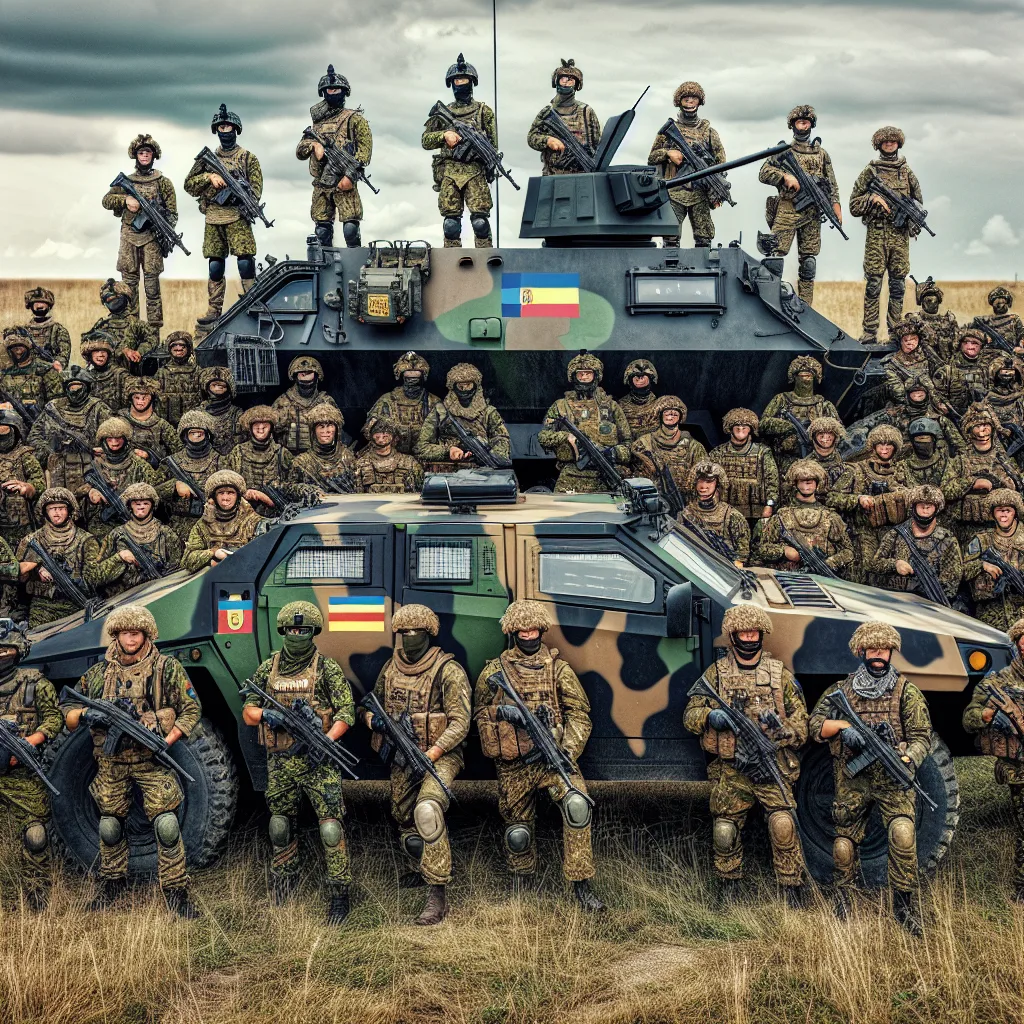
Romania Bolsters Its Elite Forces with Next-Generation Light Strike Vehicles
In a decisive move to enhance its rapid response capabilities, Romania has inked a contract for an undisclosed number of Enok AB vehicles—state-of-the-art light strike platforms developed by Germany’s ACS Armoured Car Systems GmbH. The announcement, delivered at the South-Eastern Europe Special Operations Forces Forum (SEESOF) in Târgu Mureș, underscores Romania’s commitment to modernizing its elite forces amidst a rapidly evolving regional security landscape.
At the forum, attended by military officials, defense industry representatives, and regional policymakers, the discussion centered on the integration of technology and mobility into special operations. The Enok AB, recognized for its agility and adaptability, is slated for delivery by 2026. Its introduction into Romania’s military arsenal represents more than just the acquisition of new hardware—it signals a broader strategic recalibration in response to emerging security challenges and the shifting balance of power in Eastern Europe.
Historically, Romania’s defense strategy has reflected the need for nimble and versatile units capable of operating under varied conditions. Over the past decade, the country has embarked on a series of modernization efforts, often in concert with NATO allies, to improve operational readiness and interoperability. With its unique geography and complex regional dynamics, Romania has long recognized the necessity of investing in advanced, mobile platforms that can support both conventional and unconventional operations.
The Enok AB, originally engineered for rapid deployment and unconventional warfare, brings with it a host of technical innovations. Manufactured by ACS Armoured Car Systems GmbH—an established name in the European defense industry—the vehicle is designed to combine high mobility with robust protection and combat capability. Although technical specifications remain undisclosed, industry participants note that the Enok AB’s architecture is tailored for special operations forces, featuring advanced communication systems, reconnaissance modules, and firepower integration tools.
Romania’s decision to procure these vehicles comes at a time when regional security dynamics are increasingly volatile. With geopolitical tensions simmering in Eastern Europe, NATO allies and partners continue to enhance their operational frameworks. DefenseRomania, the national source that first reported on the agreement, observes that the platform will help maintain a strategic edge in both maneuver warfare and rapid-response scenarios.
Why does this procurement matter? The integration of the Enok AB vehicles into Romania’s elite units speaks to a broader trend among Eastern European nations—investing in platforms that can operate in mixed environments, from urban centers to rugged terrains. The move is set to contribute significantly to Romania’s ability to project power, improve border security, and participate effectively in joint NATO operations.
In an analysis published by the European Council on Foreign Relations, experts note that modern light strike vehicles like the Enok AB offer a tactical advantage far beyond conventional armored units. Their design permits rapid redeployment, enables complex surveillance tasks, and facilitates the swift execution of tactical maneuvers. The emphasis on technological innovation in vehicle design reflects a paradigm shift in military strategy—one where speed, situational awareness, and network-centric warfare take precedence over brute force.
Defense industry analysts highlight several key factors underpinning this strategic decision:
- Technological Edge: The Enok AB is expected to incorporate advanced sensors, communications, and weaponry integration, which ultimately enhances operational flexibility and real-time decision-making on the battlefield.
- Interoperability: As Romania continues to collaborate with NATO and EU security frameworks, the integration of a sophisticated vehicle system promises better coordination with allied forces, ensuring seamless operation across multinational channels.
- Rapid Deployment: In the current geopolitical climate, rapid response is critical. The Enok AB’s mobility profile allows for swift insertion into various theaters of operation, thereby reinforcing Romania’s ability to act decisively in crisis scenarios.
While ACS Armoured Car Systems GmbH remains characteristically circumspect about the detailed capabilities of the Enok AB, a spokesperson for the company confirmed during the forum that the vehicle is the culmination of years of research and development. “Our objective has always been to provide our partners with a system that combines agility, technological sophistication, and operational resilience,” the spokesperson remarked, echoing a sentiment that resonates with military strategists and policy planners alike.
For Romania, the acquisition goes beyond mere equipment enhancement—it represents a step toward redefining its defense posture. As operational requirements evolve, the armed forces have to adapt to an environment where asymmetry and unpredictability are calculated risks. The Enok AB is envisioned to support units in executing complex reconnaissance, counter-terrorism, and rapid strike missions—an operational versatility that is increasingly critical in today’s security framework.
Expert military analyst Dr. Mihai Popescu of the Romanian Institute for Strategic Studies comments, “Investments in platforms like the Enok AB are essential for maintaining operational superiority. This is not just about having new vehicles in the field; it’s about an overall capability upgrade that aligns tactical agility with strategic vision. When viewed in the context of regional security, this procurement allows Romania to better serve its commitments to NATO, while also addressing localized threats with precision.”
The decision to integrate these vehicles also dovetails with broader discussions about modernizing military assets across Eastern Europe. In many parts of the region, aging equipment and budgetary constraints have forced armed forces to prioritize systems that offer maximum flexibility and cost-effectiveness. As defense budgets are scrutinized and operational mandates widen, platforms like the Enok AB—blending advanced technology with low logistical overhead—are becoming increasingly attractive.
Observers note that while the exact number of vehicles to be delivered remains under wraps, the strategic intent is clear. The contract signals a long-term commitment to consistently elevate the tactical proficiencies of the Romanian elite forces. Moreover, the timeline, with deliveries scheduled by 2026, provides a structured period for integration, training, and interoperability testing with existing systems.
Looking forward, policymakers and military planners will be closely monitoring how the Enok AB fits into Romania’s operational doctrines. Future exercises and joint training scenarios with NATO minority allies are expected to serve as litmus tests for the integration strategy. Analysts suggest that the successful deployment of these vehicles could spur further investments in similar platforms, not just by Romania but by other nations seeking to recalibrate their armed forces in light of new security challenges.
In a realm where military capabilities often serve as proxies for national resilience, Romania’s investment in the Enok AB embodies the dual pursuit of technological advancement and pragmatic readiness. At a time when the lines between conventional and unconventional warfare blur, the ability to pivot swiftly and decisively may well determine a country’s security trajectory.
In conclusion, as Romania’s elite forces prepare to welcome the Enok AB into their ranks, the development is more than a routine arms acquisition—it is a testament to the evolving nature of modern warfare. With agile platforms such as the Enok AB, the nation signals its readiness to address an array of security challenges while maintaining robust participation in collective defense frameworks. The question that remains for both military strategists and regional policymakers is how effectively these new capabilities will translate into operational excellence amid an increasingly complex global security environment.



