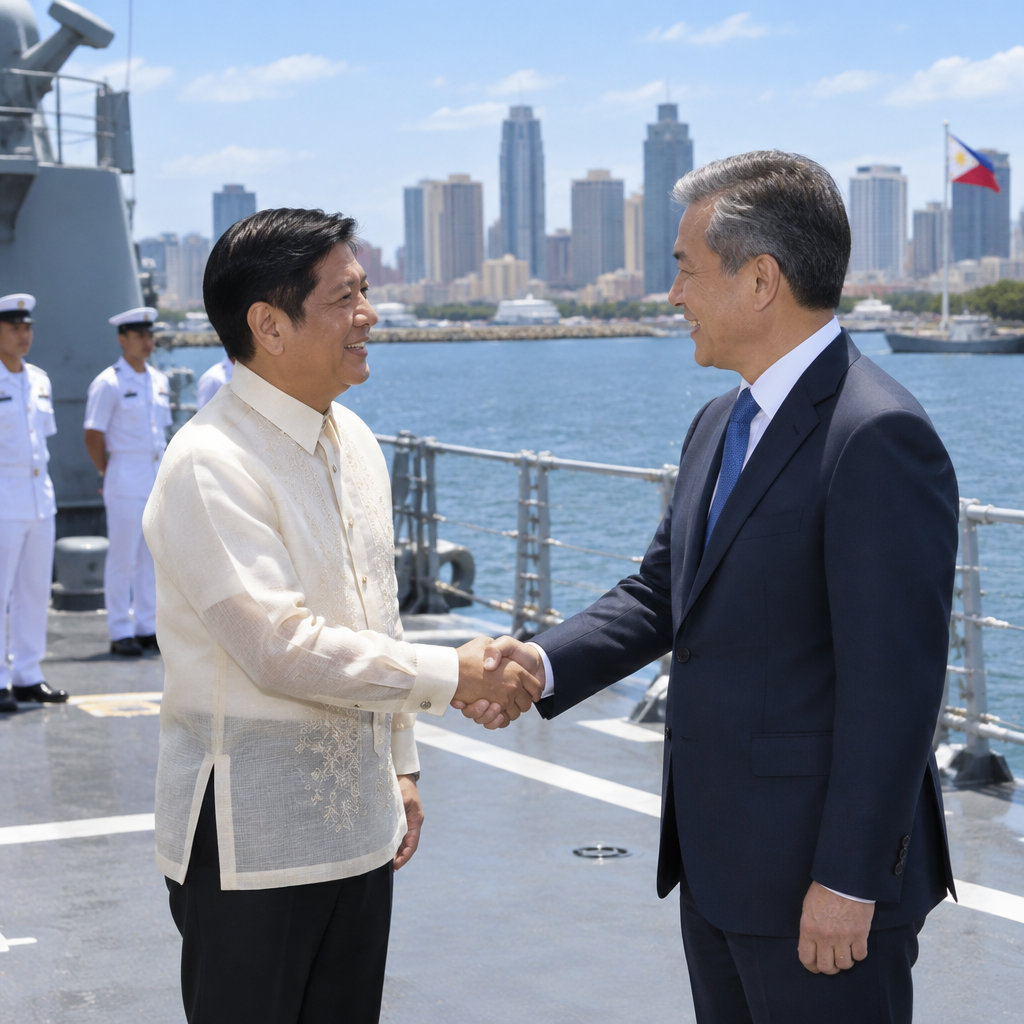
"More of a photo-op diplomatic event," the Global Times scoffed — yet Beijing's dismissive language is the very proof, not the refutation, of what Manila's Quad summit intends to do: make a diffuse but unmistakable political signal that the four partners are back in step.
The Manila meeting: first leaders' summit since 2024
The leaders of Australia, India, Japan and the United States will meet in Manila for the first time at head-of-government level since 2024. The absence of a 2025 leaders' meeting had prompted some to speculate about the Quad's durability; the summit in Manila is meant to show that there has been no "second demise" of the grouping. The Quad partners share a stated unity of purpose: supporting Indo‑Pacific nations in strengthening their sovereignty and constraining what they view as China's attempts to undermine it.
Historical frame: comeback in Manila and the reasons for resurrection
The choice of Manila carries intentional historical weight. The Quad's return to activity dates to senior officials' meetings in Manila in November 2017 — a reunion after roughly a decade of inactivity following 2007. According to the source material, one reason given for the Quad's 2017 resurrection was that the group's initial dormancy had encouraged an increase in Chinese malign activity; reconstituting the Quad was presented as a corrective.

Audit-ready is a season. It shouldn't be.
Evidence in spreadsheets, controls drifting between audits, frameworks multiplying on flat headcount. Nubivance runs continuous compliance on Rapid7 Cyber GRC - SOC 2, HIPAA, ISO 27001, PCI, CMMC.
End the scrambleChina's response, BRICS comparisons, and the message the Quad seeks to send
Beijing's reaction to the leaders' meeting was openly dismissive. The Global Times called the summit a "photo‑op" and suggested the Quad functioned as an "invisible crutch" for countries such as the Philippines. Yet the analysis here is explicit: that very dismissiveness reflects a deeper concern — the Quad makes visible what its members regard as China’s aggressive behaviour and signals that the United States and three regional powers will back smaller Indo‑Pacific states.
The source also notes that comparisons with other minilateral groupings are misleading: while China participates in groupings such as BRICS, those forums are described as centred on China's dominance with misaligned member interests. India, the material says, treats BRICS as a way to "keep an eye" on other members, in particular China.
Substantive items likely on the agenda: shipping lanes, critical minerals, AI, and chips
While political signalling is foregrounded, reporting cited in the source indicates the leaders are likely to discuss concrete measures. A Reuters report quoted officials saying leaders "are likely to take up the issue of free and unimpeded commercial shipping lanes" to secure global energy supplies. The United States, the source says, will press on critical minerals, critical technologies and supply chains — an agenda item framed publicly by Secretary of State Marco Rubio in May.
Discussion of technology is expected to include collaboration on artificial intelligence "to counter China," and private talks are likely to address the smuggling of advanced Nvidia chips into China. The source frames these topics as practical, operational issues nested inside the summit's larger political purpose.
Security cooperation already underway: maritime surveillance and Sea Dragon 2027
The Quad's security work is not limited to rhetoric. At the May 2026 foreign ministers' meeting the group launched the Indo‑Pacific Maritime Surveillance Collaboration initiative to enhance maritime surveillance, information sharing, and maritime domain awareness across the region. Quad members' armed forces are also scheduled to exercise together for the first time in Sea Dragon 2027, a U.S.‑led anti‑submarine warfare drill expected to take place around March in Guam.
What this means for the Philippines, Quad militaries, and supply‑chain policymakers
- Philippines — The decision to host the leaders' meeting on the sidelines of an Association of Southeast Asian Nations summit underscores the Manila setting as a signal of complementarity between the Quad and ASEAN rather than a rival architecture; the Global Times' "invisible crutch" line illustrates both domestic sensitivities and external criticism the Philippines must manage.
- Quad militaries — Already engaged in joint activities, the partners will watch for concrete timelines and resource commitments tied to the Indo‑Pacific Maritime Surveillance Collaboration and the Sea Dragon 2027 anti‑submarine exercise, both named in the reporting.
- Supply‑chain and technology policymakers — Officials will track outcomes on critical minerals, critical technologies and supply chains, and any formal Quad steps aimed at curbing or monitoring illicit transfers of advanced chips into China, including the reported focus on Nvidia hardware smuggling.
The Manila meeting is, by design, primarily a public demonstration of unity — but not an empty one. The source makes clear that political signalling and practical cooperation are complementary: sending a collective message ahead of a close-in set of summits — notably a meeting involving Donald Trump with Xi Jinping, and possibly Vladimir Putin, in Shenzhen a few days later — gives the Australian, Indian and Japanese leaders an opportunity to coordinate a consistent message to Washington and Beijing. Past precedent, the source notes, suggests such coordination can shape outcomes: Japanese Prime Minister Sanae Takaichi reportedly used discussions with Trump around a previous meeting with Xi in Washington in September to good effect.
Whether Manila will produce headline commitments or a steady accretion of operational steps, the reporting concludes, it will reaffirm that the Quad intends to keep Indo‑Pacific stability at the centre of its agenda — and that the grouping expects to turn political signal into concrete measures on shipping lanes, maritime surveillance, military exercises and technology controls. The proximate milestones named in the source to watch are Sea Dragon 2027 around March and the Shenzhen meetings a few days after the Quad leaders convene.