"Rather than 100 steps to do a single thing, it will just now take 10," Philippine Defense Secretary Gilberto Teodoro told reporters, describing how the new pact will cut red tape.
Defense Cooperation Agreement: purpose and ceremony
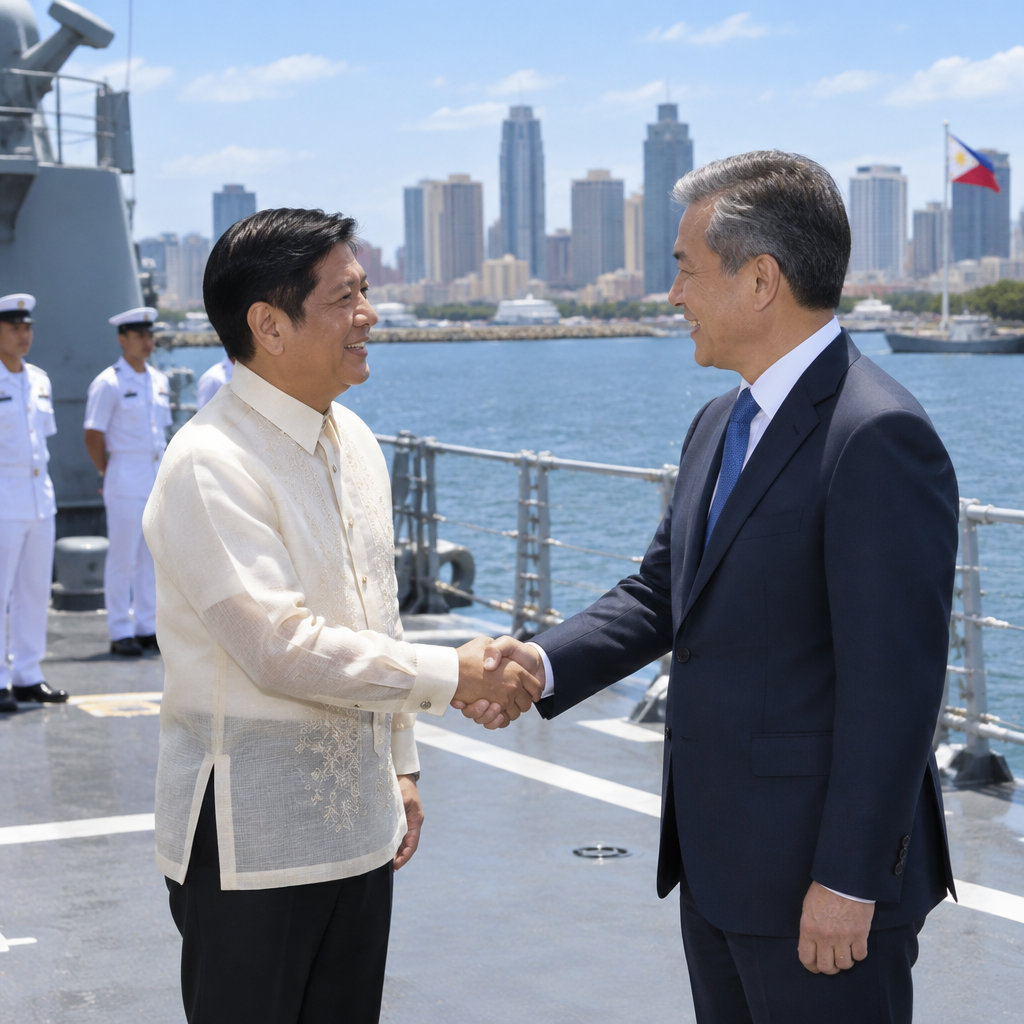
The Philippines and Australia signed a Defense Cooperation Agreement (DCA) in a ceremony held on board an Australian naval vessel docked in Manila. The pact, described by Prime Minister Anthony Albanese as building on existing defense accords, is intended to boost military cooperation by streamlining the bureaucratic processes for joint activities. Albanese said the agreement will enhance the development of military infrastructure and maritime awareness and information sharing and help make the region "more safe, more secure and more prosperous."
Status of Visiting Forces Agreement (SOVFA): cutting bureaucratic steps
Philippine Defense Secretary Gilberto Teodoro framed the DCA as a practical measure to reduce procedural friction under the Status of Visiting Forces Agreement (SOVFA), which governs the temporary deployment of Philippine and Australian personnel to each other’s territory. Teodoro’s shorthand — reducing processes from "100 steps" to "10" — was offered as a concrete illustration of the pact’s aim to accelerate joint maritime, air, and land cooperation as well as humanitarian and disaster-response activities.

Audit-ready is a season. It shouldn't be.
Evidence in spreadsheets, controls drifting between audits, frameworks multiplying on flat headcount. Nubivance runs continuous compliance on Rapid7 Cyber GRC - SOC 2, HIPAA, ISO 27001, PCI, CMMC.
End the scrambleMaritime flashpoints: Scarborough Shoal and Second Thomas Shoal
The DCA signing comes amid sustained tensions in the South China Sea, which the source identifies as centering on Scarborough Shoal, to the west of Luzon, and Second Thomas Shoal in the Spratly Islands, where Manila maintains a small occupying force aboard a grounded warship. The source reports a pattern of dangerous confrontations: the China Coast Guard has rammed Philippine civilian and coast guard vessels and doused them with high-pressure water cannons, and in some cases personnel from the two sides "have even exchanged physical blows."
Minilateral cooperation: the 'Squad' and a new coordination hub
The DCA is one piece of a broader trend toward closer security ties with partners who share concerns about China’s maritime activity. The source describes a four-nation defense group — Australia, the U.S., the Philippines and Japan — nicknamed "the Squad." After a meeting of Squad defense chiefs in Cebu on October 28, the four nations agreed to establish a coordination hub in the Philippines and to synchronize efforts to strengthen the nation’s defenses. The chiefs also expressed "serious concerns about the situations in the East China Sea and the South China Sea" and opposed "any unilateral actions, including by force or coercion, which escalate tensions and undermine regional peace and stability."
Broader legal and operational framework: SOVFA history and Maritime Cooperative Activities
The DCA builds on an expanding legal scaffolding of bilateral visiting-force accords. Australia signed a SOVFA with the Philippines in 2007, the first such agreement for any nation aside from the 1998 Visiting Forces Agreement between the Philippines and the U.S. Similar accords have since been signed with Japan (July 2024), New Zealand (April 2025), Canada (November 2025), and France (March 2026), and negotiations are ongoing with the United Kingdom. Those agreements have enabled a marked increase in joint maritime and coast guard patrols and in Military Cooperative Activities (MCAs); the 20th MCA was held between the Philippines, the U.S., and Canada in the Sulu Sea in mid-September. Separately, Australia has invested in defense infrastructure at a series of bases across the Philippines and provided various forms of support to the Philippine Coast Guard.
How the Philippines, Australia, and ASEAN are responding
- Philippines: The government has used the DCA to ease SOVFA implementation and to bolster what Teodoro called Manila’s "credible deterrence posture," explicitly including its portions of the South China Sea.
- Australia: Prime Minister Anthony Albanese presented the agreement as a forward step in maritime resilience and regional security, framing the pact as both practical (infrastructure, information sharing) and strategic.
- ASEAN and China: Under the Philippines’ chairmanship, negotiations on a Code of Conduct (COC) for the South China Sea have stalled. Philippine Foreign Secretary Ma. Theresa Lazaro said China and ASEAN had been unable to conclude the long-delayed COC and that "there is no conclusion yet," noting differing views between the parties on key issues including whether the Code should be legally binding. The Philippine Department of Foreign Affairs (DFA) said the parties had agreed on "over 80 percent of the paragraphs of the draft COC" and would continue to work to conclude negotiations "at the earliest possible time."
The DCA is a clear operational step: it shortens procedures for joint activity, embeds Australia more deeply in Philippine maritime and defence infrastructure work, and ties into a broader network of visiting-force accords and minilateral cooperation. Yet the diplomatic track remains unfinished — the Code of Conduct negotiations, where over 80 percent of draft paragraphs are agreed but key issues including legal bindingness remain unresolved, will play a determining role in whether the region’s military measures are matched by a shared, formal framework to reduce the risk of escalation.