Putin’s New Mandate: A Fast-Tracked Transformation of Russia’s Ground Combat Force
In a move that could reshape the strategic balance in Eastern Europe and beyond, Russian President Vladimir Putin has issued an urgent directive to accelerate the modernization of the nation’s ground forces. As detailed at a high-level defense meeting and reported on Defence Blog, the president underscored the primacy of land combat capabilities in modern warfare—a call to arms that resonates with both historical precedent and contemporary strategic imperatives.
At the heart of Putin’s announcement lies a pronounced emphasis on the “dominant force” that ground troops represent in any potential conflict. “It is our firm conviction that future wars will be defined by the ability to command the battle space on land,” Putin reportedly stated, reinforcing the notion that while aerial and maritime capabilities continue to be enhanced, the might of the infantry and armored divisions remains irreplaceable.
This directive is more than a routine military update. It signals a departure from previous modernization schemes that leaned heavily on advanced missile systems and cyber warfare capabilities, pivoting instead to restore and reinforce the traditional elements of Russian military strength. The move arrives at a time when global security dynamics are shifting, and nations around the world are reassessing their defense postures amid evolving threats.
Historically, Russia has long respected the role of its ground forces. From the days of the Red Army to the mechanized divisions that played pivotal roles during the Cold War, terrestrial strength has been the backbone of Russian military doctrine. The current order, however, is set against the backdrop of a new era of warfare—one where hybrid threats, economic sanctions, and shifting alliances contribute to an increasingly complex operating environment.
Paying homage to the legacy of Russian military tradition, Putin’s fast-track initiative comes as part of a broader strategy to reorient the armed forces towards a more resilient and versatile force structure. Defense analysts note that while modern technology such as unmanned vehicles and cyber tools has transformed combat, the unpredictable nature of ground engagements necessitates a renewed focus on soldier training, infantry equipment, and armored vehicles capable of withstanding a rapidly modernizing battlefield.
The current emphasis on ground forces also reflects the evolving nature of global military engagements. Although network-centric and cyber warfare can deliver precision, history shows that the ability to control terrain remains decisive. As conflicts become more multifaceted, the combination of conventional might and advanced technologies is likely to define success. Russia’s latest development plans are rooted in the belief that the ability to project power on the ground is both a deterrent and a promise of national security.
The order has already set the wheels in motion within various divisions of Russia’s Ministry of Defense. Preliminary assessments indicate that new procurement programs will prioritize next-generation armored vehicles, enhanced logistics, and sensor integration systems that can better coordinate traditional combat units in conjunction with precision-guided munitions. This strategy seeks to ensure that the Russian Army can respond to both conventional state-on-state conflicts and the complex scenarios that characterize modern hybrid warfare.
Observing these developments from Warsaw to Washington, strategic analysts note that Moscow is not merely reacting to current threats, but rather positioning itself proactively in the long-term evolution of warfare. “Russia’s recalibration towards bolstering its ground forces is a clear answer to evolving security dynamics,” noted Dmitri Trenin, director of the Carnegie Moscow Center, in recent discussions on military trends in Eastern Europe. “While advanced systems remain critical, there is no substitute for the versatile capabilities provided by a well-equipped and adaptable infantry force.”
This approach is also mirrored in the doctrines of other major powers, where integrated battlefield strategies that combine cyber, air, and ground operations are increasingly demanded by the complexities of modern conflict. However, Russia’s renewed focus on its ground capabilities—particularly the rapid modernization of land-based systems—is indicative of a belief in the enduring value of the soldier on the front line.
The strategic rationale behind this order is clear. With an eye on both regional contingencies and a shifting global security landscape, Russia appears determined to ensure its military remains a credible force both at home and on the international stage. Putin’s insistence on a fast-track build-up is being interpreted as a timely response to perceived vulnerabilities as well as an assertion of Russia’s commitment to sustaining its nuclear, conventional, and hybrid deterrence capabilities.
This initiative raises several significant questions. How will the accelerated modernization affect Russia’s defense budget, especially in light of ongoing economic pressures? What will be the impact on regional military balances, particularly in NATO’s eastern flank? And perhaps most critically, how might foreign adversaries recalibrate their strategic postures in response to this renewed emphasis on ground prowess?
From an economic viewpoint, the move comes with a substantial commitment of resources. With state funds and defense contracts expected to secure an influx of orders for new equipment, the ripple effects of this modernization could also influence the domestic industrial base. Defense economists from the Stockholm International Peace Research Institute (SIPRI) have noted that spikes in military expenditure—especially with a twist towards conventional arms—often spur related investments, potentially reinvigorating sectors of the national economy while also heightening geopolitical tensions.
Internationally, the announcement contributes to an already complex mosaic of alliances and rivalries. Public statements from NATO officials caution that any significant modernization of Russian ground forces must be matched by countermeasures to ensure the stability of the region. “While we respect the sovereign right of any nation to fortify its military, we remain vigilant about the implications that such enhancements have for regional deterrence balances,” stated Jens Stoltenberg, NATO Secretary General, during previous briefings on the need for collective defense reassurances.
The military-strategic implications of Putin’s order extend well beyond the borders of Russia. Regional powers and global players alike are now reexamining their threat assessments. In particular, Eastern European nations have expressed concern over the pace of Russia’s modernization efforts. In a statement published by the European Council on Foreign Relations, analysts warned that “an exceptionally rapid build-up of ground forces, coupled with advanced weaponry, may lead to calls for a recalibration of defense spending and strategic postures across the region.”
Within the Kremlin, the order is being touted as a reaffirmation of Russia’s commitment to its sovereign security. Officials in Moscow stress that modernization is a necessary evolution in response to a world where technological advancements and tactical surprises are the norm. This narrative is reinforced by internal analyses which point out that, despite digital breakthroughs, there remains an indispensable value in the traditional art of maneuver warfare.
Beyond the immediate military implications, this new directive is also expected to influence Russia’s broader diplomatic engagements. As Moscow asserts its right to self-determination in defense policy, Western nations may find themselves compelled to engage in a delicate balancing act—differentiating between defensive posturing and offensive posturing. Diplomatic experts advise that any escalation must be managed through continuous dialogue to avoid miscalculations that could inadvertently escalate tensions further.
Offering further clarity on the issue, several military analysts have broken down the broader reasoning behind Putin’s focus on ground forces with supporting evidence from recent Russian military exercises. For example, field maneuvers featuring rapid troop mobilizations and simulated urban combat scenarios have underscored the practical need for modernized land systems. These exercises, observed by international military attachés, point to an integrated effort not only to upgrade equipment but also to revise training curricula and operational doctrines.
Political strategist Mark Galeotti, a former adviser on Russian security issues now affiliated with the Royal United Services Institute (RUSI), commented, “This order is emblematic of Russia’s ongoing evolution. It’s a signal that while cyber and air capabilities remain significant, the Russian leadership believes that a robust, agile, and technologically enhanced ground force will provide an indispensable edge in any future conflict.” Galeotti’s assessment underscores a widely held view among military experts who contend that the modernization of ground forces is as much about renewing national pride and historical continuity as it is about tactical innovation.
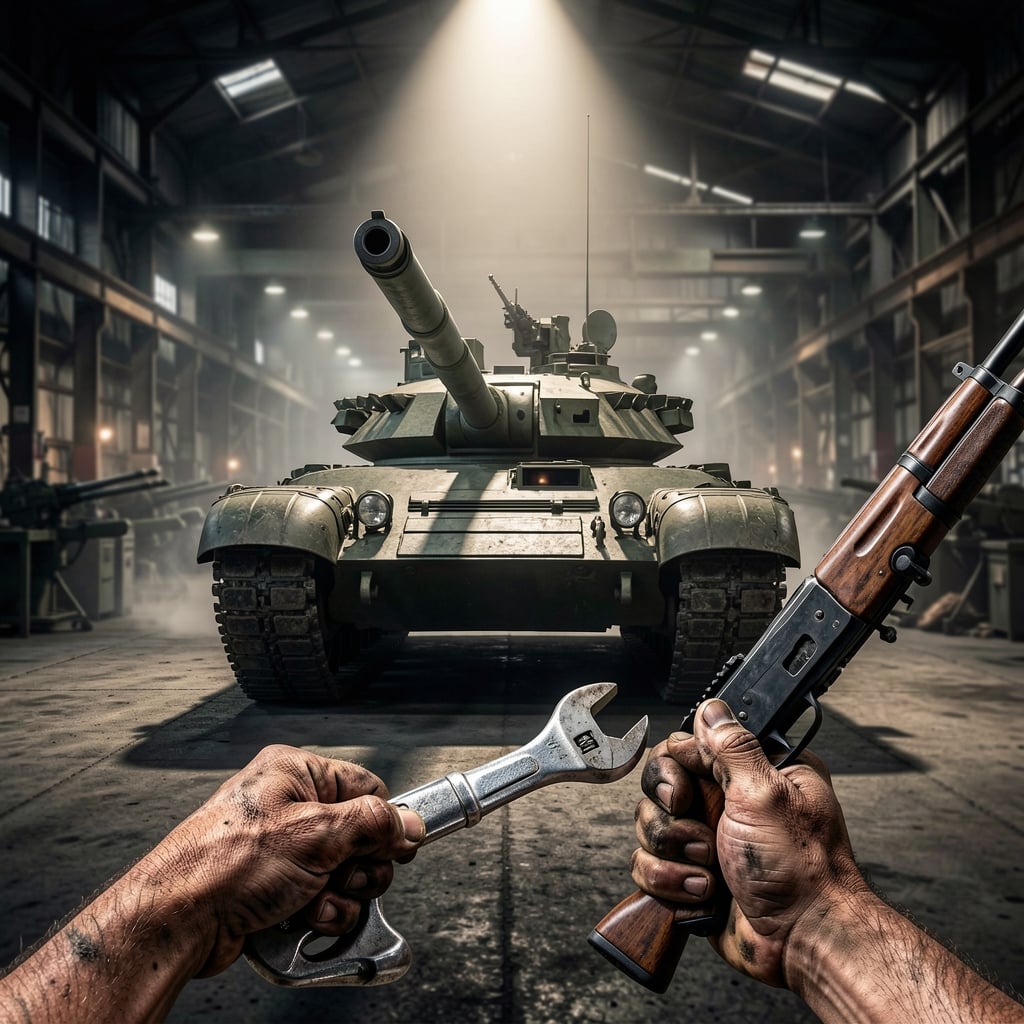
Looking ahead, the path of Russia’s military build-up will likely be marked by several key milestones. Increased production orders for new tanks, infantry fighting vehicles, and armoured personnel carriers are anticipated in the coming fiscal cycles. This will be accompanied by an overhaul of the training regimes for conscripts and professional soldiers alike—an effort that could reshape the Russian Army into a more flexible and technologically adept fighting force.
Observers will be keenly monitoring the following aspects of the unfolding military modernization:
- Budget allocations: Future defense budgets and procurement contracts will serve as tangible indicators of the government’s commitment to this modernization drive.
- Technological integration: The extent to which advanced sensor systems, communication networks, and precision-guided munitions are integrated with traditional ground units will determine operational outcomes in simulated and real-world scenarios.
- Regional responses: Neighboring countries and NATO members are expected to adapt their strategic postures, possibly leading to a new round of arms modernization on both sides of the Eastern European corridor.
While the strategic rationale is multifaceted, an underlying theme is Russia’s desire to ensure that its ground forces are not left behind in the rapidly evolving landscape of military technology. This recalibration is intended not only to deter adversaries but also to reaffirm domestic confidence in nationalism and the country’s ability to modernize despite economic sanctions and international pressures.
In conclusion, President Putin’s call for an expedited development of ground combat capabilities marks yet another pivotal moment in Russia’s ongoing quest for military modernization. As history has repeatedly shown, the nature of warfare is ever-changing, but underlying principles—such as the need for a rapidly responsive, versatile, and well-equipped force—remain constant. The coming months and years will reveal how this strategic pivot impacts Russia’s standing on the global stage, influences the security calculus of neighboring states, and prompts a reexamination of traditional military doctrines worldwide.
As the international community watches these developments with a mix of apprehension and pragmatic caution, one must ask: Can the modernization of ground forces restore balance in an era dominated by digital and cyber conflicts? Or is this a countermove in a larger game, one where the traditional art of warfare continues to hold sway in the digital age?