“Better‑than‑walking” — that is how the CS/VP4 “Mountain Cat” family has been described since the platform entered service in 2008, and that succinct phrase frames a long-running pattern in the vehicle’s development: an airdroppable, lightweight, amphibious ATV meant as a mobility aid has been repeatedly stretched to meet new needs.
CS/VP4 “Mountain Cat”: a family born light
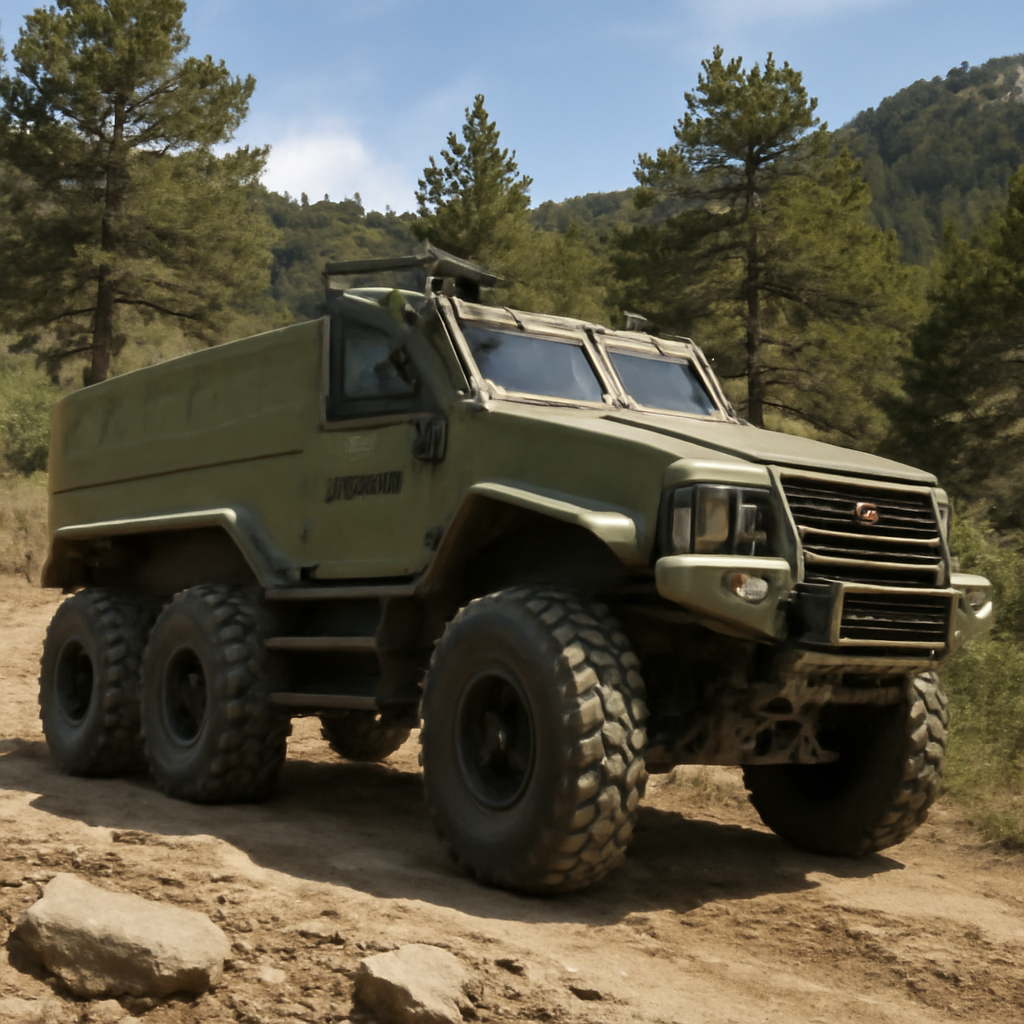
The CS/VP4 “Mountain Cat” first appeared as an airdroppable, lightweight, amphibious all‑terrain vehicle in service from 2008. Its early incarnations were deliberately modest — a “simple metal box” powered by a 1.4T diesel engine with suspension tuned to haul airborne troops. From the source account: it was never intended to “step into a boxing ring” or pretend to be anything beyond a mobility aid.
Airlift assets shaped the cat’s growth: Mi‑171 and Y‑8/Y‑9 to Y‑20, Z‑18 and Z‑20
The blog ties the Mountain Cat’s physical growth directly to the airlift tools available to China’s forces. In the platform’s early years, the PLA’s tactical lift options were described as “basically Mi‑171s and a handful of Y‑8/Y‑9s.” As heavier and more capable vertical‑lift and transport platforms entered service for the PLAAF, PLAN Marines, and PLA Ground Force — specifically named in the account as the Y‑20, improved Z‑18s, and Z‑20s — the Mountain Cat was given permission to bulk up. The narrative is explicit: the vehicle “got fatter” because the aircraft “got stronger.”

Audit-ready is a season. It shouldn't be.
Evidence in spreadsheets, controls drifting between audits, frameworks multiplying on flat headcount. Nubivance runs continuous compliance on Rapid7 Cyber GRC - SOC 2, HIPAA, ISO 27001, PCI, CMMC.
End the scrambleVariants and kitization: from transport to fire support and air defense
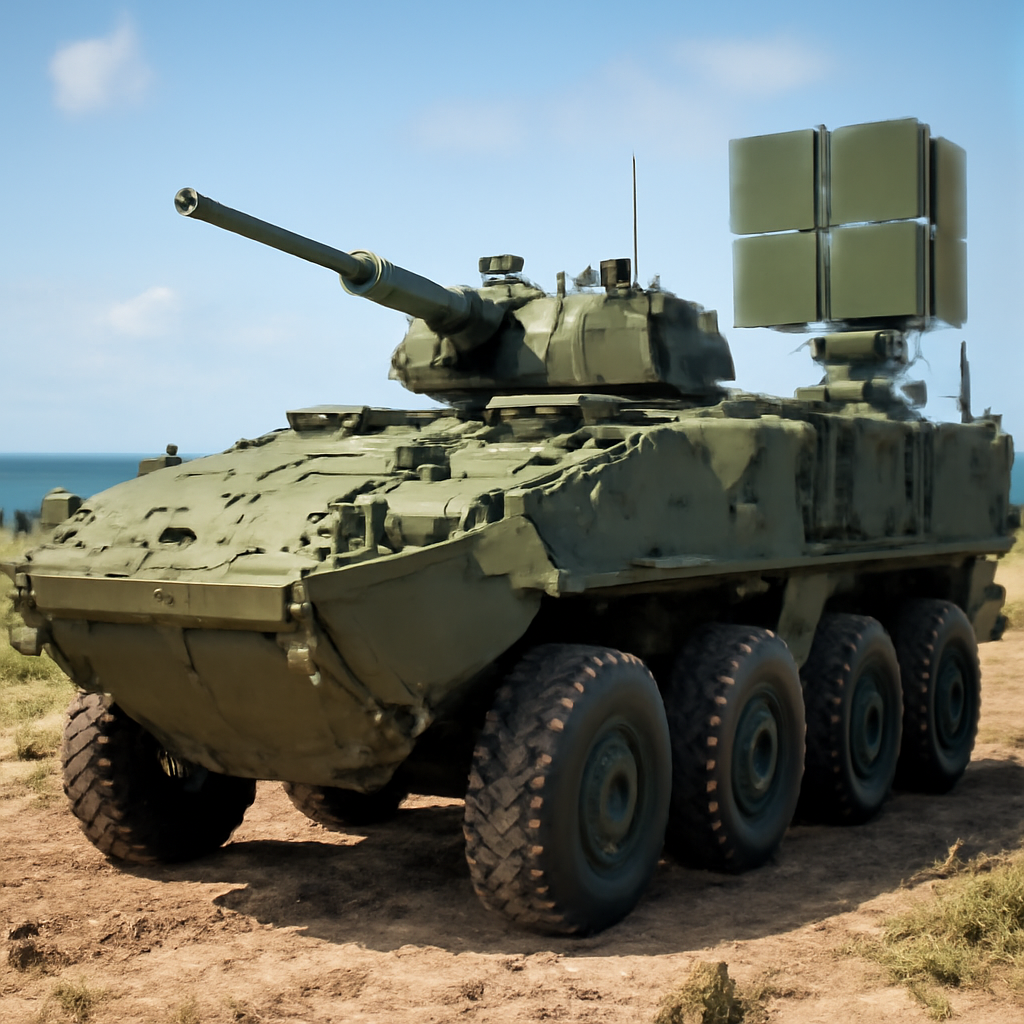
Across its third or fourth iteration, the Mountain Cat family expanded into a broad range of roles. The source documents heavier weapons, 6×6 and 8×8 variants, and mission kits that earlier frames could not have supported. The platform is now being marketed — the blog notes the display at a recent Zhuhai Airshow — as “an entire light family of assault and heliborne solutions” covering transport, indirect and direct fire support, and air defense. The account also records that frontal armor was added in later versions, explicitly because the Y‑20 can lift the extra weight.
Doctrine and platform: a pattern the author has seen before
The author situates the Mountain Cat’s trajectory in a recurring theme: when a platform fits PLA doctrine, or can be adapted to fit the broader ecosystem, the force will stretch that platform “as far as physics and budget allow.” The blogger points to prior examples — the Type 59, the Y‑8, and the Y‑5 — to illustrate the same tendency to extract additional roles and capability from an existing design until the limitations become apparent. The post’s language is plain: “If it works, they’ll keep squeezing utility out of it until the welds complain.”
What this means for the PLAAF, PLAN Marines, and PLA Ground Force
- PLAAF: The service’s acquisition of larger lift platforms (the Y‑20 and improved helos such as the Z‑18 and Z‑20, as named in the account) directly enabled heavier Mountain Cat variants — including armored and weaponized forms — by removing previous weight constraints.
- PLAN Marines: The blog highlights the platform’s marketing at Zhuhai and its utility as a heliborne and assault family, indicating the vehicle is being positioned for expeditionary and littoral tasks where amphibious mobility and heliborne insertion matter.
- PLA Ground Force: The Ground Force benefits from modular mission kits and higher‑capacity variants (6×6 and 8×8), which transform the Mountain Cat from a simple troop mover into a multi‑role light vehicle for transport and direct/indirect fire roles.
Photographic and illustrative material accompanies the blog’s coverage — one post credits Andrew KC for images of the 5th PLAN Marine Brigade — and the author links the Mountain Cat’s expansion to broader visual and marketing trends, including related displays such as a Lynx 8×8 120mm mortar‑howitzer variant noted elsewhere on the blog.
The account is compact and pointed: a platform conceived as a modest mobility aid in 2008 has been progressively re‑engineered and marketed into a family of heliborne assault and fire‑support solutions, its growth enabled by larger lift aircraft and a doctrine that tolerates stretching successful platforms. The final, practical observation the author leaves the reader with is as plain as the vehicle’s original mission — when the aircraft can carry it, the Mountain Cat will be asked to carry more.