Pentagon's Golden Dome Project Advances Amid Skepticism
Analyst 207||Source: BreakingDefense
“We need to show the public that we are making progress, that this isn’t just a paper exercise,” Gen. Michael Guetlein said at Joint Expeditionary Base Little Creek-Fort Story, a blunt acknowledgement that the Pentagon’s Golden Dome project must be seen to be real as well as funded.
Gen. Michael Guetlein in Norfolk
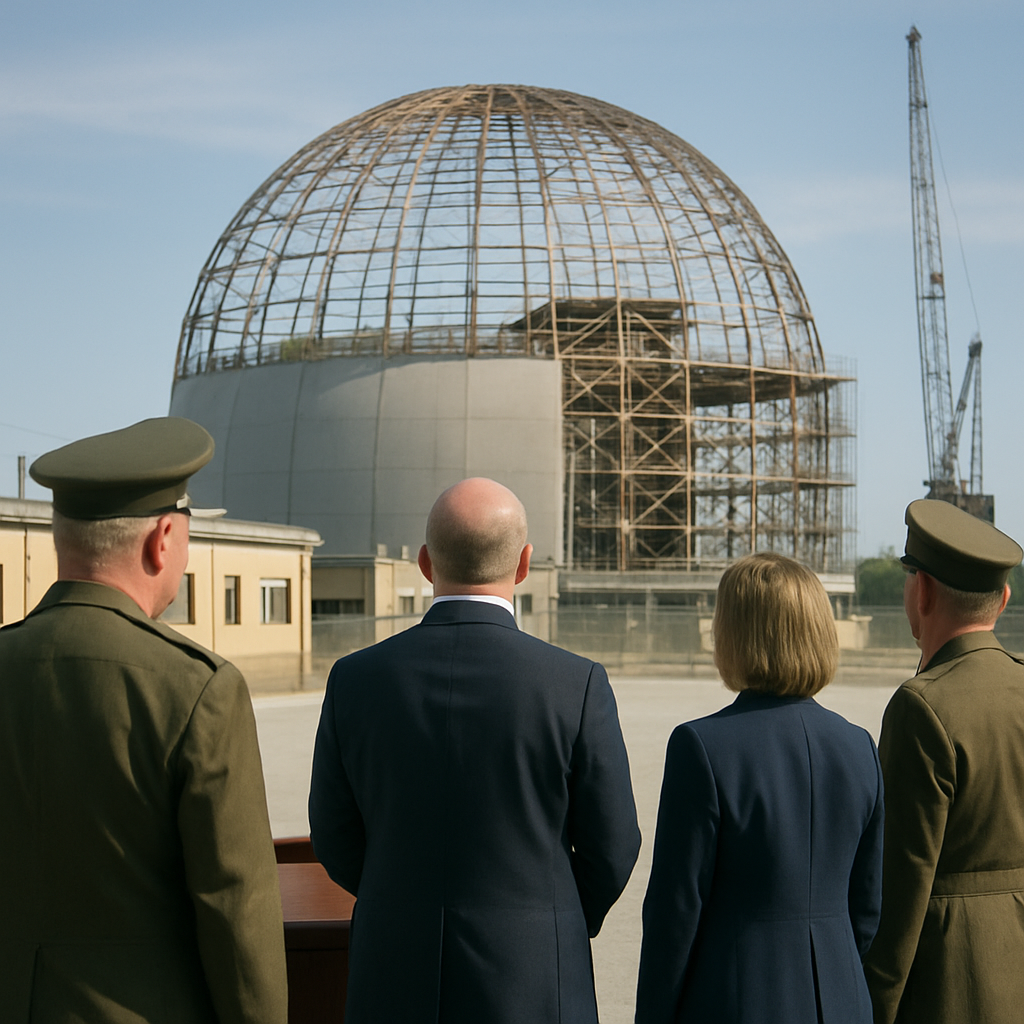
Gen. Guetlein, the Golden Dome program manager, spoke to a small group at JEB Little Creek-Fort Story as the Pentagon moves to translate a high-profile national security concept into tangible systems and sites. He told listeners that “contracts are being awarded, sites are being scouted, and we are hitting our milestones on schedule and on budget.” Senior officials attended the event, including Undersecretary of Defense for Research and Engineering Emil Michael; the program’s military deputy, Lt. Gen. Brian Gibson; NORAD Deputy Director of Operations Maj. Gen. Mark Piper; and Lt. Gen. Frank Lozano, the Army’s Portfolio Acquisition Executive for Fires.
ALPS radar: a visible first step
Guetlein pointed to the Army’s advanced Long-Range Persistent Surveillance (ALPS) radar, now installed adjacent to the Fort Story baseball field, as "tangible proof of our progress." Built by PAE Fires, the ALPS system was described as able to “detect threats without ever sending out a signal, which allows soldier to quietly see without being seen.” Guetlein called ALPS “the first down payment in changing the equation of homeland defense,” while also indicating that other, less openly acknowledged technologies are being placed in the region as part of Golden Dome.
[SPONSOREDNUBIVANCE]
The cyber insurance questionnaire just landed. Now what?
SOC 2, HIPAA, insurance renewals - someone has to own security strategy. Nubivance provides fractional CISO leadership without the full-time salary.
Golden Dome carries a life-of-program estimate of roughly $185 billion and a fiscal 2027 price tag of $17.5 billion. Of that FY2027 request, only $398 million appears in the base budget; the balance is slated for reconciliation funding. The Pentagon documents and program officials describe $14.2 billion of the reconciliation request as spread across services and agencies to cover research and development efforts. Program leaders and outside observers acknowledged the political fragility of that approach: the reporting notes “a key lawmaker is already talking about stripping defense funding out of the first go at reconciliation and trying again down the road,” a challenge that could leave much of the initial Golden Dome funding subject to legislative maneuvering.
Ecosystem Hub and Apex Arc: opening data, cautiously
Guetlein described a newly created “Ecosystem Hub” intended as “a one-stop entry point for Golden Dome for industry, academia, our allies and our other government agencies.” The hub, he said, “includes data on supply chain security and resiliency.” Within that construct sits “Apex Arc,” which Guetlein called a data lake exposed to government, industry and academia. “Apex Arc is a data lake that we expose all of our data to government, industry, academia. [It] includes an AI sandbox and a data exploitation sandbox, to allow them to come in and see what they can do with our data, and if they can provide operational value, we can immediately pave them path to an operational system,” he said. Guetlein framed the hub and Apex Arc as a way to bring outside actors into the program while preserving necessary protections around sensitive capabilities.
What this means for the public, Congress, and industry
- The public: Guetlein acknowledged the American public has not yet “bought into the program,” in part because officials have “been protecting the secrets” to avoid tipping adversaries. That gap in visibility is the motivation behind staging demonstrable systems such as ALPS in a public setting.
- Congress: Program leaders face scrutiny tied to both the scale of the $185 billion estimate and the reliance on reconciliation funding; the presence of $14.2 billion in R&D money outside the base budget raises the prospect of political fights that could delay or reshape early-year investments.
- Industry and academia: The Ecosystem Hub and Apex Arc offer a formal channel for companies and researchers to access Golden Dome data and to attempt operational demonstrations. Guetlein emphasized that successful work in the sandboxes could “immediately pave” a path to operational systems, signaling procurement and contracting opportunities for firms that can show value.
Affirmation of movement — and lingering skepticism
Observers noted the event’s role as a public affirmation that work is underway. Tom Karako of the Center for Security and International Studies described the gathering as a confirmation that “stuff’s getting done,” and cited Guetlein’s assertion that “contracts are indeed being let.” At the same time, Lt. Gen. Gibson stressed a persistent trade-off: some Golden Dome locations and capabilities will be public, others deliberately concealed to avoid giving adversaries an advantage. He framed Norfolk as “a good representative location of things for you to imagine and think about,” while insisting the program cannot afford decades to unfold.
Guetlein closed his remarks with a straightforward claim: Golden Dome is “no longer theoretical.” Whether that rhetorical shift translates into sustained public support and uninterrupted funding — given the reconciliation exposure and the admitted need to balance transparency with secrecy — is the immediate policy and political question the program faces as it moves from promise to deployment.
India is taking a major leap towards self-reliance in aero-engine production, with Defence Minister Rajnath Singh announcing a significant boost in turbofan engine output to meet the growing needs of the Indian Air Force. Hindustan Aeronautics Limited's Koraput Division is set to increase its annual production of AL-31FP turbofans from 30 to 50 engines, backed by a ₹335 crore investment.
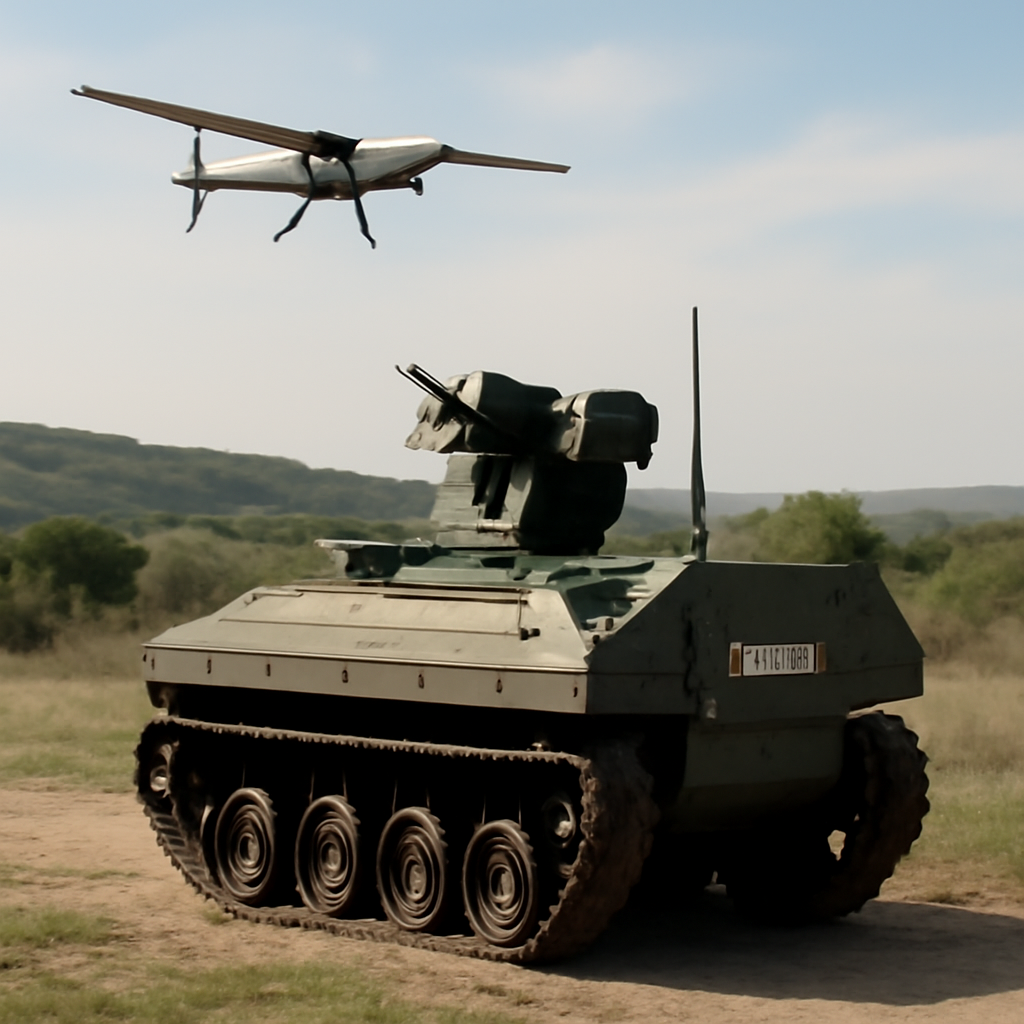
Get ready for a game-changer on the battlefield: HAVELSAN's BULUT UAV and BARKAN UGV just made their mark in a Turkish military exercise, showcasing cutting-edge capabilities in reconnaissance, target-marking, and direct fire support. The BARKAN UGV can blaze a trail for up to eight hours over tough terrain, providing units with reliable backup.
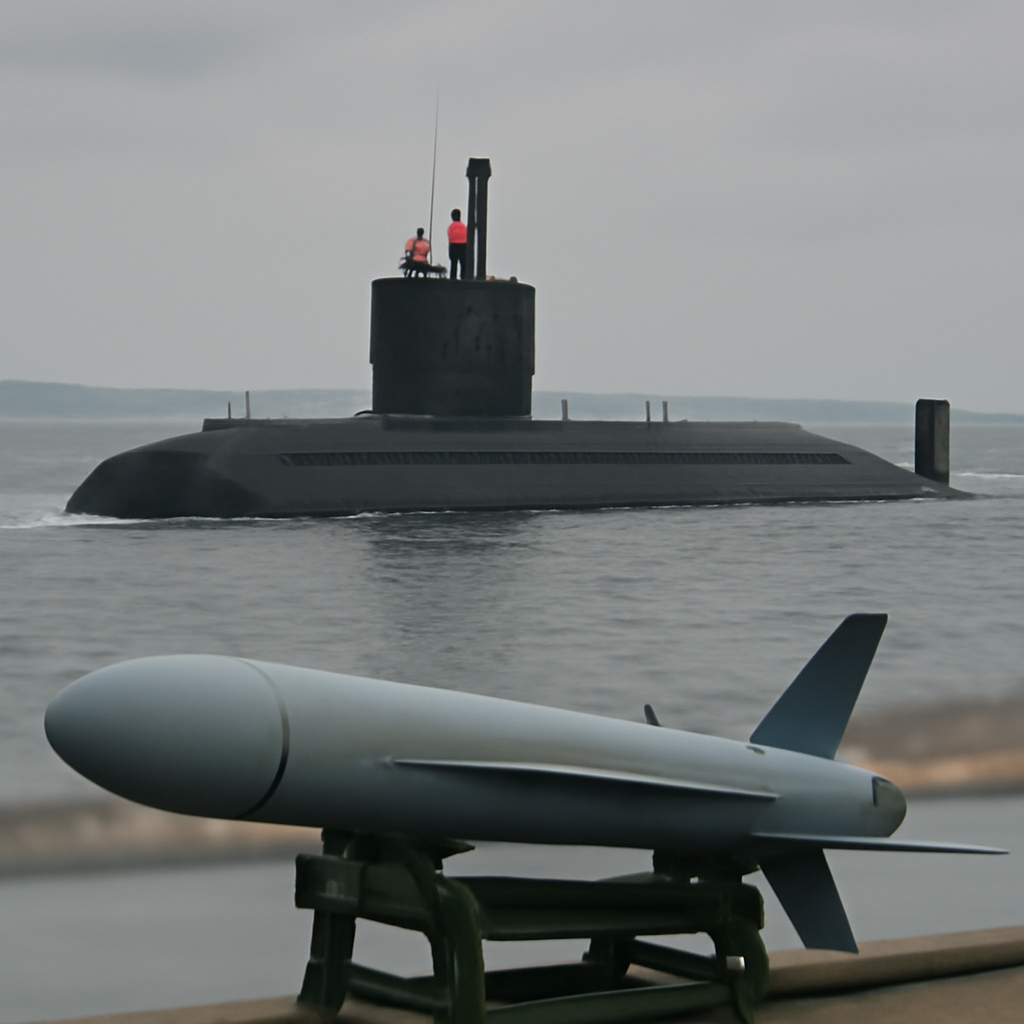
North Korea's latest at-sea missile tests are a bold statement of its military ambitions, with leader Kim Jong Un vowing to arm the Navy with nuclear weapons as soon as possible. The tests, conducted by the Hero Kim Kun Ok submarine, showcased Pyongyang's growing underwater combat capabilities.
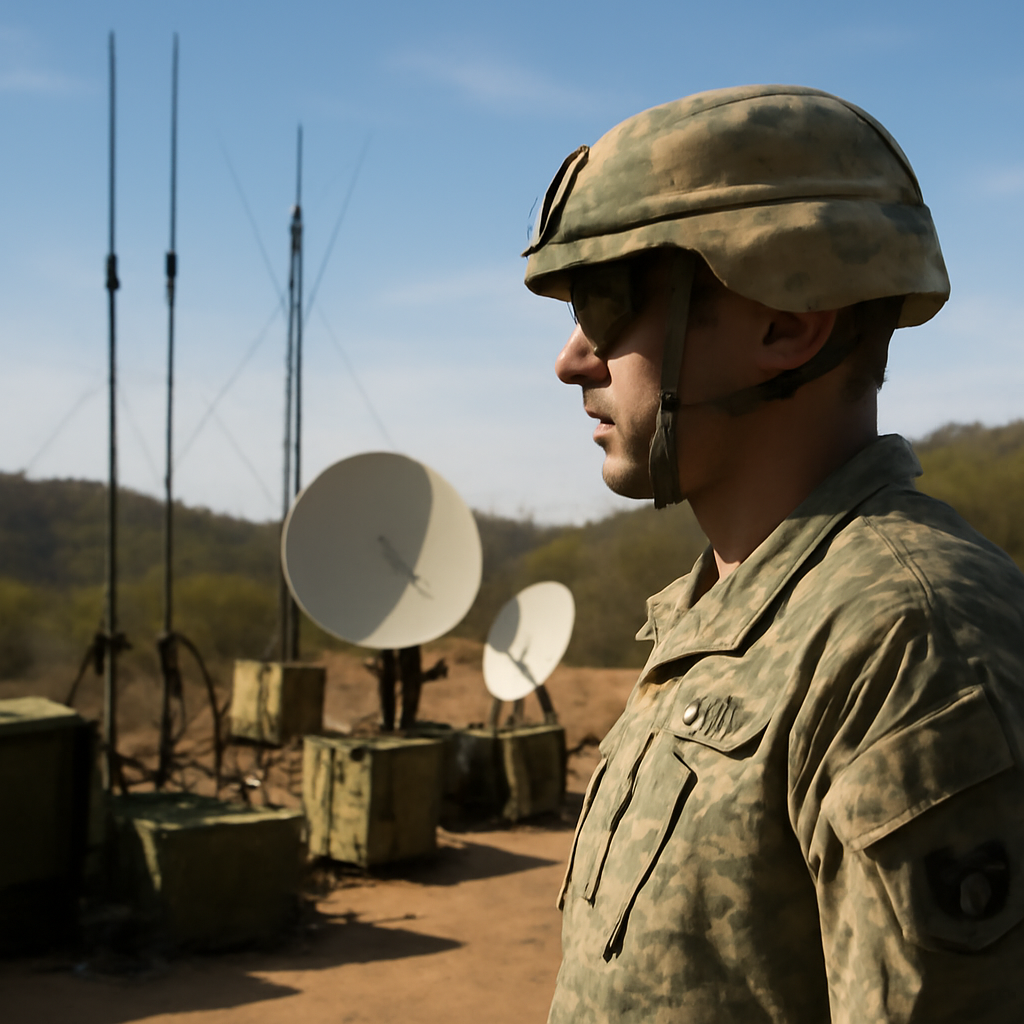
In today's rapidly evolving electromagnetic warfare landscape, the Army's biggest challenge is finding and tracking adversarial signals that are intentionally hidden, brief, or low-power. Success in the electromagnetic domain now hinges on overcoming this critical hurdle.