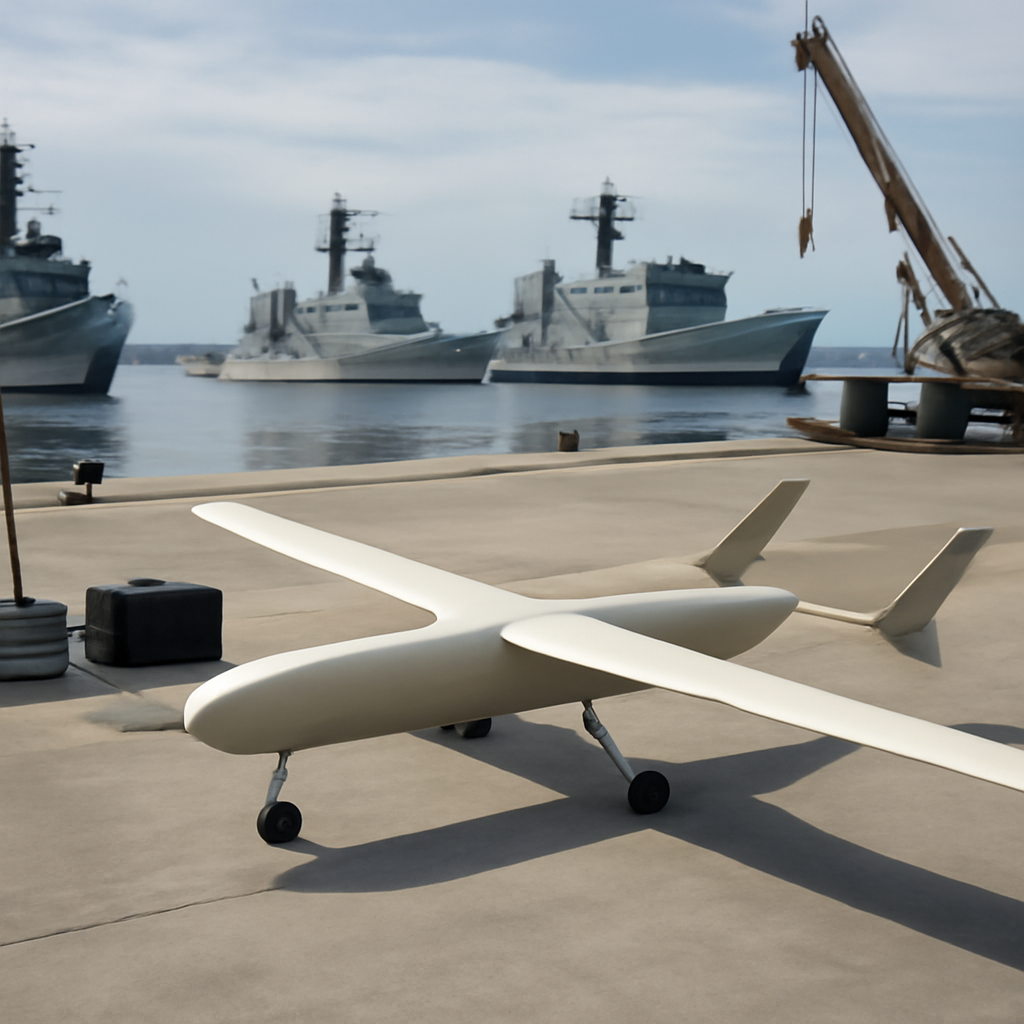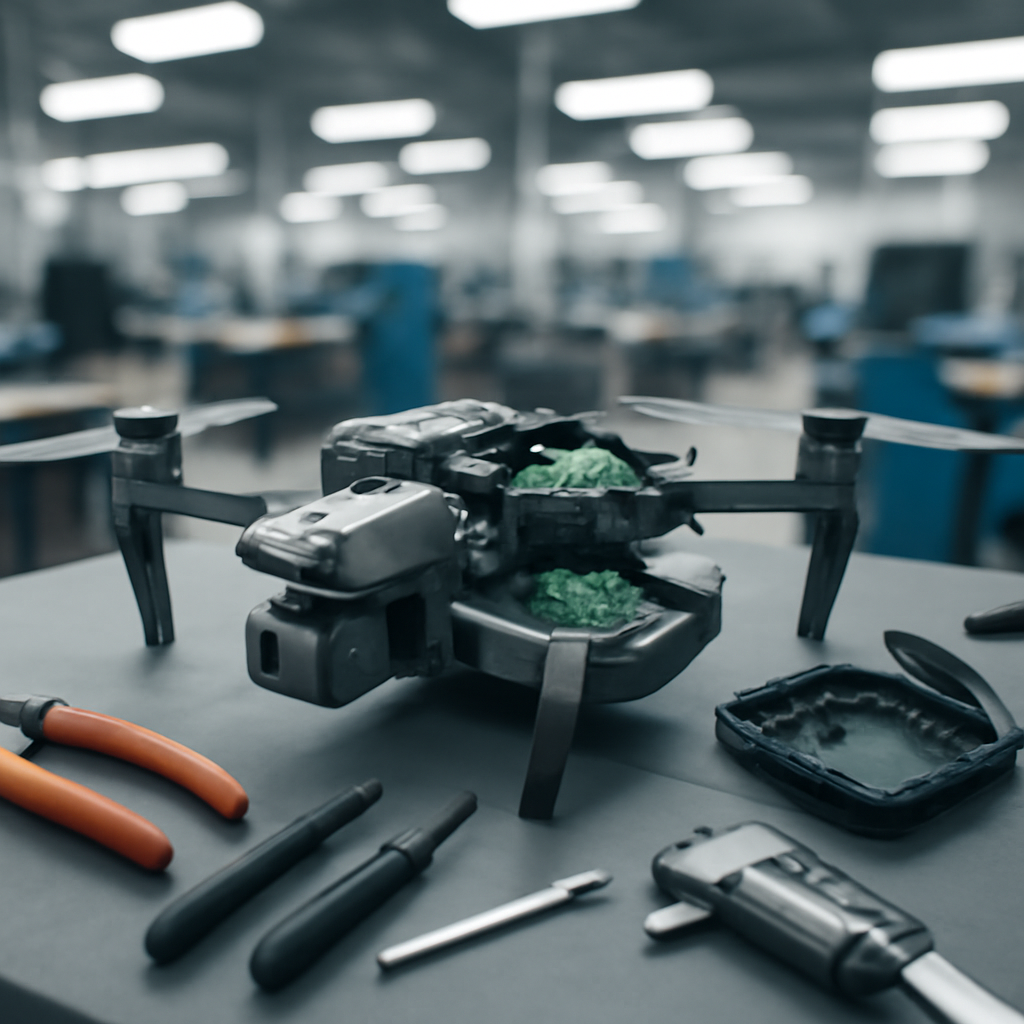
"We must stop asking, 'How cheaply can we build another drone?'" Col. Dustin Thomas writes, pressing a shift from unit price to combat value as the central metric for purchasing unmanned systems.
The 100,000‑drone thought experiment
Col. Thomas opens with a concrete scenario: the Pentagon buys 100,000 drones for $1,000 apiece and stores them for future combat. If only 30,000 are used before an adversary fields a countermeasure that renders the remaining 70,000 operationally ineffective, the author argues, the apparent bargain evaporates. The stated lesson: lower unit cost no longer reliably equates to lower cost per unit of combat value when designs can become obsolete before they are employed.
Industrial‑age rules versus a new manufacturing revolution
The essay contrasts four Industrial Revolution bedrocks—Standardization, Specialization, Synchronization, and Certification—with a new set of capabilities driven by artificial intelligence, design‑independent tools, and digital engineering. Whereas the old model reduced unit cost by locking products and processes into repeatable, certified workflows, the new tools allow rapid design changes and near‑instant fabrication. Col. Thomas notes that AI can design small aircraft in minutes, 3D printers and CNC machines can produce an almost infinite variety of shapes, and digital engineering synchronizes those changes across design and manufacture—together enabling design, build, verify, and field cycles measured in days or weeks rather than years.

Audit-ready is a season. It shouldn't be.
Evidence in spreadsheets, controls drifting between audits, frameworks multiplying on flat headcount. Nubivance runs continuous compliance on Rapid7 Cyber GRC - SOC 2, HIPAA, ISO 27001, PCI, CMMC.
End the scrambleOperational obsolescence and the hidden costs
Operational obsolescence, as Thomas defines it, arises when changes in threat, technology, or tactics reduce a system's combat value. The 100,000‑drone example is used to show that obsolescence carries costs beyond discarded airframes: logistics, storage, manufacturing capacity, and lost opportunity for the inventory all count. The author urges acquisition authorities to evaluate production lots not by unit cost alone but by "how much combat value will this production lot deliver before it needs to be redesigned."
RIMPAC 2026, Game of Drones, and rapid adaptation in practice
Thomas points to practical demonstrations where rapid adaptation is already moving from laboratory to operations. He cites a competition event where a sensor maker known for Nintendo controller components paired with an aircraft design company to map Earth’s magnetic field and create a navigation tool for GPS‑denied environments. He also highlights Rim of the Pacific exercise (RIMPAC 2026), which the Navy "has touted" as the largest advanced manufacturing demonstration in Department of War history, and which showcased in‑theater manufacturing capacity. These examples, he contends, show how speed in design and integration can translate into operational advantage—while also giving adversaries the same speed to counter.
What this means for acquisition leaders, industry, and the Navy
- Acquisition leaders: The author calls on acquisition officials to expand evaluation criteria beyond unit cost to include expected useful combat life per production lot and incentives for optionality—the ability to insert new technology and adapt at speed.
- Industry and manufacturers: Thomas recommends rewarding designs and production offers that preserve flexible interfaces and modularity, and that prioritize the ability to integrate new sensors, algorithms, and structures quickly rather than minimizing per‑unit price alone.
- The Navy and operational planners: Exercises like RIMPAC should not only test forward manufacturing capability but also the full loop—identify a battlefield problem, integrate new technology, redesign the weapon, manufacture it, and deliver it to combat.
Col. Thomas brings practical pedigree to the argument: he commands DCMA’s Unmanned Systems – Experimental Command (US‑X), which provides contract oversight for unmanned systems and manages the Blue List; he previously led Black Phoenix, an innovation team focused on designing, building, and flying small unmanned systems in less than 24 hours, and he founded Game of Drones, an experimentation event for rapid integration of new technology. He cautions that these views are his alone and "do not necessarily reflect the views of the Department of War."
The policy pivot Thomas prescribes is straightforward: plan to stockpile the components and flexible manufacturing capacity that permit rapid redesign and reconstitution, not static airframes that are likely to be overtaken by countermeasures. In his words, without that change, "we risk stockpiling obsolescence."