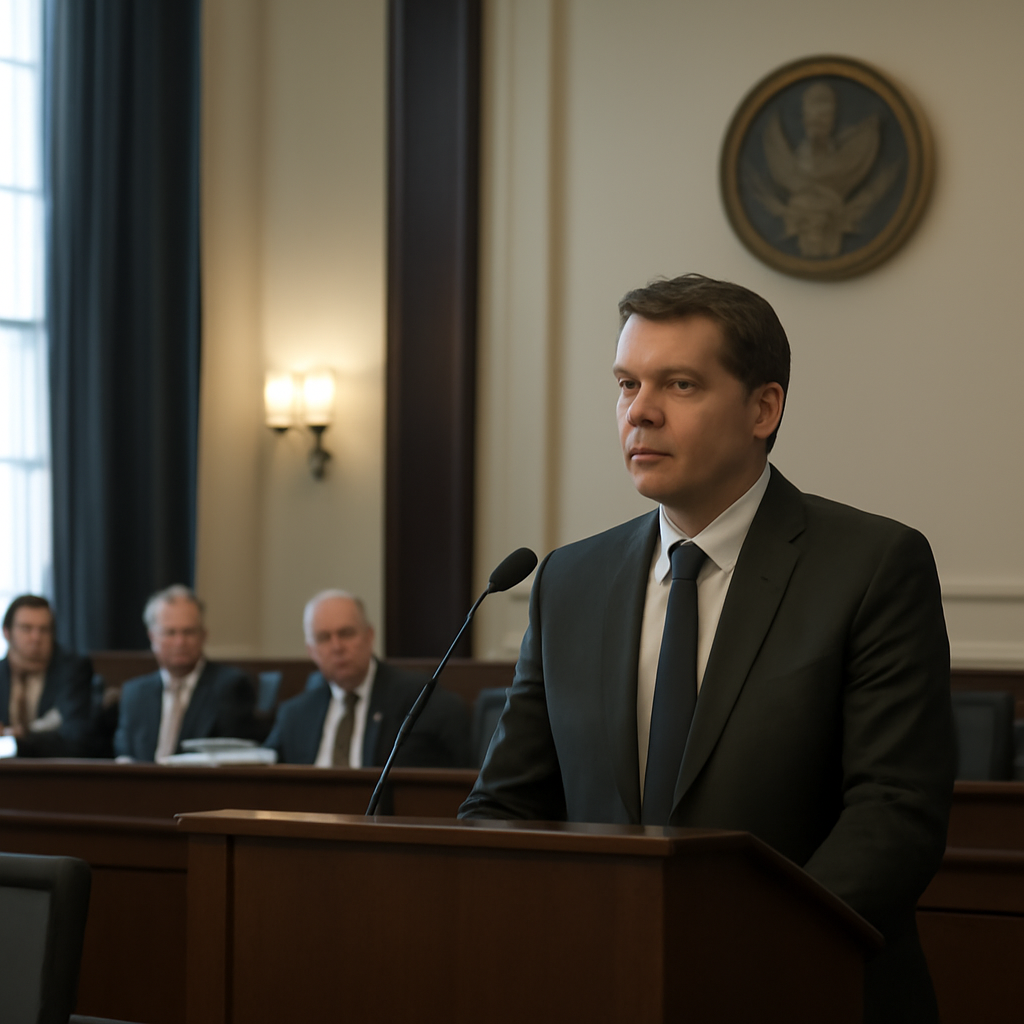
“I expect certain aspects of the Iran war to cost $37.5 billion through the end of September,” Defense Secretary Pete Hegseth told the Senate Appropriations Committee on July 22, 2026.
Hegseth’s $37.5 billion figure and what it covers
At a Capitol Hill hearing today, Hegseth offered a tightened price tag for parts of U.S. military involvement tied to the Iran conflict: $37.5 billion through Sept. 30, the end of fiscal 2026. He said the total would cover military pay, operations and maintenance, and other “anticipated costs.” Hegseth did not enumerate items excluded from that number during questioning.
How that estimate compares to prior Pentagon and administration figures
The $37.5 billion estimate marks an increase from earlier Pentagon tallies but remains well below other figures the administration has presented. Hegseth said it is up from a $25 billion estimate given in late April and a $29 billion figure provided a month later for costs already incurred. By contrast, the administration has asked for $67.1 billion in defense funds tied to the Iran conflict as part of a nearly $90 billion supplemental request — a package that the White House has said would fund everything from restocking munitions to drone purchases and classified programs.

This site is the portfolio.
OSINTSights runs on Cloudflare Workers, D1, R2, and Vectorize, with an AI pipeline on Hetzner ARM. Nubivance designed, built, and operates it. We do the same for clients.
See what we buildSenators pressed for detail during the Senate Appropriations Committee hearing
Lawmakers pushed back on the numbers and the transparency behind them. Sen. Jeanne Shaheen, D-New Hampshire, questioned whether the supplemental would cover repair costs for damaged bases and asked whether the Pentagon had provided full damage estimates. Sen. Dick Durbin, D-Ill., said the department’s request “does not make a lot of sense.”
Hegseth defended the supplemental as “connected to the real world realities of this budget cycle” and warned that without the funds some activities — including training — would have to be “curtailed.” He also noted that the Pentagon recently asked to reroute roughly $4.3 billion from fiscal 2026 accounts to cover higher-priority global personnel and operational costs.
Top generals and the production shortfall risk
Chairman of the Joint Chiefs of Staff Gen. Dan Caine testified alongside Hegseth and declined to give a fixed cost estimate for the conflict, saying “the enemy gets a vote.” Caine emphasized the need to partner with industry to accelerate defense production, warning of a shortfall in munitions if the department and private sector do not share risk appropriately.
The hearing also returned to a larger budget fight: Hegseth is seeking approval for both a supplemental now and the department’s broader $1.5 trillion request for fiscal 2027, which includes $1.15 trillion in a base budget and $350 billion in reconciliation spending for priorities like the Golden Dome missile defense plan and munitions.
Budget timing, unobligated funds, and contracting deadlines
Several senators noted that the Pentagon received nearly $1 trillion to cover fiscal 2026, and Shaheen pointed out the department had “barely spent half of the $150 billion in reconciliation funding,” asking why additional money was needed if roughly $75 billion remained unobligated. Hegseth confirmed the department has about $75 billion still unobligated but projected that 95 percent of it would be under contract by Oct. 1; he warned that funds left uncontracted by the end of September risk an 8.3 percent cut to the remaining balance.
The timeline matters: Hegseth framed the supplemental as urgent and said it was not a substitute for other funding measures but rather necessary “to rebuild the military.”
What this means for the Pentagon, Congress, and the defense industry
- The Pentagon: Faces pressure to reconcile competing pots of money — the unobligated reconciliation funds, the new supplemental, and internal reprogrammings — while answering lawmakers’ questions about what specific operations and repairs the supplemental will fund.
- Congress: Must decide whether to approve a supplemental that the administration says would fund munitions, drones and classified programs, even as some appropriators demand more granular accounting and assurance that existing funds have been spent appropriately.
- The defense industry: Is likely to be asked to accelerate production and enter new contracts if Congress approves supplemental funding; senior military leaders warned of shortfalls in munitions and called for federal-private sector risk-sharing to meet demand.
The hearing came nearly five months after the wide-scale attacks in late February between the U.S. and Israel and Iran; those operations and counterattacks have fluctuated before a mid-June memorandum of understanding aimed at a roadmap toward a permanent peace deal within 60 days. Tensions continued: after incidents in the Strait of Hormuz and regulatory measures by the U.S., Iran struck U.S. bases, and Pentagon Press Secretary Sean Parnell said “nearly” 100 U.S. service members had been injured since July 7, with roughly 96 percent returned to duty; three service members were killed over the weekend — two at an airbase in Jordan and one in Iraq during a “controlled detonation” of an Iranian drone.
The central fiscal fact remains: Hegseth supplied a $37.5 billion cost estimate tied to certain aspects of the Iran war through Sept. 30, even as the administration seeks $67.1 billion in conflict-related defense funds within a broader supplemental. Congress must now weigh a shorter, specific price tag against a larger request that the Pentagon says is needed to restore stocks, expand production and sustain operations — and decide how quickly it is prepared to move before end-of-fiscal-year contracting deadlines arrive.