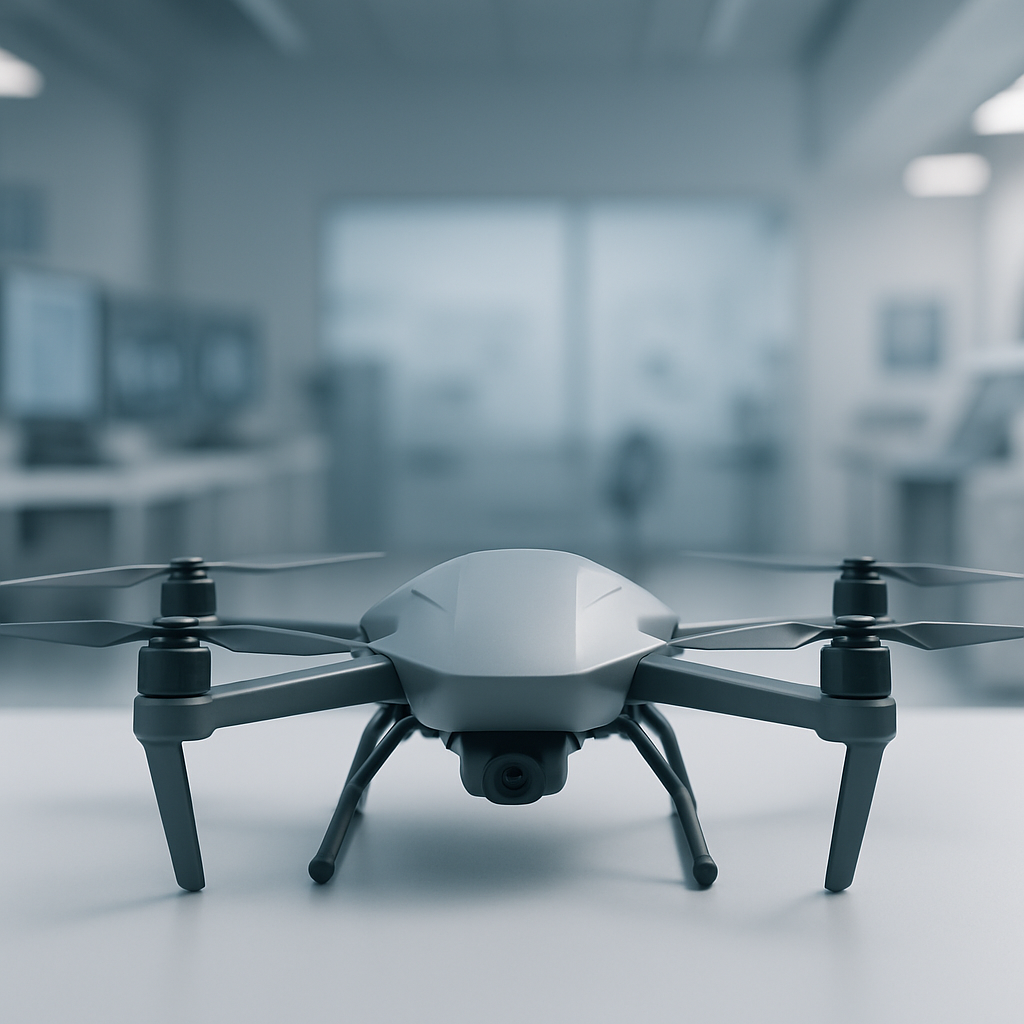
“Each Predator combat air patrol of continuous surveillance required nearly 150 personnel,” wrote David Petraeus and Isaac Flanagan in The Hill, framing a blunt problem: unmanned systems demand people as much as machines. That personnel constraint — and the organizational limits it exposed during a decade of Middle East operations — now sits at the center of Pentagon planning as autonomous-weapons spending faces an unprecedented jump.
Defense Autonomous Working Group and a $54 billion proposal
The Pentagon’s lead office for drone warfare, the Defense Autonomous Working Group, sits at the junction of doctrine, procurement, and research as the administration’s 2027 spending proposal would expand its budget from $226 million this year to $54 billion. Retired Army general and former CIA director David Petraeus and scholar Isaac Flanagan warned in The Hill that without clear answers for how operators will buy, train on, use, and maintain autonomous weapons, “any new drone is ‘not a weapons system at all—it is an asset on a spreadsheet.’”
DARPA’s Materials for Physical Compute in Untethered Robotics
One of two new DARPA requests to industry aims to change how robots think. The Materials for Physical Compute in Untethered Robotics effort seeks unmanned systems that can reason without relying on connections to “vulnerable data centers” or draining batteries by uploading video and receiving commands. The DARPA request for information notes current robotics “still require constant internal data processing, with either the end-users or data centers, creating delayed actions through latency and consuming power for data transmission.”
The RFI urges moving beyond seeing autonomous systems as “assemblages of wire, metal frames, and motors,” arguing that such a mindset yields robots with “small behavior diversity.” DARPA is seeking concepts at the “material, component, and kernel level”—explicitly down to chemistry and physics—that could alter the basic nature of machine intelligence.

This site is the portfolio.
OSINTSights runs on Cloudflare Workers, D1, R2, and Vectorize, with an AI pipeline on Hetzner ARM. Nubivance designed, built, and operates it. We do the same for clients.
See what we buildDARPA’s DICE: Decentralized Artificial Intelligence through Controlled Emergence
The second DARPA effort, DICE (Decentralized Artificial Intelligence through Controlled Emergence), targets coordination among machines. Its stated aim is to enable robots to “dynamically form teams using peer-to-peer coordination to execute complex missions.” In short, DICE is designed to help robots communicate and collaborate to form mission-oriented teams rather than rely on a centralized human operator for every decision.
DIU’s plain-language control contest and SOUTHCOM’s new command
Other Defense Department efforts run parallel to DARPA’s RFIs. The Defense Department’s innovation arm, DIU, is running a contest to find ways to control drones with plain-language commands — described as the sort of direction one might give a soldier or a large-language-model tool. At the same time, U.S. Southern Command has created a structural response: Gen. Frank Donovan announced the SOUTHCOM Autonomous Warfare Command to “maximize the efficient fielding of autonomous systems.”
What this means for technologists, the Defense Autonomous Working Group, and military operators
- Technologists and security-focused teams: DARPA’s calls push research toward material- and component-level innovation and peer-to-peer coordination, and toward reducing reliance on remote data centers and heavy communications—technical priorities the RFIs define explicitly.
- The Defense Autonomous Working Group and procurement leaders: The proposed leap from $226 million to $54 billion will place a premium on turning DARPA concepts into usable systems while answering Petraeus and Flanagan’s questions about acquisition, training, and sustainment before money is spent.
- Military operators and commanders: Petraeus and Flanagan’s example — that a single Predator patrol required nearly 150 personnel — underscores the operational constraint: without new organizational structures or automation that reduces personnel burdens, expanded drone inventories may not translate into more coverage or capability.
The Pentagon’s research path is explicit: build machines that think more independently and collaborate more organically. The policy challenge is equally explicit, and posed most plainly in the reporting: “Technology is moving faster than doctrine. So should doctrine come first? Or the other way around?” How that question is answered will shape whether the massive proposed funding increase buys usable force multipliers or merely fills spreadsheets.
https://www.defenseone.com/technology/2026/05/pentagon-drones-autonomous-warfare/413323/