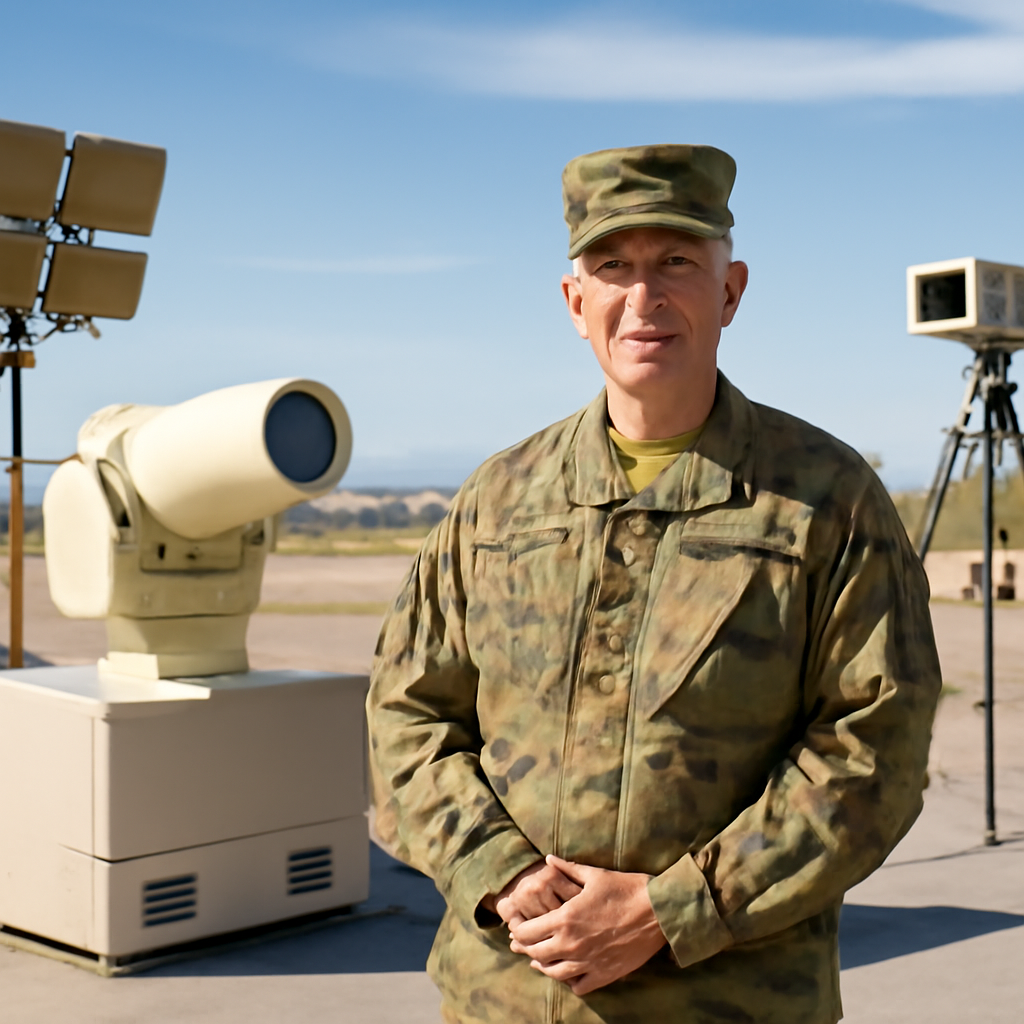
Brig. Gen. Matthew Ross is leading Joint Interagency Task Force 401’s effort to widen the Pentagon’s counter-UAS toolkit by adding new effectors, new sensors, and new ways to think about protecting what matters.
Directed energy: lasers and high‑power microwaves tested in operations
JIATF‑401 is taking directed energy out of lab demonstrations and into operational settings, testing both lasers and high‑power microwaves. The task force’s work reflects a broader Pentagon move toward a layered counter‑UAS posture: lower‑cost sensing, kinetic and non‑kinetic effectors, directed energy, artificial intelligence, and physical protection. In plain terms, the goal is to have multiple ways to detect, track, and defeat drones so responses can match threat, terrain, mission, and cost.
Artificial intelligence to speed decisions and testing
AI is being deployed by JIATF‑401 not as a research novelty but as a practical tool to accelerate decision‑making and testing cycles. According to the reporting, the task force is using AI to speed both operational choices—deciding how to counter an incoming unmanned aerial system—and the experimental work that validates new countermeasures. That emphasis on faster human‑machine workflows aims to shorten the time from detection to effect and from prototype to operational use.

Audit-ready is a season. It shouldn't be.
Evidence in spreadsheets, controls drifting between audits, frameworks multiplying on flat headcount. Nubivance runs continuous compliance on Rapid7 Cyber GRC - SOC 2, HIPAA, ISO 27001, PCI, CMMC.
End the scrambleHardening, dispersion and lessons from Ukraine
JIATF‑401 is explicitly drawing lessons from Ukraine’s experience with drones and missile threats: sometimes the most effective response is not another counter‑drone system but changes to infrastructure. Hardening, dispersion and other physical protections can be as valuable as a new sensor or effector. That lesson shifts some investments away from single‑solution buys and toward resilience measures that reduce the value of being targeted in the first place.
Opening new paths for industry and procurement
The task force’s approach is also creating “new paths for industry,” broadening opportunities for vendors that can contribute sensors, effectors, AI tools, or hardened infrastructure solutions. By operating across kinetic, non‑kinetic and passive protective options, JIATF‑401 is signaling that procurement decisions will weigh not just capability on a single metric but suitability for a layered posture that includes lower‑cost sensing and diverse defeat mechanisms.
What this means for technologists, policymakers, and end users
- Technologists and security teams: Expect operational testing cycles that emphasize integration—AI plus sensing plus effectors—and a growing appetite for directed energy demonstrations in realistic settings.
- Policymakers and procurement leaders: The widening menu of options means acquisition choices will likely consider hardening and dispersion alongside new defeat systems, and contracting pathways may open for nontraditional suppliers as JIATF‑401 seeks diverse solutions.
- End users and the general public: For sites and missions at risk from small UAS, mitigation may increasingly blend active defeat measures with passive protections—hardening and dispersal—to reduce vulnerability rather than rely solely on intercepting every threat.
Breaking Defense thanks CACI for supporting this editorial E‑Brief. Sponsorship does not influence the editorial content of the E‑Brief.
JIATF‑401’s work is practical and pragmatic: expand the options, test them where they matter, and value resilience as highly as reaction. The net effect could be a counter‑UAS posture that is less brittle—more choices tuned to cost, terrain and mission—rather than a brittle dependence on any single technical fix. The next steps to watch will be the outcomes of the directed‑energy and AI tests and whether procurement shifts to reward layered solutions and hardening measures as much as new interceptors.