Ceasefire, certainty, and a contested claim
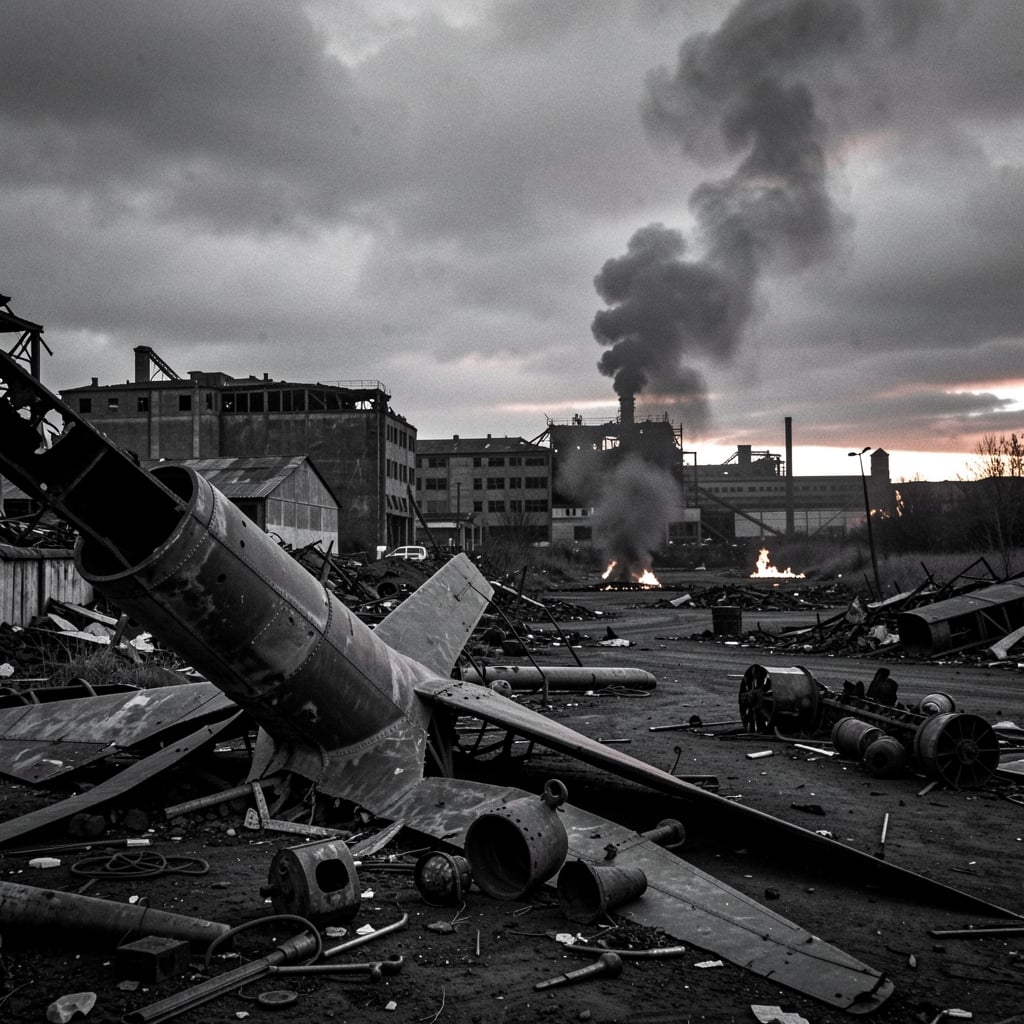
A two-week ceasefire has taken effect, but the question now is less about the absence of immediate fighting than about the permanence of what the Pentagon is calling a decisive outcome. "We’ve destroyed Iran’s defense industrial base, their ability to reconstitute those capabilities for years to come," said Chairman of the Joint Chiefs of Staff Gen. Dan Caine, a sweeping assertion that frames the pause as the capstone of a campaign the Pentagon has described as a "decisive military victory."
What has been reported so far
As the temporary cessation of hostilities begins, the U.S. defense establishment is publicly characterizing the recent operations in absolute terms. The Pentagon’s characterization — highlighted in public statements and reflected in coverage of the momentary lull — places the emphasis not merely on tactical gains but on what it calls strategic, long-term degradation of an adversary’s industrial capacity. The direct wording from the chairman of the Joint Chiefs of Staff remains the principal, verifiable source for that claim.

This site is the portfolio.
OSINTSights runs on Cloudflare Workers, D1, R2, and Vectorize, with an AI pipeline on Hetzner ARM. Nubivance designed, built, and operates it. We do the same for clients.
See what we buildWhy this claim matters
If taken at face value, the assertion that an opponent’s defense industrial base has been destroyed and rendered unable to reconstitute capabilities "for years to come" carries implications across multiple domains. For policymakers, it reframes any near-term calculation about deterrence, reconstruction and future force posture. For technologists and analysts, it raises questions about what constitutes a defense-industrial ecosystem, how resilient supply chains and manufacturing lines are assessed, and what measures would be required to restore lost capacity. For potential adversaries and allies alike, the claim is both a signal and a test: a signal of a claimed permanent shift in military balance and a test of whether that claim can be substantiated or reversed over time.
Different perspectives and the burdens of proof
- From a strategic-policy perspective: A declarative victory narrows political choices in the near term but imposes long-term accountability. If a military leader asserts long-lasting destruction of industrial capabilities, policymakers will be judged on how they validate and sustain that outcome.
- From a technical-analysis perspective: Verifying the destruction of an industrial base requires transparent indicators — production counts, supply-chain tracing, on-the-ground inspection or reliable remote sensing — none of which are detailed in the public claim itself. Analysts will want evidence showing not just damage but disruption to the ability to reconstitute over time.
- From an adversary’s perspective: Such an assertion may prompt efforts to conceal, disperse, or accelerate recovery activities; conversely, if the claim is accurate, it may constrain planners who rely on those industrial capacities.
Absent corroborating detail in the public record, the chairman’s statement stands as a forceful, singular assessment. It shapes expectations and invites scrutiny in equal measure: scrutiny over the methods used to reach that conclusion, and scrutiny over the durability of whatever was achieved.
Looking ahead
The two-week ceasefire creates breathing room for verification, diplomacy and assessment. But it also creates a clock: claims of irreversible damage will be tested by time, by reconstruction efforts, and by the opacity or transparency of the affected systems. The central question now is not whether a pause exists, but whether the asserted victory will withstand outside examination — and whether the consequences of that assertion will change behavior as much as the operations themselves did. Will a declared "decisive military victory" translate into lasting strategic advantage, or will it become a headline that history revises?