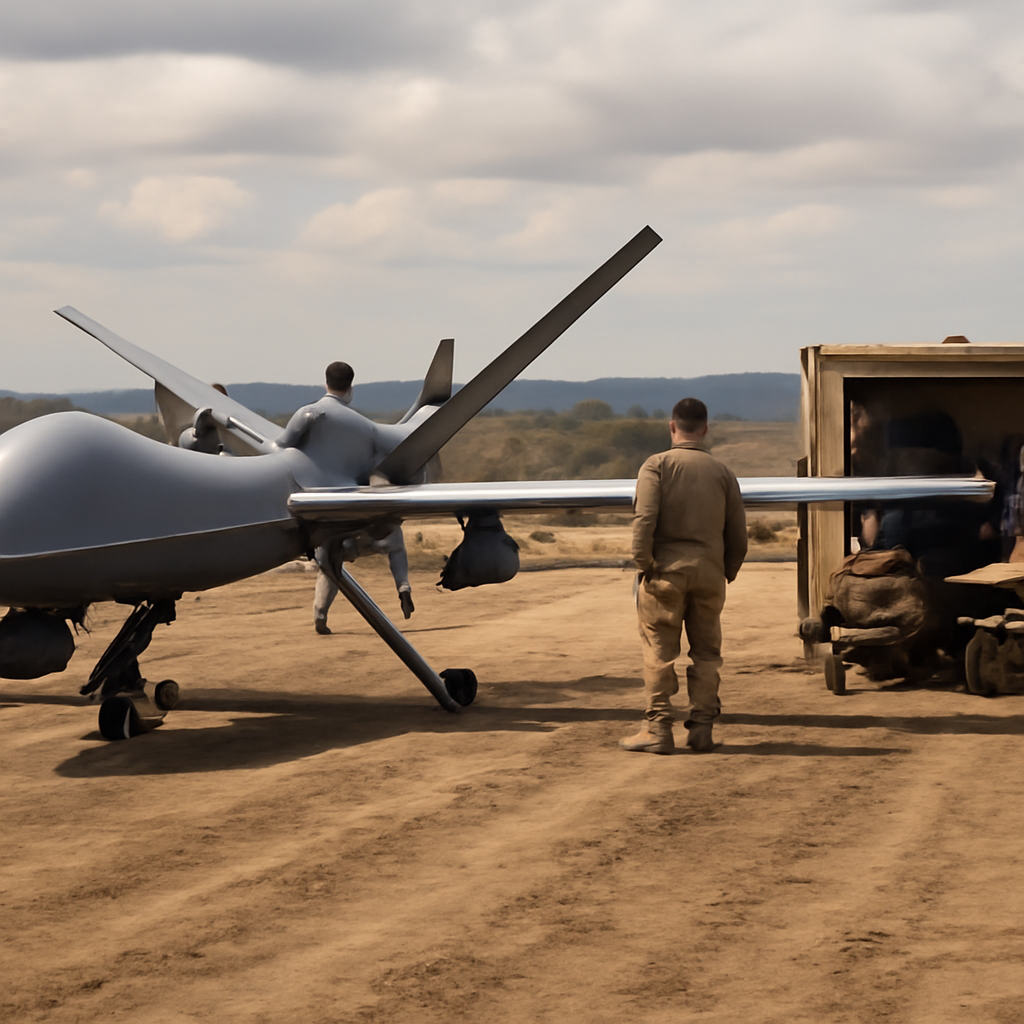
"Cartel networks are increasingly employing unmanned aircraft systems to facilitate illicit human-smuggling and actively spy on our personnel and law enforcement partners," Maj. Gen. Curtis Taylor said, explaining why a military laser system was used this month to "engage and defeat three hostile UAS" at the southern border.
Joint Task Force–Southern Border says AMP‑HEL shot down three hostile drones
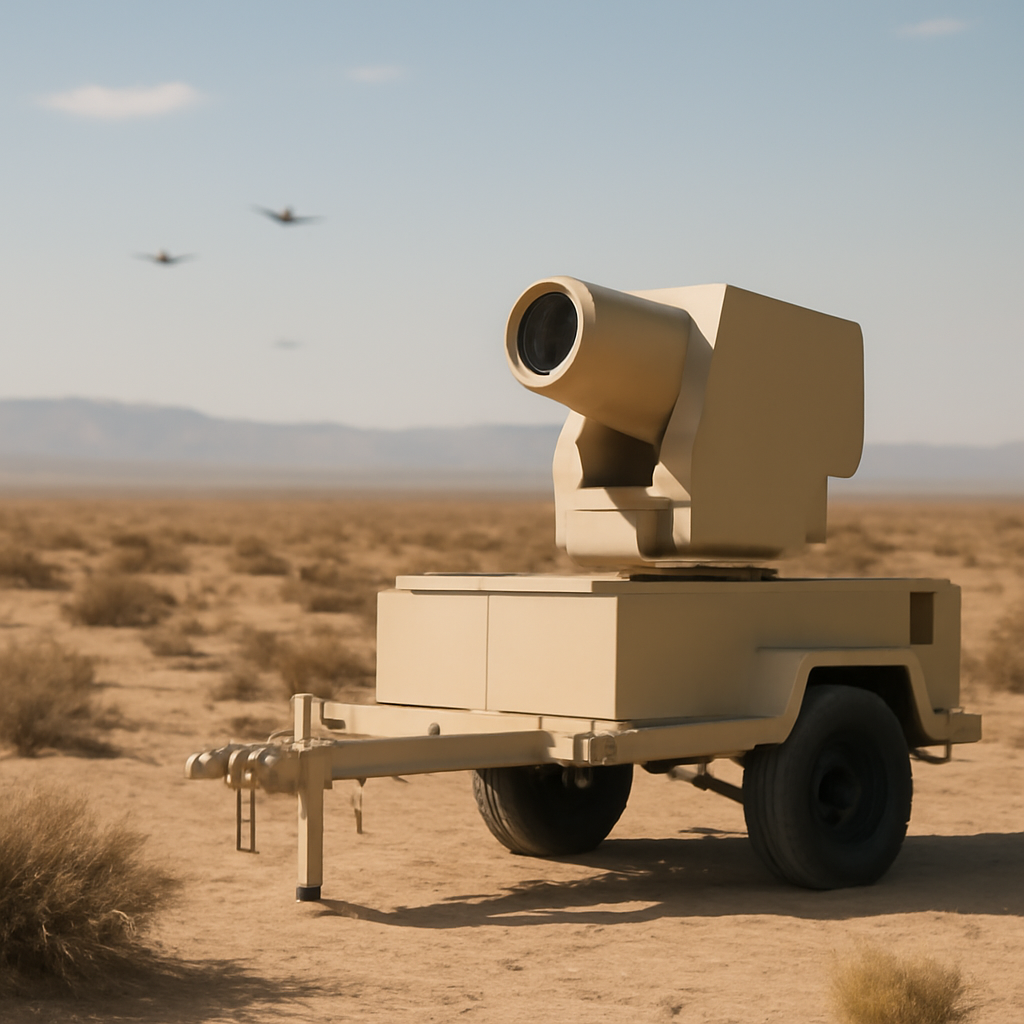
The Joint Task Force–Southern Border (JTF‑SB) announced in a release that personnel used an Army Multipurpose High Energy Laser (AMP‑HEL) system to "engage and defeat three hostile UAS" that posed a "physical threat" to U.S. military personnel and U.S. Customs and Border Patrol (CBP) members. The task force did not disclose the exact engagement location or identify who was operating the aircraft, but the release suggested the drones could have been conducting reconnaissance for a drug cartel.
AeroVironment confirmed a non‑kinetic counter‑drone system tied to AMP‑HEL
An AeroVironment (AV) spokesperson told Breaking Defense that the task force used one of the company’s non‑kinetic counter‑drone systems, which is the product of the Army’s AMP‑HEL program. The spokesperson declined to say which particular system was used and did not respond to a request for clarification by press time. The JTF‑SB release likewise did not disclose whether the laser was mounted on a vehicle; a task force spokesperson did not respond to a request for comment.
Breaking Defense noted the original JTF‑SB statement referenced a counter‑UAS system delivered to the Army in December — the same timeframe an AV press release said the company delivered its prototype 20kW‑class LOCUST. Beyond those linkages, public statements from AV and JTF‑SB stopped short of identifying the platform used in the engagement.

This site is the portfolio.
OSINTSights runs on Cloudflare Workers, D1, R2, and Vectorize, with an AI pipeline on Hetzner ARM. Nubivance designed, built, and operates it. We do the same for clients.
See what we buildOperation executed under US Northern Command in support of CBP
JTF‑SB said the mission was carried out under U.S. Northern Command and "in support of" U.S. Customs and Border Protection. The announcement comes amid an expanded military role in addressing drone threats on the southern border — a posture the Pentagon has increased in recent months even as previous coordination problems with civilian agencies have generated controversy.
JIATF 401 and the southern border as a testing ground
Breaking Defense previously reported that the Pentagon has treated the southern border as a kind of "sandbox" to test new counter‑drone capabilities. The Army‑led Joint Interagency Task Force 401 (JIATF 401) has invited industry partners to demonstrations at the border, aiming to show technologies intended to disable adversary drones in cost‑effective ways that minimize collateral risks to nearby civilian populations. The recent AMP‑HEL engagement is the latest instance of that dynamic — industry prototypes and military programs being exercised in an operational environment.
What this means for U.S. Customs and Border Protection, the Army, and AeroVironment
- U.S. Customs and Border Protection: CBP is explicitly named in the JTF‑SB release as a party supported by the mission. The agency will be watching whether directed‑energy countermeasures reduce reconnaissance and smuggling risks near points where its personnel operate, while also monitoring how military deployments intersect with civilian law‑enforcement responsibilities.
- The Army / Joint Task Force–Southern Border: The Army’s AMP‑HEL program appears operationally engaged at the border; the JTF‑SB used the system to defeat three UAS it judged hostile. The Army and JTF‑SB will likely continue to test and refine how directed‑energy systems perform in real operations and whether they can be integrated cleanly with other counter‑UAS measures.
- AeroVironment: AV confirmed a non‑kinetic counter‑drone system tied to AMP‑HEL was used and tied the timeline to a recent delivery and its prototype 20kW‑class LOCUST. AV will be attentive to how publicized operational uses affect procurement momentum, customer scrutiny, and requests for technical clarification about which platform was employed.
The public record released so far is narrow: three drones were shot down, an AMP‑HEL system was used, and the engagement was executed under Northern Command in support of CBP. The announcement underscores two tangible trends in the border environment — an operational willingness to employ directed‑energy systems against perceived airborne threats, and continued collaboration between military task forces and industry partners in fielding counter‑UAS capabilities. What remains unanswered in the statements is which specific platform was mounted where, who launched the drones, and how military use of such systems will be coordinated with civilian authorities going forward.
Source: Breaking Defense — “Military uses AV directed-energy system to ‘defeat’ drones at the border”