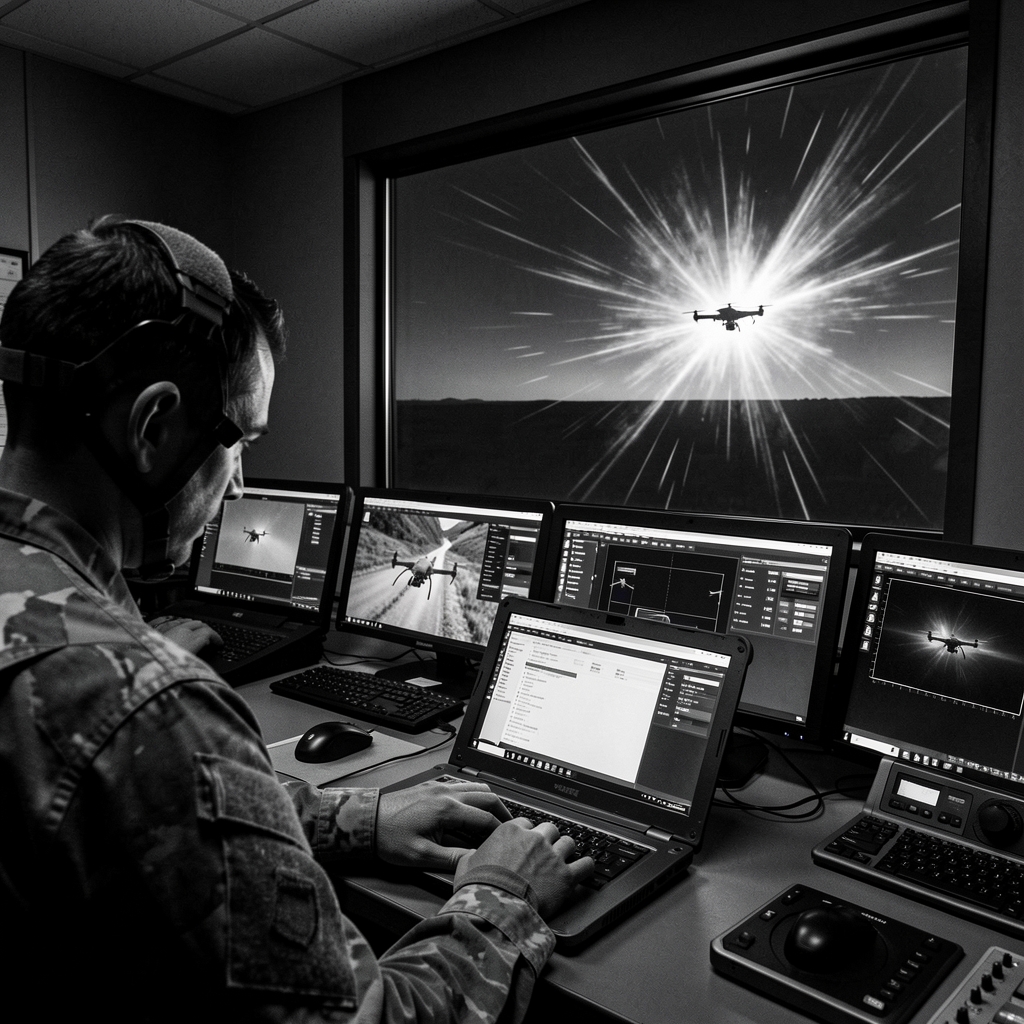
Pentagon’s Strategic Pivot: Expanding the Drone-Denying Arsenal
The U.S. Department of Defense is taking a decisive step to shore up its defenses in an era marked by proliferating unmanned aerial threats, with L3Harris Technologies once again in the spotlight. A recently confirmed order calls for additional VAMPIRE counter-unmanned aerial systems—short for Vehicle Agnostic Modular Palletized ISR Rocket Equipment—underscoring the Pentagon’s commitment to fortifying its counter-drone capabilities.
In a press release issued by L3Harris Technologies, defense officials detailed that this order builds upon the initial deployment of the VAMPIRE system in 2023. Designed to counter the challenge of adversarial drone swarms and rapidly advancing unmanned platforms, the VAMPIRE system represents a blend of innovation and adaptability. Analysts point to this procurement as emblematic of an evolving defense strategy, one that demands versatile systems capable of adjusting to the dynamic conditions of modern battlefields.
Historically, the United States has sought to maintain a technological edge over potential adversaries by investing in modular and scalable defense systems. The VAMPIRE order reflects lessons learned from previous engagements and training exercises, where the agility of defensive systems proved crucial against small, fast-moving targets. The system’s modular design allows for rapid installation on diverse platforms—a feature that military strategists view as indispensable in conflict scenarios characterized by rapid tactical shifts.
At a time when drones have redefined warfare by offering both surveillance and offensive capabilities at a fraction of traditional costs, this new order carries significant implications. The Pentagon’s renewed investment not only aims to neutralize unmanned aerial threats but also to ensure that U.S. forces maintain operational superiority in contested environments. Officials have noted that the expanded use of counter-UAS systems could help mitigate vulnerabilities in both domestic and overseas engagements.
Industry observers have noted several factors driving this procurement. Among these:
- Technological Maturation: The VAMPIRE system benefits from iterative improvements and real-world feedback since its initial 2023 deployment, ensuring its relevance in a rapidly changing threat landscape.
- Operational Flexibility: By adopting modular designs, the system can be integrated seamlessly with existing military hardware, reducing the time required to achieve full operational capability.
- Strategic Deterrence: Enhanced counter-UAS capabilities serve not only as a defensive asset but also as a deterrent, signaling to potential adversaries that the United States remains vigilant and proactive in securing its airspace.
Experts within the defense community emphasize that such developments, while technical in nature, have profound strategic implications. As unmanned systems continue to advance, the ability to quickly and effectively neutralize hostile drones could prevent escalation and protect both military assets and civilian populations. Analysts from reputable sources including the Center for Strategic and International Studies underscore that investments in technologies like VAMPIRE are critical for future-proofing the nation’s defense infrastructure.
Looking forward, the expanded deployment of these counter-drone systems is expected to influence not only tactical field operations but also broader strategic doctrines. Military planners are likely to consider the integration of systems like VAMPIRE into a spectrum of operations—from border security initiatives to full-scale military engagements. Observers will be closely watching how these capabilities evolve, particularly as peer adversaries invest in their own counter-UAS technologies.
As the Pentagon refines its approach to modern warfare, the stakes extend beyond the immediate battlefield. In an era where technology can tip the balance between victory and defeat, securing a technological advantage is both a matter of national security and global stability. With unmanned aerial systems poised to reshape the contours of conflict, the continued investment in advanced countermeasures poses a strategic question: How will emerging technologies redefine the future of aerial security and deterrence?
In answering that question, one fact remains clear—defense innovation is an ongoing race, and the Pentagon’s latest move with the VAMPIRE systems underscores the urgency of staying ahead in a rapidly evolving military landscape.



