"Pakistanis would 'eat grass' before relinquishing the option," pledged Zulfikar Ali Bhutto in 1965 — a phrase Dr. Mansoor Ahmed uses in his retelling to mark the political determination that helped turn a civilian nuclear foundation into a sustained weapons-capable program.
Atoms for Peace and the 1956 Atomic Energy Commission
Ahmed traces the program’s earliest foundations to open, civilian channels rather than clandestine networks. Pakistan established its Atomic Energy Commission in 1956 in response to the Atoms for Peace initiative. Between the mid-1950s and the mid-1960s, roughly 500 Pakistani scientists and engineers trained in the United States, Canada, the United Kingdom, and Europe — a cadre that, Ahmed argues, constituted the program’s most valuable early asset.
That human reservoir was reinforced by tangible civilian infrastructure: a five-megawatt research reactor at PINSTECH and an early power-reactor agreement with Canada. In Ahmed’s account, those items mattered less as singular technical breakthroughs than as enablers of the long-haul institutional work needed to sustain complex capability.
Munir Ahmad Khan’s 1964 observation at Trombay
Ahmed identifies Munir Ahmad Khan — an IAEA reactor engineer who observed India’s Trombay complex and its CIRUS reactor in 1964 — as a decisive figure. Khan’s experience and institutional leadership helped translate latent technical know-how into an enduring program. On Ahmed’s telling, this kind of leadership and continuity made the difference between capability that fades and capability that is defended across successive governments.

This site is the portfolio.
OSINTSights runs on Cloudflare Workers, D1, R2, and Vectorize, with an AI pipeline on Hetzner ARM. Nubivance designed, built, and operates it. We do the same for clients.
See what we buildA coalition of technologists and politicians: I.H. Usmani and Abdus Salam
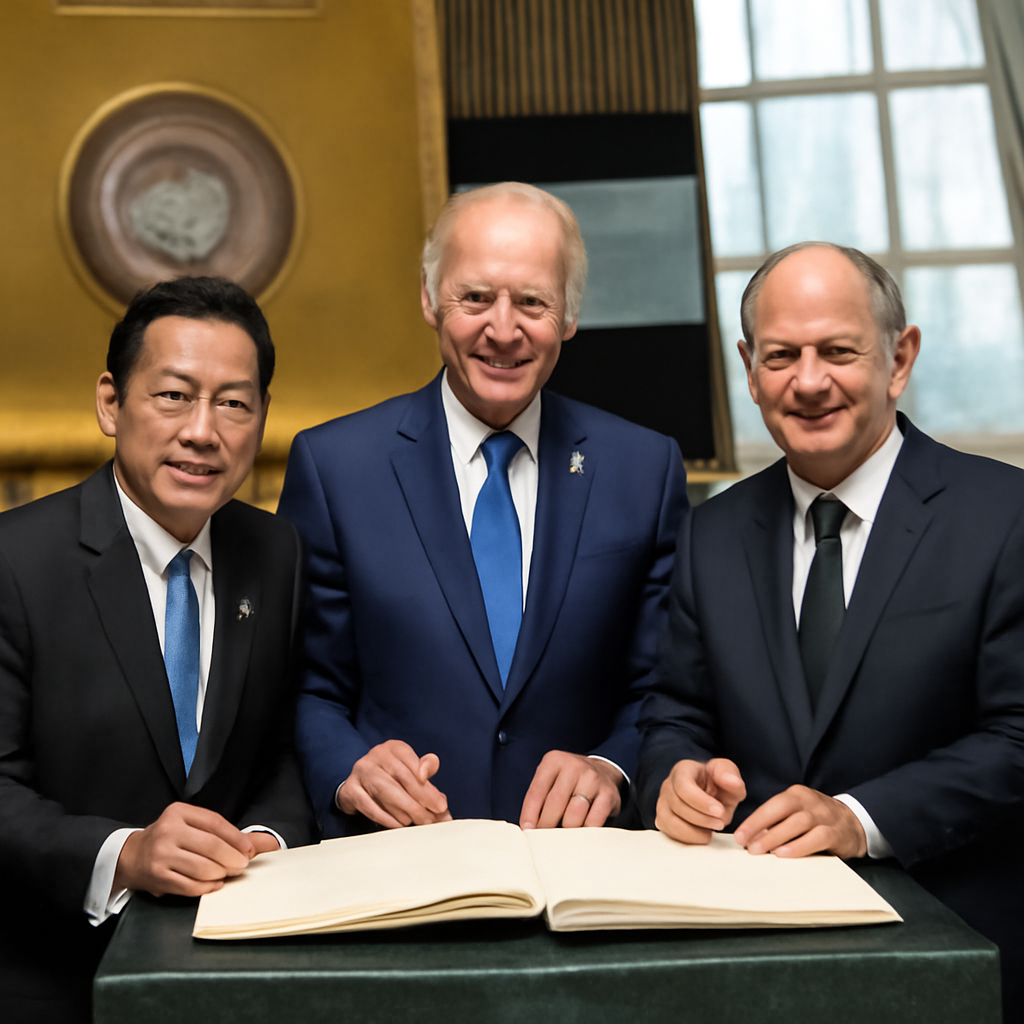
The program’s persistence, Ahmed contends, depended on a narrow coalition of actors. Civilian scientists such as Dr. I.H. Usmani and Nobel laureate Dr. Abdus Salam advanced the technical and institutional work, while political figures, notably Zulfikar Ali Bhutto, provided public resolve. That alignment — scientists, engineers, administrators and political will — is presented as the mechanism that kept long-horizon work insulated from short-term disruption.
Ahmed contrasts Pakistan’s experience with other states — Egypt, Taiwan, Iraq, and Libya — which, despite comparable strategic pressures, did not sustain parallel programs because they lacked this durable coalition.
The myth of illicit procurement and the A.Q. Khan compression
Ahmed challenges the dominant framing that reduces Pakistan’s nuclear trajectory to illicit procurement, smuggling, and a single personality, A.Q. Khan. He argues that this narrative compresses decades of institutional development into a short-hand that obscures earlier, civilian-led work and the program’s capacity to master the fuel cycle from end to end. Instead of an almost accidental weapons outcome — the frequent description of India’s pathway — Ahmed situates Pakistan’s trajectory in sustained policy choice and institutional resilience.
Resolve, resilience, responsibility: three characteristics
Ahmed reframes Pakistan’s nuclear history around three recurring traits: resolve in the face of technology denials, resilience in mastering the full fuel cycle, and a record of responsibility for which Pakistan is "seldom credited," as the summary of his thesis puts it. These characteristics, he suggests, better explain how the program moved from civilian beginnings to weapons-capable status than single-event narratives do.
How Pakistani scientists, Pakistan’s political leadership, and international analysts are positioned
- Pakistani scientists and engineers: Ahmed’s emphasis on the trained cadre highlights their central role as the program’s durable asset; this group’s continued institutional presence is portrayed as the technical backbone that enabled long-term capability.
- Pakistan’s political leadership: Political commitments, exemplified by Bhutto’s 1965 pledge, supplied the public resolve and policy continuity necessary to protect long-horizon projects from short-term political change.
- International analysts and narrative-makers: Ahmed’s revisionist account invites a reassessment of the illicit-procurement framing and the tendency to attribute complex outcomes to single actors or smuggling networks, arguing for attention to institutional history and human capital.
Ahmed’s core contention reframes Pakistan’s nuclear history from an episodic story of illicit acquisition to an extended case of institutional persistence: a civilian-led training pipeline, early reactor programs, and a compact of technologists and politicians that together created the conditions for end-to-end fuel-cycle mastery. He also uses that record as a wider argument — that the same model of sustained investment and insulated institutions could, in principle, underpin capability in other technical fields.
For readers seeking the full archival detail and the episode-length conversation, Dr. Mansoor Ahmed discusses this reconstruction further on Quwa’s Pulse Check; the preview is available free and the full interview is linked by the publisher.