“In 2010, Pakistan’s SOEs rolled out licensed-manufactured designs such as the Selex ES Falco.” That sentence marks both an origin point and a pivot: a deliberate, state-led rerouting of Pakistan’s drone strategy in the late 2000s that chilled an emergent private sector but, over time, built a centralized industrial capability now centered on the National Engineering and Scientific Commission (NESCOM).
NESCOM’s capabilities and the strategic pivot
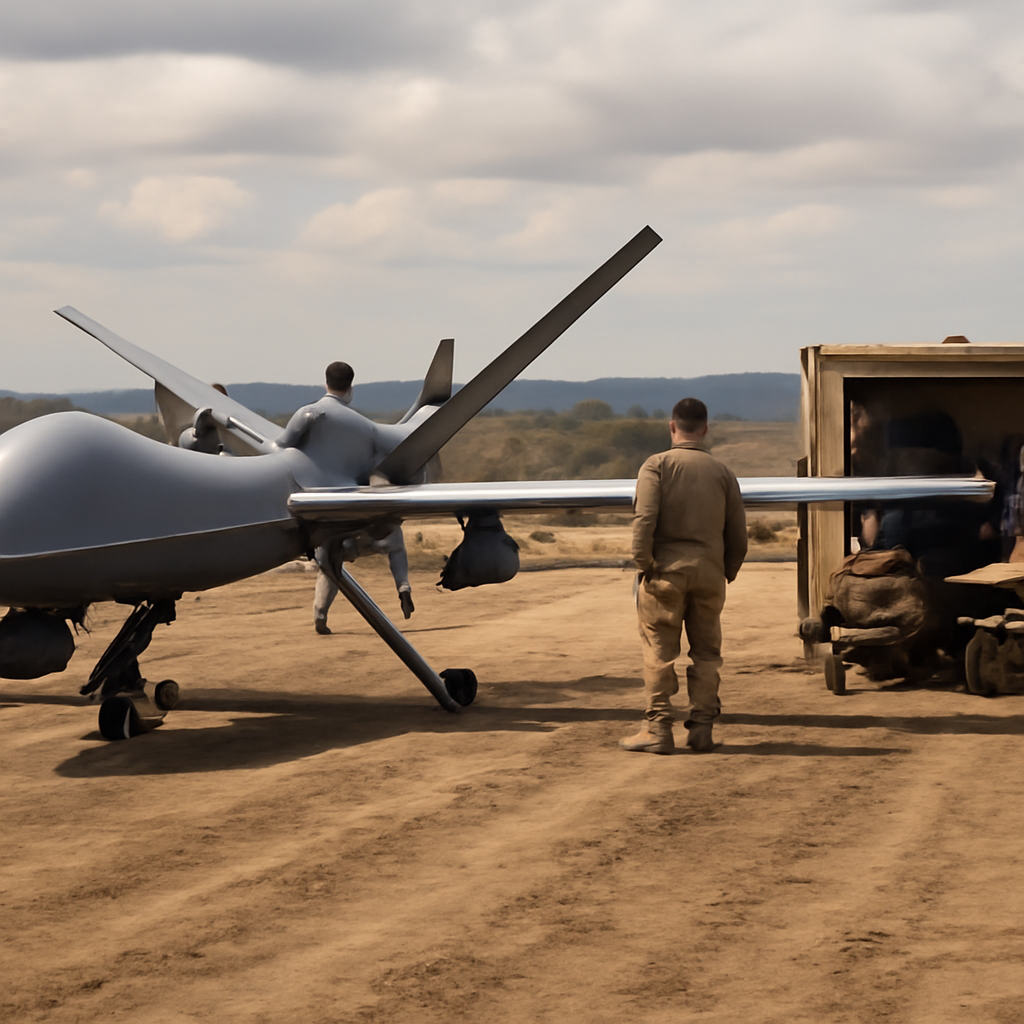
In the late 2000s Pakistan shifted its long-term drone development and procurement away from a budding private sector—where companies like Integrated Dynamics and Satuma led the field—and toward its better-provisioned state-owned enterprises, specifically NESCOM. That decision constrained private-sector development but, independently, elevated NESCOM’s role. By 2026 NESCOM no longer relies only on licensed builds; it designs and builds multiple unmanned aerial system (UAS) platforms and the internal systems that make them function: flight controls, system software, autopilots, as well as sensors, mission kits, munitions, and command, control, and communications (C3) architecture. In short, NESCOM now offers what the source terms a mature drone ecosystem.
NESCOM’s UAS portfolio: Shahpar, Ranger, Yalghar, Sarfarosh, Scout
NESCOM organizes its UAS offerings into two core categories: reusable platforms and one-way attack (OWA) drones. Reusable platforms include the Shahpar- and Ranger-series; OWA examples include Yalghar and Sarfarosh. Complexity does not strictly separate the two categories: NESCOM also produces smaller, lower-cost reusable platforms such as Scout, demonstrating that role and mission—not simply size or simplicity—define placement in the portfolio. Both portfolios are growing, according to the source, and encompass a range of subsystems and munitions tied to specific operational roles.

The cyber insurance questionnaire just landed. Now what?
SOC 2, HIPAA, insurance renewals - someone has to own security strategy. Nubivance provides fractional CISO leadership without the full-time salary.
Get a security leadWhere NESCOM still depends on imports: engines, lenses, microcontrollers
Despite expanded domestic design and integration, NESCOM remains dependent on imported components for critical inputs. The source specifies that NESCOM imports engines for its larger drones and looks to overseas markets for advanced lenses, microcontrollers, and other key inputs. While NESCOM designs and manufactures some subsystems—such as electro-optical and infrared (EO/IR) turrets—Pakistan lacks the upstream industrial base to produce several high-value components. That dependency matters: it constrains the degree to which NESCOM can substitute, upgrade, or independently iterate certain technologies without engaging foreign suppliers.
Alsons Group and the domestic propulsion push
Market signals from large-scale, long-term demand are nudging private suppliers back into the supply chain, most visibly in propulsion. Alsons Group has begun manufacturing piston engines in the 120cc–280cc range—sizes the source identifies as suitable for smaller UAS applications, particularly OWAs but also some reusable platforms. That nascent domestic capability addresses a discrete slice of the propulsion market but does not, according to the source, eliminate NESCOM’s remaining import dependencies for larger systems and high-end subsystem inputs.
How the tri-services, private suppliers, and potential foreign buyers are positioned
- The tri-services: With NESCOM’s integrated ecosystem—platforms, flight controls, mission kits, munitions, and C3 architecture—the tri-services are positioned to pursue capabilities such as long-range OWAs that might otherwise have been denied or cost-prohibitive via external suppliers.
- Private suppliers (Integrated Dynamics, Satuma, Alsons Group): The late-2000s pivot chilled private-sector development, but recent market demand is drawing firms back into critical niches. Alsons Group’s piston engines (120cc–280cc) exemplify private-sector re-entry on propulsion for smaller UAS roles.
- Potential foreign buyers: NESCOM’s expanded portfolio and downstream production capabilities give Pakistan offerings that the source says could appeal to many potential foreign buyers. If NESCOM’s apparent commercialization play succeeds, the source suggests those capabilities could extend into joint ventures, offsets, and other trade initiatives that drive growth and foreign-currency earnings.
Pakistan’s strategic choice to centralize drone development under NESCOM reshaped its industrial landscape. The tradeoff was immediate, measurable: a contraction of private-sector leadership in the late 2000s. The payoff, as described in the source, is a state-led ecosystem capable of designing and integrating whole UAS suites—platforms, software, sensors, munitions, and C3—that empower domestic military users and create export-facing possibilities. Key constraints remain visible and concrete: imported engines for larger drones and reliance on overseas suppliers for advanced lenses and microcontrollers. Whether domestic moves such as Alsons Group’s piston-engine production can materially close those gaps will help determine if NESCOM’s commercialization play translates into sustained industrial growth and a durable export position.