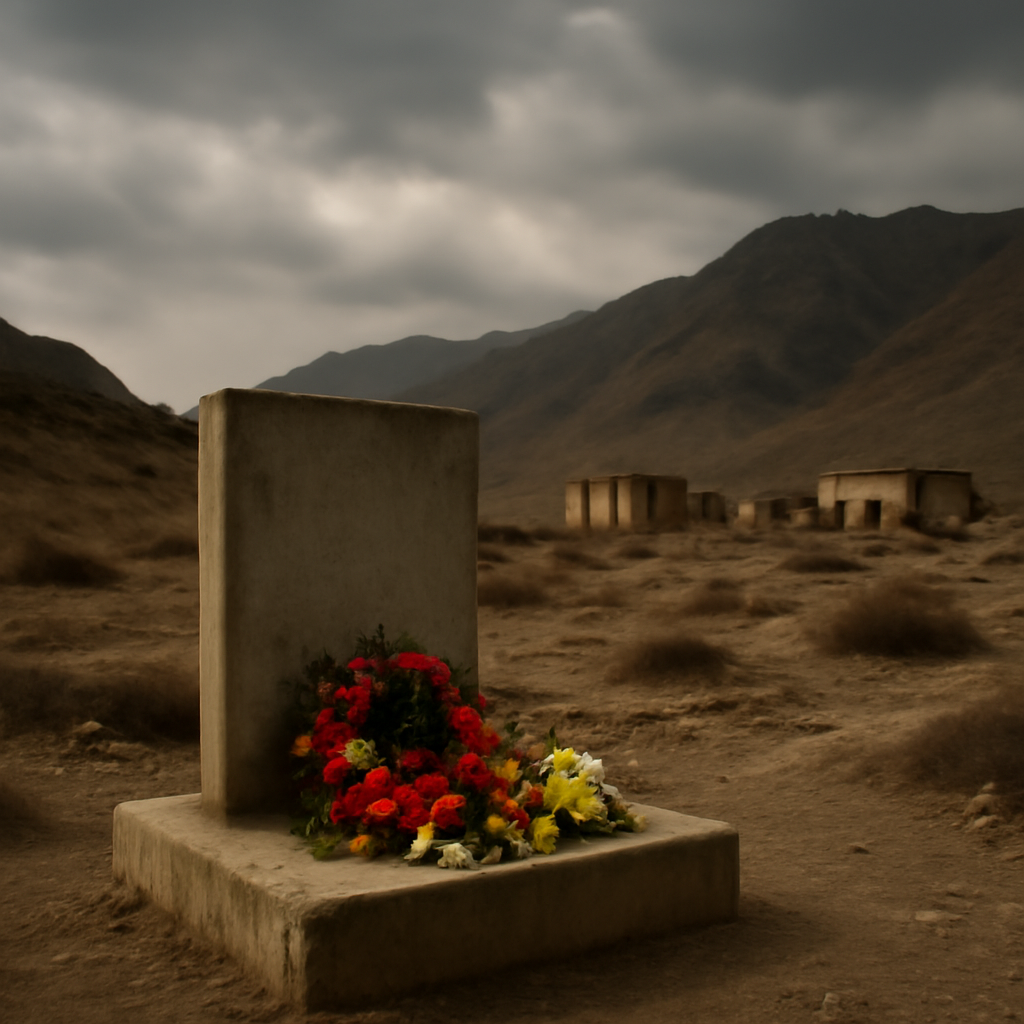
“Balochistan had suffered 1,147 terrorist attacks, and 2,394 deaths (424 civilians, 736 security personnel, and 1,233 insurgents or terrorists, plus one death that was not categorized).”
Balochistan: the new epicenter in 2026
For the first time in recent years, the province of Balochistan has overtaken Khyber Pakhtunkhwa (KP) as Pakistan’s most violent region. According to the South Asia Terrorism Portal’s open-source data cited in the original report, by October 19, 2026 Balochistan had recorded 1,147 terrorist attacks and 2,394 deaths, including significant tolls among civilians and security personnel. Those raw figures frame a security problem that the author describes as “disturbing and complex,” not reducible to simple explanations or single causes.
Khyber Pakhtunkhwa: emergency rule, deeper roots
Khyber Pakhtunkhwa — long regarded as Pakistan’s terrorism hotspot — has seen conditions worsen in 12 of its 36 districts, prompting the imposition of emergency and governor’s rule. The report emphasizes that contemporary terrorism in KP predates the Pakistan Tehreek-e-Insaf’s provincial governments and can be traced back to the May 1994 Malakand uprising led by Sufi Muhammad’s Tehreek-e-Nifaz-e-Shariat-e-Muhammadi. The author argues that terrorism in KP has persisted “despite, and not because of, the PTI’s provincial regime,” and warns that politicizing internal security has compounded an already difficult situation.

This site is the portfolio.
OSINTSights runs on Cloudflare Workers, D1, R2, and Vectorize, with an AI pipeline on Hetzner ARM. Nubivance designed, built, and operates it. We do the same for clients.
See what we buildTTP and IMP: cross-border networks and evolving tactics
Two militant networks named in the report — Tehreek-e-Taliban Pakistan (TTP) and Ittehad-ul-Mujahideen Pakistan (IMP) — have been conducting large-scale attacks from hideouts in Afghanistan and along the Afghanistan–Pakistan border. Since the Taliban’s return to power, the report says, these networks’ organizational coherence, operational capacity, recruitment, propaganda, and fundraising strategies have all evolved. That evolution, coupled with sanctuary across the border, is presented as a key driver of renewed violence inside Pakistan.
Military successes, political deficits
The report notes Pakistan’s reliance on the military as the country’s “most developed and capable security institution.” Military operations have been credited with dismantling terrorist command-and-control nodes, infrastructure, and logistical pipelines. Yet the author cautions that without the political processes needed to convert tactical gains into lasting strategic advantages, security improvements have reversed. The absence of “constitutional and administrative reforms” and a governance deficit are listed alongside a “kinetic-heavy counterterrorism approach” and an underdeveloped non-kinetic framework — including the lack of a Preventing and Countering Violent Extremism policy — as factors that sustain the cycle of violence.
Strategic communication, non-kinetic measures, and cross-border policy
Transparent, timely, and rule-of-law–grounded strategic communication is highlighted as essential to reclaiming the narrative from violent nonstate actors. The report prescribes a two-pronged communication effort: first, explain to the public why past operations were necessary and why blaming them alone for terrorism’s recurrence is unfair; second, make clear how new operations will differ from earlier ones. The author warns against “premature victory declarations” — noting the 2015–2020 period when a decline in attacks was mistaken for elimination — and stresses that the absence of violence is not equivalent to peace.
Diplomatically and coercively, the report urges Pakistan to highlight the Taliban’s support for the TTP, IMP, and Baloch separatist groups and to impose punitive costs on Kabul for allowing Afghan soil to be used for cross‑border terrorism. It specifically recommends Pakistani air strikes in Afghanistan aimed at destroying terrorist hideouts and degrading Taliban military capabilities to force a recalculation of support for those groups.
What this means for Pakistan’s security institutions, the government, and the public
- Security institutions: Expect continued reliance on large-scale kinetic operations to “blunt the sharp edge of terrorism,” but also pressure to integrate non-kinetic measures and avoid premature victory claims that could erode public trust.
- The government and policymakers: Face a mandate to pair military action with constitutional and administrative reforms, and to develop a Preventing and Countering Violent Extremism framework that addresses ideological and socioeconomic drivers of recruitment.
- Civilians and affected communities: Will be the immediate audience for strategic communication efforts; the report underscores the need for honest, continuous updates to counter misinformation and restore state-society confidence.
The declaration of emergency in KP, the escalation of violence in Balochistan, and the transnational operations of TTP and IMP together mark what the author calls an inflection point. The choice ahead is stark but specific: marry kinetic successes with genuine political reform, non‑kinetic programming, and transparent communication — or risk short-lived respite followed by a return to chronic instability.