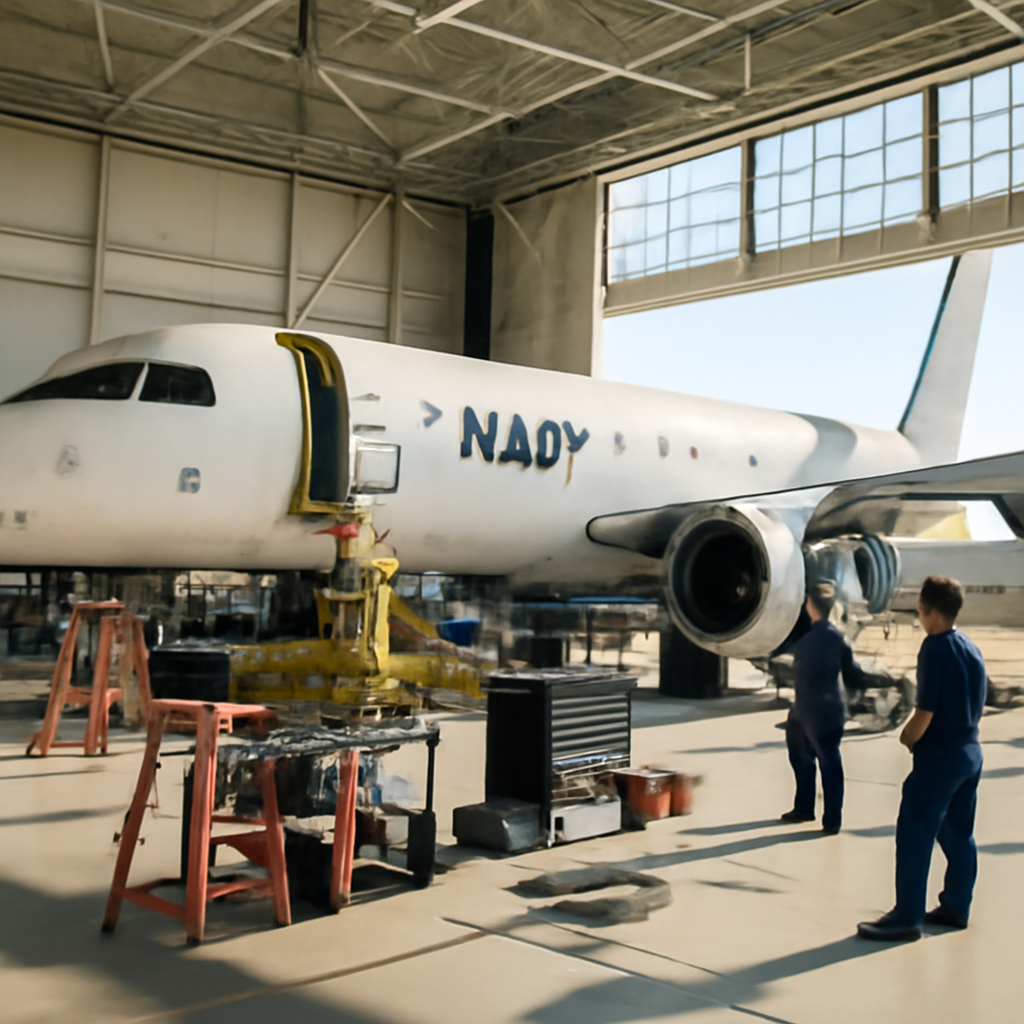
The Sea Sultan is the Pakistan Navy’s next‑generation long‑range maritime patrol aircraft (LRMPA), built from the Embraer Lineage 1000E and configured to take on roles now filled by the service’s Lockheed Martin P‑3C Orion fleet, including intelligence, surveillance and reconnaissance (ISR), anti‑submarine warfare (ASW), and anti‑ship/surface warfare (AShW/ASuW).
Platform choice and mission set: Lineage 1000E as the base for ISR, ASW, and AShW/ASuW
The Sea Sultan program uses the Embraer Lineage 1000E as its base platform and is intended to perform a range of missions previously carried out by the Pakistan Navy’s P‑3C Orions. The program explicitly targets ISR, ASW, and AShW/ASuW capabilities, converting a business‑jet airframe into a long‑range maritime patrol aircraft capable of deploying and launching munitions.
Procurement architecture: Leonardo as prime contractor, Paramount Group as integrator
The program was initiated with a 2020 tender for a single twin‑engine jet platform and a stated total requirement of 10 aircraft. Leonardo was selected as the prime contractor to supply key subsystems and to manage the program. South Africa’s Paramount Group was contracted to perform the configuration work required to adapt the Lineage 1000E airframe for maritime patrol and weapons deployment roles.

This site is the portfolio.
OSINTSights runs on Cloudflare Workers, D1, R2, and Vectorize, with an AI pipeline on Hetzner ARM. Nubivance designed, built, and operates it. We do the same for clients.
See what we buildMajor engineering work: airframe changes and munitions integration
Paramount Group’s scope included significant changes to the airframe to enable ASW and AShW/ASuW munition deployment and launch capabilities. The conversion work involves complex technical tasks to adapt a Lineage 1000E business jet into a maritime patrol platform capable of the diverse mission set the Pakistan Navy requires.
OEM exclusion: Embraer was not involved in procurement or modifications
Despite the Lineage 1000E being Embraer’s design, the Pakistan Navy did not involve Embraer in either the procurement or the configuration work. As a result, Leonardo and Paramount Group have been tasked with carrying out the modification and integration work — including the program’s complex technical challenges — without direct involvement from the original equipment manufacturer that designed and built the base airframe.
Delivery plan and current status: three earmarked, two sent, first delivery at risk
Initially the Pakistan Navy earmarked three Lineage 1000E aircraft for conversion; only two were sent to Paramount Group. The program’s timeline slated the first converted aircraft for delivery to the Pakistan Navy by the end of 2026, but that delivery is described as being at risk of delays attributed to the complex technical work required for the conversions.
What this means for the Pakistan Navy, Leonardo, Paramount Group, and Embraer
- The Pakistan Navy: faces a risk to its planned timeline for a first Sea Sultan delivery by the end of 2026, and currently has only two of the three aircraft initially earmarked for conversion forwarded to the integrator.
- Leonardo: as prime contractor and supplier of key subsystems, is managing a program in which major airframe modification and weapons‑integration tasks must proceed without the airframe OEM’s involvement.
- Paramount Group: is executing the configuration work and the significant airframe changes needed to enable munition deployment and launch capabilities, carrying out technically complex modifications on the Lineage 1000E.
- Embraer: the Lineage 1000E original equipment manufacturer, was not involved in procurement or configuration work for the Sea Sultan program.
The Sea Sultan project ties a commercial Lineage 1000E platform to a demanding military mission set and a tight delivery timetable. With only two aircraft forwarded for conversion and the first delivery to the Pakistan Navy flagged as at risk by the end of 2026, the program’s near‑term schedule and the technical challenge of integrating weapons and ASW systems onto a business‑jet airframe will determine whether the Sea Sultan can begin replacing P‑3C Orion roles on the planned cadence.
Original story: Pakistan Navy Sea Sultan LRMPA Program Update (August 2026)