“The Agosta 70 has been in continuous PN service for over 45 years” — a lifespan that makes these boats the longest-serving submarine type in the Pakistan Navy’s history and places the fleet at a strategic hinge as newer, air-independent-propulsion (AIP) submarines arrive.
Design and specifications of the Agosta 70
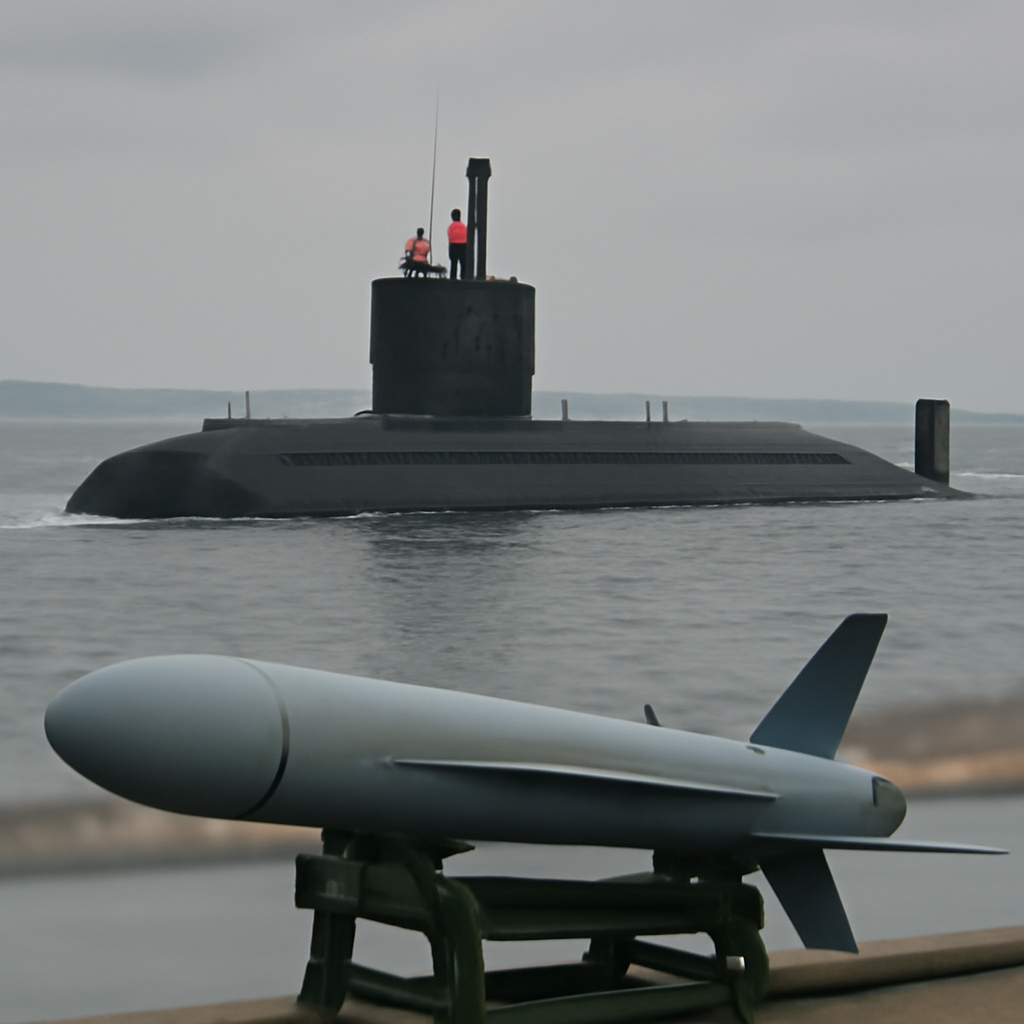
The Agosta 70 is a conventional diesel-electric submarine based on the French Agosta-class design developed by DTCN. According to Wikipedia and Global Security, the class displaces 1,510 tons surfaced and 1,760 tons submerged, measures 67 m in length with a 6 m beam and a 5.4 m draught, and carries a crew of 54 (7 officers and 47 enlisted). Surfaced speed is 12 knots and submerged speed reaches 20 knots; range is 8,500 nautical miles at 9 knots and test depth is 300 m.
Propulsion is provided by two SEMT-Pielstick 16 PA4 V 185 VG diesel engines driving two alternators and a single shaft. The Agosta 70 does not have air-independent propulsion (AIP) and therefore must snorkel routinely to recharge batteries — a capability distinction explicitly compared to the PN’s newer boats: the Khalid-class (MESMA AIP) and the Hangor-class (Stirling AIP).
Armament and sensors reflect late-1970s French fittings: four 550 mm bow torpedo tubes (a different calibre from the 533 mm standard on newer PN classes), original ECAN L5 Mod 3 and ECAN F17 Mod 2 torpedoes, and later qualification to fire the UGM-84L Harpoon Block II anti-ship missile. The sensor suite includes a Thomson CSF DRUA 33 radar, Thomson Sintra DSUV 22 sonar, DUUA 2D and DUUA 1D sonars, and a DSUV 62A towed array; these systems have not received the comprehensive upgrades being applied to the Khalid-class under the STM mid-life program.
Operational history and maintenance legacy
PNS/M Hashmat (S-135) and PNS/M Hurmat (S-136) were commissioned on 17 February 1979 and 18 February 1980 respectively. Both boats were the Pakistan Navy’s primary submarine capability through the 1980s and 1990s, bridging the interval between the Daphné-class retirements and the arrival of the first Khalid-class submarine in 1999. The Agosta 70s were the PN’s only submarines during the 1999 Kargil crisis.
Periodic overhauls and maintenance at the PN Dockyard in Karachi extended hull life and sustained operations for more than four decades. That institutional experience — hull repairs, engine overhauls, sensor maintenance — contributed directly to subsequent Pakistani submarine programs. The PN Dockyard’s Agosta 70 sustainment work fed into Agosta 90B assembly and the later Hangor transfer-of-technology program at KSEW, forming a clear industrial lineage.

This site is the portfolio.
OSINTSights runs on Cloudflare Workers, D1, R2, and Vectorize, with an AI pipeline on Hetzner ARM. Nubivance designed, built, and operates it. We do the same for clients.
See what we buildSouth African origin and the UN embargo
The two boats were built by Dubigeon-Normandie at Nantes in the late 1970s for the South African Navy as SAS Astrant and SAS Adventurous. Their sale to South Africa was blocked by United Nations Security Council Resolution 418 (November 1977), which imposed a mandatory arms embargo. France then sold both completed boats to Pakistan, which took them into service pre-built and fully equipped — a purchase that provided Pakistan with relatively modern submarines without local assembly or transfer of production technology.
Retirement, replacement, and fleet implications
As the Hangor-class (S26) program delivers new, 2,800-ton Stirling-AIP boats with modern sensors, the Agosta 70s are being retired from frontline service — although, as of May 2026, neither Hashmat nor Hurmat has been formally decommissioned. The Hangor’s AIP capability and larger displacement mark a qualitative shift: the Agosta 70s are the last non-AIP boats in the fleet and their eventual retirement will leave the PN with an entirely AIP-equipped submarine force.
Operationally, the timing matters. The KSEW-built Hangor batch is not expected to complete until the early 2030s, and the PN’s current fleet of five submarines cannot sustain a meaningful number of boats on patrol simultaneously. Retiring the Agosta 70s before enough Hangor-class boats enter service would widen that patrol-capability gap; conversely, retaining the aging Agosta 70s in reduced-readiness or training roles may be necessary until the Hangor program is complete.
What this means for PN Dockyard, KSEW, and regional analysts (CLAWS)
- PN Dockyard and KSEW: The Agosta 70 sustainment record leaves operational know-how in local yards — a capability KSEW and the Dockyard will draw on as Hangor construction and Hurmat/Hashmat maintenance overlap during transition.
- Pakistan Navy leadership and fleet planners: Balancing hull-life limits against patrol requirements will drive decisions on formal decommissioning dates and possible reduced-readiness roles for the Agosta 70s until early-2030s Hangor deliveries are available.
- Regional analysts (CLAWS): External assessments — for example, CLAWS’ June 2025 report that Hurmat “suffers from a faulty starboard engine and electronic warfare system, rendering it completely non-operational” — underscore how visible technical shortfalls shape external perceptions of PN readiness, even as the navy and dockyards manage long-term fleet transition.
The Agosta 70 story is one of technological transition and institutional continuity: two decades of frontline service gave way to decades of sustained maintenance, which in turn seeded domestic assembly and design programs. The specifics are concrete — commissioning dates in 1979–1980, French-built hulls redirected after UN Resolution 418, 550 mm torpedo tubes, diesel-electric propulsion without AIP — and they frame a practical question for the Pakistan Navy: how long to keep ageing boats afloat to meet patrol demands before handing full responsibility to a new, AIP-equipped fleet that will not be complete until the early 2030s.
Source: Quwa — Agosta 70: Pakistan Navy’s Legacy Submarine Class