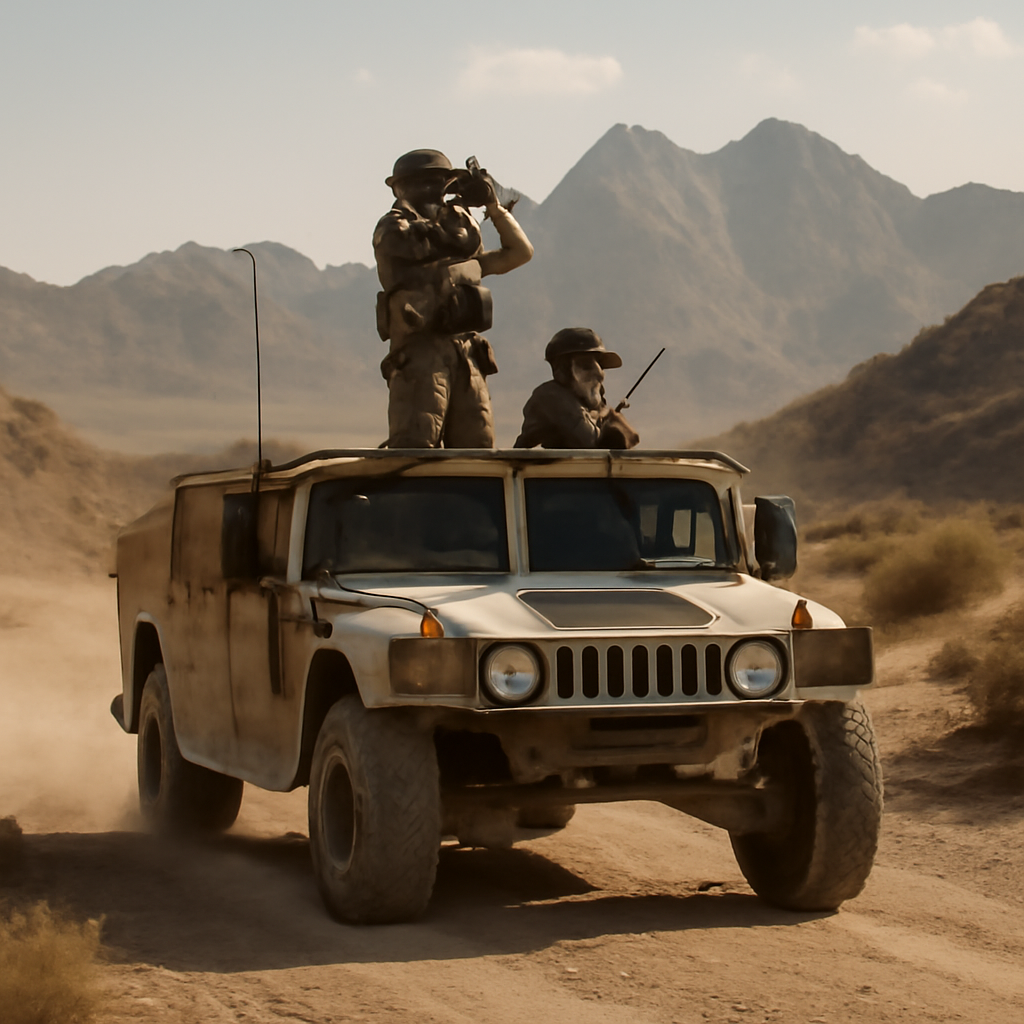
"The operation would run 'with full vigour,' the ISPR said, promising it would run 'until the last militant is eliminated.'"
Operation Shaban: a coordinated, two‑front offensive
Operation Shaban, launched in early July 2026, is a joint offensive by the Pakistan Army, Frontier Corps (FC) Balochistan and the Balochistan Police. It is being conducted on two distinct fronts: against the Tehreek-e-Taliban Pakistan (TTP) in the Pashtun-majority north around Ziarat, and against the Baloch Liberation Army (BLA) in the Baloch-majority south around Lasbela and Khuzdar. State media and Pakistani security sources have provided the sequence and claims summarized here.
Week one: the July 5–11 sequence of attacks and operations
The current sequence began on 5 July 2026 near Quetta, when Voicepk reported a TTP strike at Hanna Urak — one of two attacks the group claimed as the violence started. On 6 July, in Ziarat district, TTP fighters reportedly mounted a multi-directional assault on a police checkpost guarding the Mangi Dam project; the Express Tribune reported nine officers killed, including two station house officers, and said 18 surviving personnel were abducted.
Security forces responded with clearance operations. Pakistan Observer reported 26 militants killed during 6–7 July operations in mountainous hideouts around Ziarat. The fighting spread south on 8 July when Pakistan’s military said the BLA ambushed an army convoy in the Bela‑Winder area of Lasbela, killing 11 soldiers — the deadliest single strike in the sequence.
At a Rawalpindi press conference on 8 July, the director general of Inter-Services Public Relations (ISPR), Lieutenant General Ahmed Sharif Chaudhry, said the 18 police abducted at Mangi Dam had all been killed and that 54 militants had died in operations over three days. On 9 July an attack on a police station in the Zehri area of Khuzdar was reported repelled; Daily Pakistan reported eight killed in the initial exchange, and Pakistan Observer reported five to six more killed in follow-up helicopter operations.
By 10 July the Express Tribune reported the Operation Shaban toll at 43, while provincial and national outlets offered larger cumulative counts for the period beginning 5 July — ranging from 75 in Balochistan Chief Minister Sarfraz Bugti’s account to 79 reported by Geo News.
11 July was described as the heaviest day so far. Security sources described three separate operations plus a distinct intelligence-based operation (IBO). Early on the 11th, nine militants were reported killed, taking the Operation Shaban total to 52 and the count since 5 July to 88, according to security sources. State-run Pakistan TV said the Army, FC Balochistan and Police were intensifying coordinated air and ground operations. Aaj English TV reported five more militants killed in a second action that day. At 17:45, ISPR issued a timestamped update reporting seven more killed and putting the overall total since 5 July at 102, and characterized the dead as foreign nationals.

Audit-ready is a season. It shouldn't be.
Evidence in spreadsheets, controls drifting between audits, frameworks multiplying on flat headcount. Nubivance runs continuous compliance on Rapid7 Cyber GRC - SOC 2, HIPAA, ISO 27001, PCI, CMMC.
End the scrambleCasualty tallies and divergent reporting
Across the week the reported totals diverged. At different points outlets and officials reported Operation Shaban tallies of 39, 43 and then larger cumulative counts of 75–102 for the period beginning 5 July. Individual actors cited in those figures include Express Tribune, Pakistan Observer, Daily Pakistan, Aaj English TV, Geo News, state-run Pakistan TV and ISPR, as well as Balochistan Chief Minister Sarfraz Bugti. The ISPR figure that reached 102 on 11 July was presented in a timestamped update and accompanied by the statement that the operation would continue.
Tactics and assets: air strikes, helicopters, ground clearance and IBOs
Multiple outlets reported a combination of air and ground tactics. Aaj English TV cited helicopters and Pakistan Air Force assets striking hideouts in remote mountainous terrain while ground troops conducted search-and-clear operations. Daily Ausaf described targets struck through air and ground operations in difficult mountainous areas and along remote routes. Radio Pakistan reported a separate intelligence-based operation near an N-25 crossing that killed two militants and recovered weapons, hand grenades, a motorcycle, mobile phones and flags; that action was attributed by the state to Baloch militants rather than the TTP.
How the Pakistan Army, Balochistan leadership, and the militant groups are positioned
- Pakistan Army, FC Balochistan and Balochistan Police: The three security arms are operating jointly and publicly committing to sustained air-and-ground clearance operations; ISPR’s statement framed the campaign as continuing "with full vigour" and without an end date.
- Balochistan provincial leadership: The Balochistan Chief Minister Sarfraz Bugti offered a higher cumulative figure for the period beginning 5 July, reflecting a provincial tally distinct from some national outlets and ISPR updates.
- Militant groups (TTP and BLA): The sequence shows distinct, geographically separate activity — the TTP in the Ziarat area and the BLA in Lasbela and Khuzdar — including ambushes and attacks on security checkpoints that triggered the current offensive. State reporting described some detained or killed militants as foreign nationals and attributed particular incidents to specific groups.
Operation Shaban has produced a rapid succession of clashes, competing casualty tallies and an explicit commitment from ISPR to continue until militants are eliminated. The operation’s immediate arc — concentrated attacks and swift, multi-domain clearance responses across both northern and southern Balochistan — leaves a clear short-term rhythm but an open question about how long the campaign will be sustained and how the divergent tallies will be reconciled.



