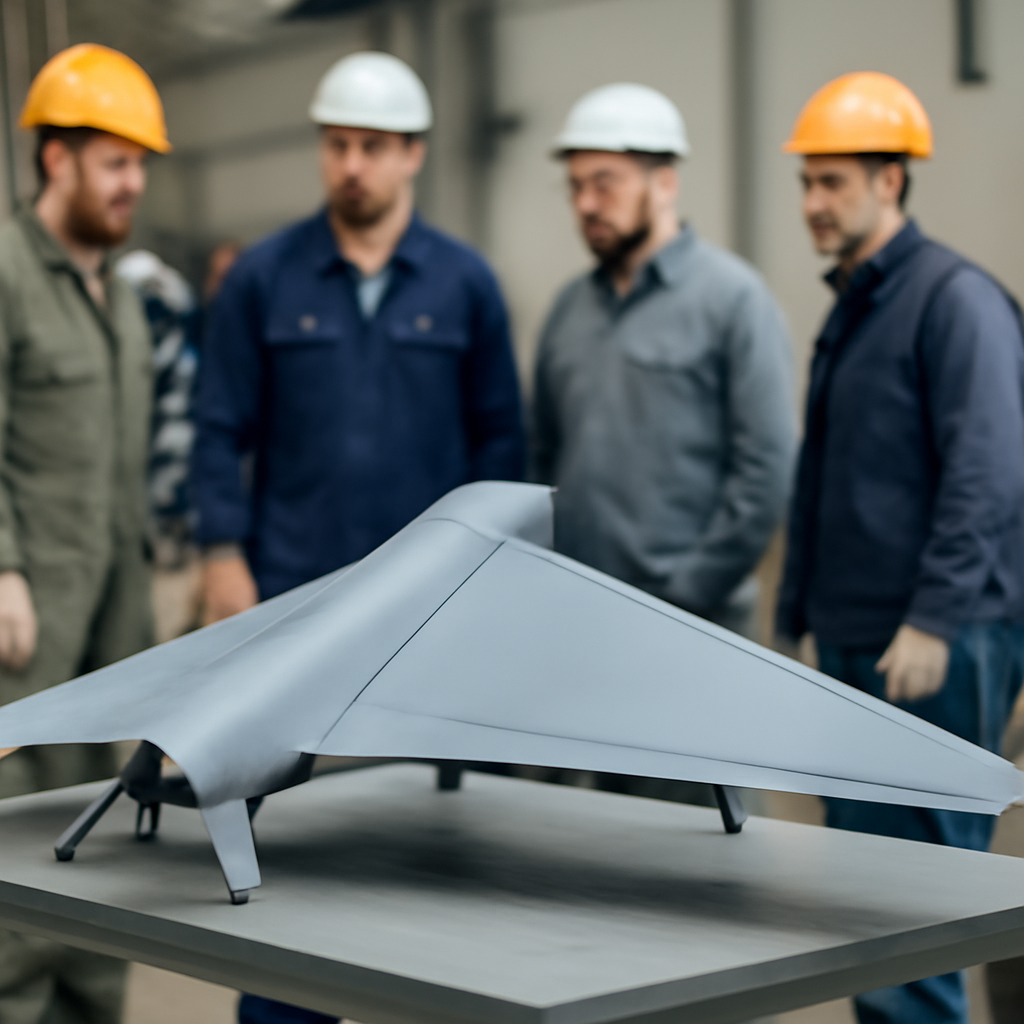
“On 29 August, the Pakistan Army Chief of Army Staff (COAS) and Chief of Defence Forces (CDF), Field Marshal Asim Munir, visited Pakistan Ordnance Factories (POF).” During that visit he was briefed on a tailless delta loitering munition — a Shahed-136‑style design — joining other projects that together sketch a deliberate move toward a scalable, long‑range strike posture.
POF’s delta wing and the HIT D-248: two candidates for long reach
POF’s new tailless delta loitering munition was presented alongside a range of other programs. It would be at least the second Shahed‑style munition under development in Pakistan; Heavy Industries Taxila’s (HIT) D-248 is already public and carries a stated range of 2,200–3,000 km. The actual ranges of these new systems remain unvalidated, and the source describes some figures as marketing claims rather than confirmed performance. Still, the simultaneous emergence of POF’s design and HIT’s D-248 signals an Army interest in munitions with very long nominal ranges.
Piston-powered OWAs, jet-powered OWAs, and the Army’s “low‑cost, long‑range” layer
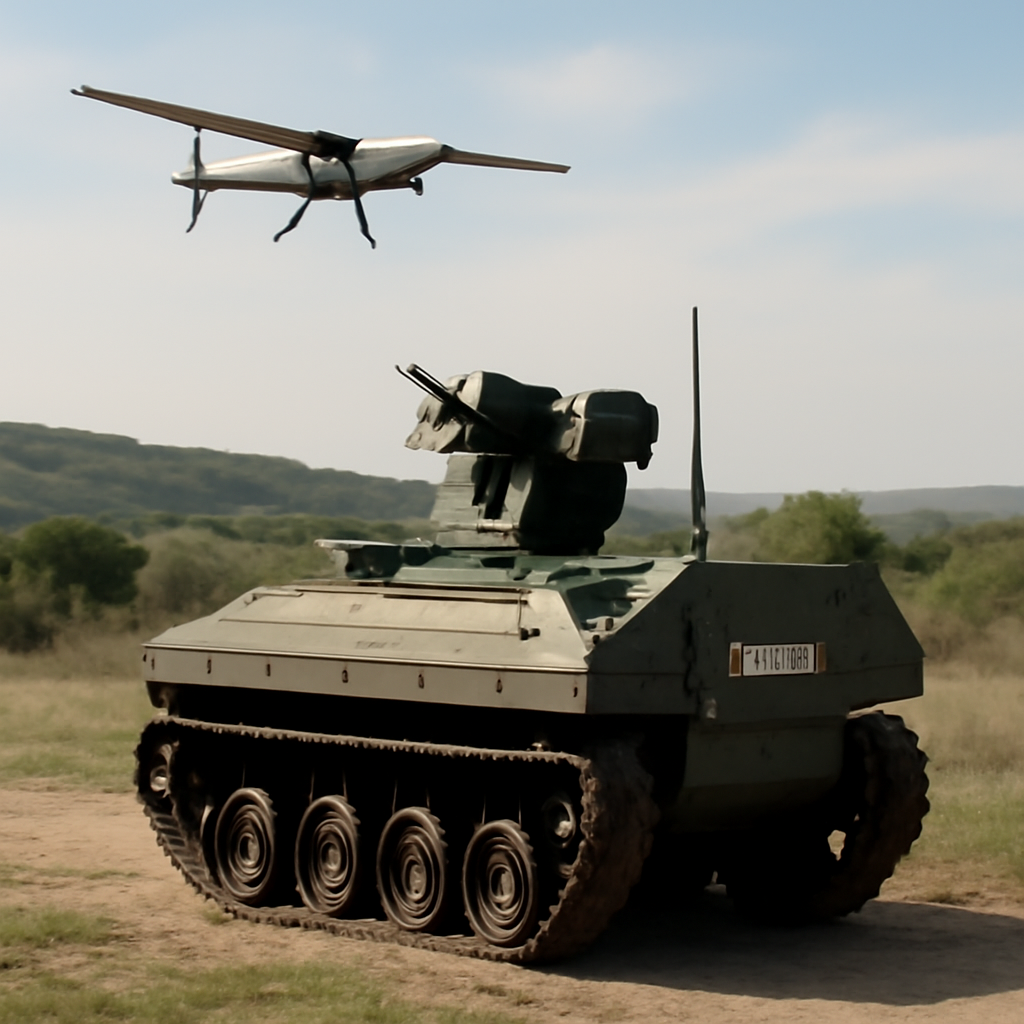
The Army’s “reach capacity” appears to have at least two technical tracks. One is piston‑powered one‑way attack (OWA) drones: low‑cost, propeller‑driven designs intended for mass salvos to exhaust or saturate air defences. The other is jet‑powered OWAs — essentially low‑cost cruise missiles — that trade economy for speed and altitude to penetrate defences or open gaps for piston-powered hordes to exploit. Private firms and SOEs are active on both tracks: NaqCoDE Technologies is developing the NASR series for piston OWAs; Woot‑Tech has been testing two jet OWA designs, the Nimbus 2K and the HiMark‑25 (TJ); NESCOM is working on a jet-powered design called “Delta Baaz.” Global Industrial & Defence Solutions’ Sarfarosh is described as matching the Geran‑5 concept, with a stated range of 750–1,000 km.

This site is the portfolio.
OSINTSights runs on Cloudflare Workers, D1, R2, and Vectorize, with an AI pipeline on Hetzner ARM. Nubivance designed, built, and operates it. We do the same for clients.
See what we buildIndustrial scale, DIPRA, and the production bottleneck
Quwa frames the requirement in quantitative terms: if the Army truly seeks the mass‑salvo approach used by Russia and Ukraine, procurement could run into the tens of thousands of units. No single state‑owned enterprise (SOE) could reasonably meet that scale alone. The newly formed Defence Industrial Production and Regulatory Authority (DIPRA) is presented as a mechanism to open production to private firms and channel work that does not require SOEs. A private Pakistani company is reportedly in discussions with Ukraine’s Fire Point to co‑market and manufacture the FP‑1 for this requirement. The commercial pitch is explicit: if the Army commits to firm orders and permits re‑exports, private industry would absorb the cost of factory build‑out so the Army pays only for produced drones. Quwa warns — and the reporting echoes — that industrial capacity, not design ideas or advertised ranges, will determine whether advertised long‑range deterrent effects are credible.
ARFC, the Fatah family, NESCOM, and how the strike force could be organized
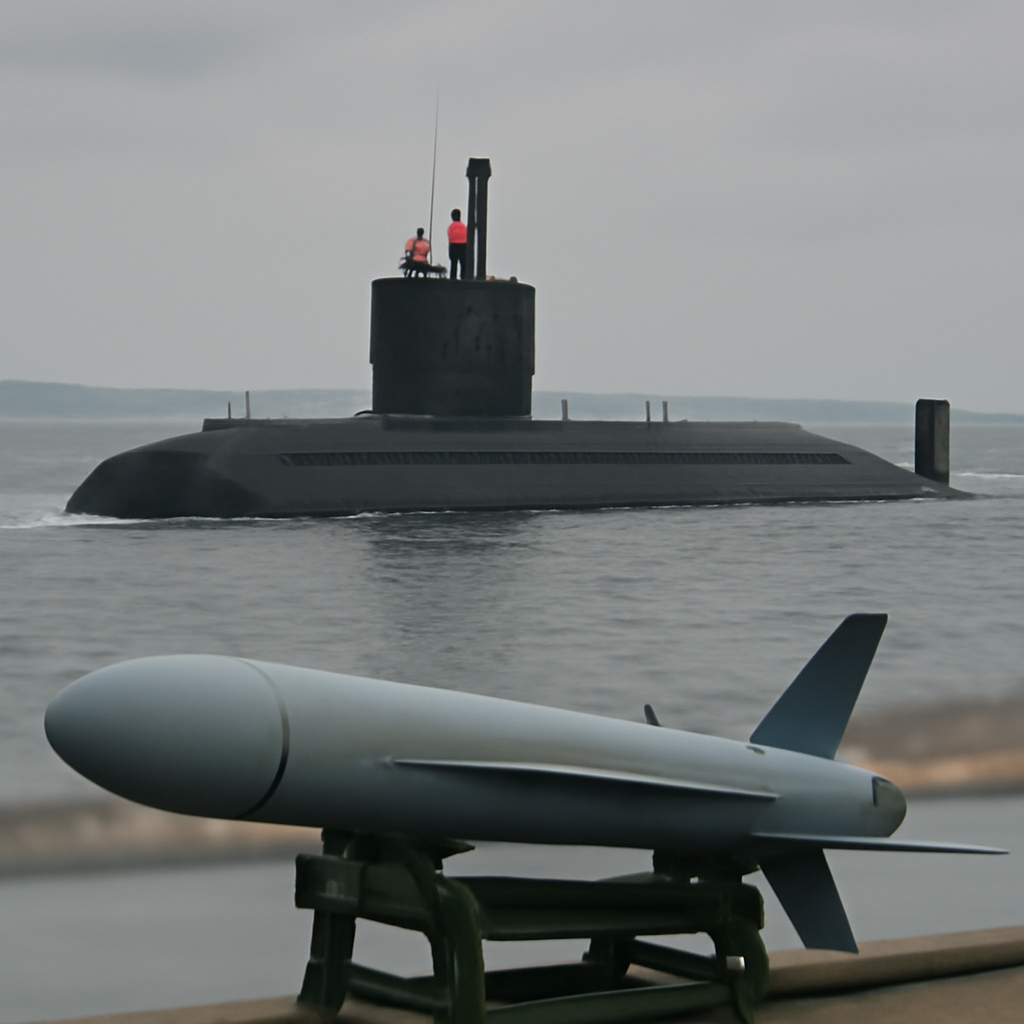
The Army Rocket Force Command (ARFC) already manages a Fatah family of heavier strike weapons: Fatah‑1 guided multiple‑launch rocket system (GMLRS), Fatah‑2 tactical ballistic missile/surface‑to‑surface missile (TBM/SSM), Fatah‑3 supersonic‑cruising missile (SSCM), and Fatah‑4 subsonic land‑attack cruise missile (LACM). The Fatah‑2 platform also underpins Pakistan Navy’s P282 anti‑ship ballistic missile (ASBM) and the Strategic Plans Division’s New Abdali Weapon System. NESCOM could continue to evolve the Fatah family into longer‑range TBMs, potentially in the 1,000–2,000 km band. The reporting suggests a split by role and range: very long‑range strategic OWAs (100+ km and above) would likely be managed by ARFC because of their strategic remit, while shorter‑range OWAs could be fielded at brigade or corps level for tactical effects.
What this means for the Pakistan Army, the Pakistan Air Force, and private manufacturers
- Pakistan Army: The service is moving to create a layered, self‑contained strike capability that combines intelligence (satellites), targeting, and massed munitions. The Army is already commissioning an Integrated Battlefield Management System (IBFMS) to tie PAKFIRE (artillery) and Rehbar (tanks) into broader targeting chains, and is procuring guided shells, retrofit kits, guided mortar systems and studying guided stand‑off weapons for Z‑10ME helicopters.
- Pakistan Air Force (PAF): The Army’s drive to shoulder more conventional strike could shift historical burdens; Quwa notes the targeting inputs, satellite passes, and BDA cycles that inform strike operations originate outside the Army, raising interoperability questions about where long‑range OWA inventories should be stewarded.
- Private manufacturers: DIPRA and the promise of firm orders plus export permissions create a commercial pathway for private firms to invest in production capacity. That opportunity carries risk: manufacturers would need orders large enough to justify factory build‑out and any technology transfers or indigenization required.
Across designs — POF’s delta wing, HIT’s D‑248, and private jet‑powered prototypes — the narrative is less about any single weapon than about volume. The decisive questions are industrial and organizational: will Pakistan scale production (and export rules) to match advertised ranges, and which command will ultimately own the resulting inventory? DIPRA’s early decisions and whether the ARFC, a PAF‑led drone force, or a hybrid command receives stewardship will reveal more about Pakistan’s emerging strike doctrine than any single range figure touted today.