Overland AI’s Groundbreaking Combat Vehicle: A New Era of Drone Integration on the Battlefield
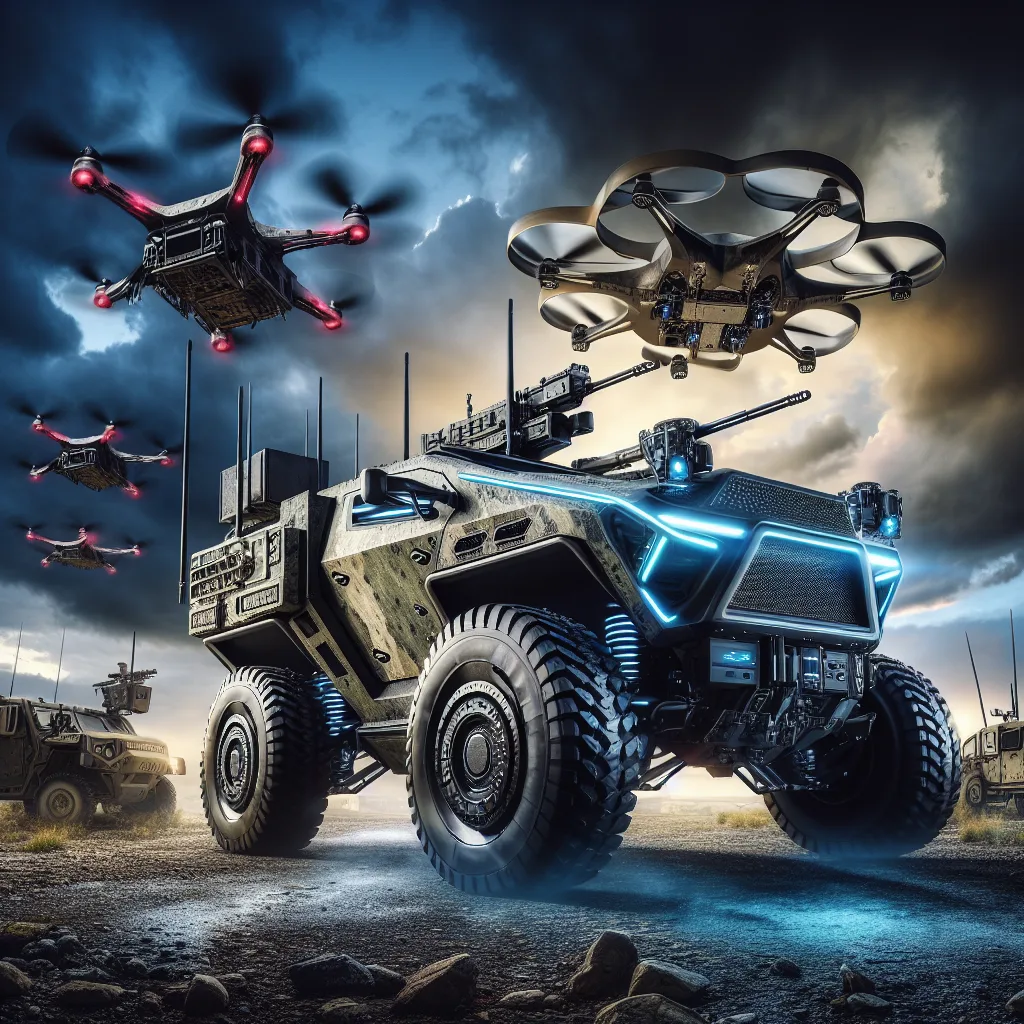
In a significant leap forward for military technology, Overland AI has unveiled a fully autonomous ground vehicle system that seamlessly integrates drone capabilities. This innovation was showcased during the U.S. Army’s Project Convergence Capstone 5 (PC-C5), an event designed to test and evaluate emerging battlefield technologies. As the military landscape evolves, the implications of such advancements raise critical questions about the future of warfare and the role of automation in combat scenarios.
The backdrop to this development is a rapidly changing global security environment, where traditional combat strategies are increasingly being supplemented—or even replaced—by advanced technologies. The integration of drones into ground combat vehicles represents a paradigm shift, allowing for enhanced reconnaissance, targeting, and operational efficiency. This evolution is not merely a technological upgrade; it reflects a broader trend in military strategy that prioritizes speed, precision, and adaptability.
At the heart of this innovation is Overland AI’s collaboration with the Sandhills Project and the 20th Engineer Brigade of the XVIII Airborne Corps. The partnership underscores the military’s commitment to exploring new technologies that can provide a tactical edge. The vehicle, developed in conjunction with General Dynamics Land Systems, is designed to operate autonomously while coordinating with aerial drones, thereby expanding the operational capabilities of ground forces.
Currently, the U.S. Army is focused on integrating artificial intelligence and autonomous systems into its operations, as evidenced by the ongoing Project Convergence initiative. This program aims to enhance joint all-domain command and control, allowing for real-time data sharing and decision-making across various military branches. The successful demonstration of Overland AI’s combat vehicle at PC-C5 is a testament to the Army’s commitment to innovation and modernization.
Why does this matter? The implications of integrating drone technology into ground combat vehicles extend beyond mere operational efficiency. They touch on critical issues of military ethics, the future of human involvement in warfare, and the potential for increased effectiveness in combat scenarios. As these technologies become more prevalent, they will inevitably reshape the battlefield, raising questions about accountability and the rules of engagement in an era where machines can make life-and-death decisions.
Experts in military technology and strategy emphasize the importance of understanding the broader context of these advancements. According to Dr. John McCarthy, a defense analyst at the Center for Strategic and International Studies, “The integration of drones into ground vehicles is not just about enhancing capabilities; it’s about redefining how we think about warfare itself. The potential for autonomous systems to operate in complex environments presents both opportunities and challenges that must be carefully navigated.”
Looking ahead, the trajectory of military technology suggests that we will see increased investment in autonomous systems and drone integration. As nations around the world seek to modernize their armed forces, the competition for technological superiority will intensify. Observers should watch for shifts in defense budgets, policy discussions surrounding the ethical implications of autonomous warfare, and the potential for international arms control agreements that address these emerging technologies.
In conclusion, Overland AI’s demonstration of a drone-integrated combat vehicle marks a pivotal moment in military innovation. As we stand on the brink of a new era in warfare, one must ponder: how will these advancements shape not only the battlefield but also the very nature of conflict itself? The answers may redefine our understanding of security and the human experience in war.