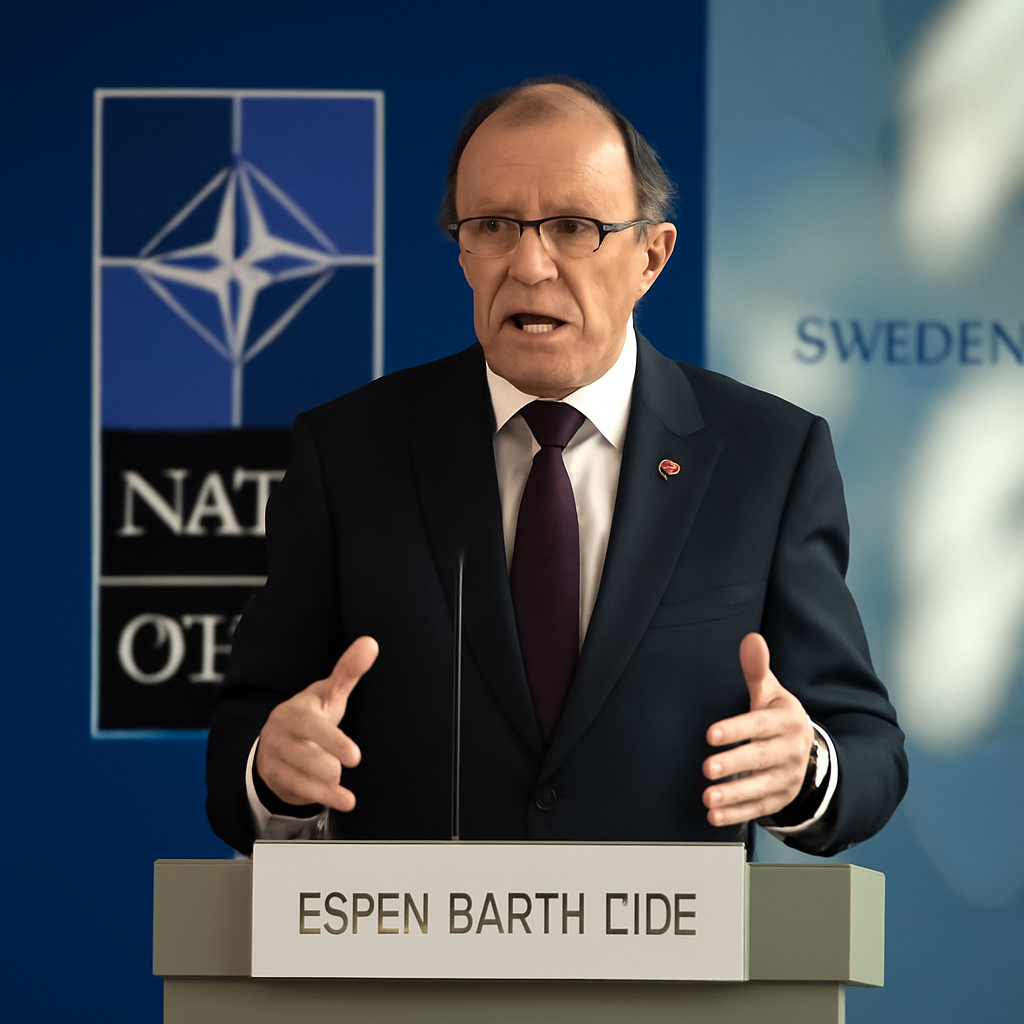
"These weapons... have the capacity to destroy almost all American cities," Norway's foreign minister Espen Barth Eide said during doorstep remarks at a NATO meeting in Sweden, underlining the stakes he sees in the alliance's cohesion.
Espen Barth Eide at the NATO Ministers of Foreign Affairs in Sweden
Speaking at the NATO Ministers of Foreign Affairs convention taking place in Sweden, Eide framed his comments around a simple political and strategic imperative: a strong, unified partnership within the alliance is necessary to prevent the worst outcomes he described. He emphasized that NATO is not only about Europe's security, but also benefits the United States—telling Americans that "NATO is also good for them," and urging transatlantic unity.
Kola Peninsula and Russia’s Northern Fleet
Eide pointed to the Kola Peninsula as the concrete geographic source of the threat he described. He noted that the peninsula, which directly borders Norway, is where Russia keeps most of its nuclear capabilities. The Kola Peninsula is identified in his remarks as the primary base for Moscow’s Northern Fleet, which the foreign minister said comprises a variety of submarines, including nuclear-powered ballistic-missile submarines that serve as a nuclear deterrent.

This site is the portfolio.
OSINTSights runs on Cloudflare Workers, D1, R2, and Vectorize, with an AI pipeline on Hetzner ARM. Nubivance designed, built, and operates it. We do the same for clients.
See what we buildU.S. posture and the planned deployment to Poland
The minister's remarks came less than a day after President Donald Trump rebuked plans to reportedly scrap a planned deployment to Poland. Eide used that timing to press the point that European contributions to defense are important—but so is reminding "our good friends on the other side of the Atlantic" of the mutual benefits of NATO. His comments linked alliance cohesion directly to the deterrence value he described.
Ukraine as "a security provider" and a leader in drone warfare
Eide also cast Ukraine in an active role within the security architecture. He said the battlefield situation in Ukraine has "somewhat improved for Kyiv" and characterized Russia as "in a bad place." He argued that Ukraine has become "a security provider" and called it "the world leader in drone and anti-drone warfare as well as other emerging technologies," presenting Kyiv as both a battlefield actor and a contributor to capability development within the security environment.
What this means for NATO leaders, the president, and Ukraine
- NATO leaders: The Norwegian foreign minister’s remarks are a call for unity at the ministers’ convention—an appeal to preserve collective deterrence by keeping strategic basing and capabilities under a coordinated alliance posture.
- The president (as referenced): The proximity of Eide's remarks to President Donald Trump's rebuke over a reported change to a Poland deployment frames transatlantic political decisions as immediate variables that allies view as consequential for deterrence.
- Ukraine: Eide’s description positions Ukraine as both beneficiary and contributor—its battlefield performance and technological developments in drones and counter-drone systems are portrayed as elements that help shape regional security dynamics.
Eide’s intervention at the Sweden meeting laid out a stark, geographically anchored argument: nuclear-capable forces based on the Kola Peninsula and organized under Russia’s Northern Fleet are, in his view, a transatlantic concern that demands alliance cohesion. Whether NATO ministers translate that framing into sustained political and military choices at the convention remains the immediate test of the appeal he made.