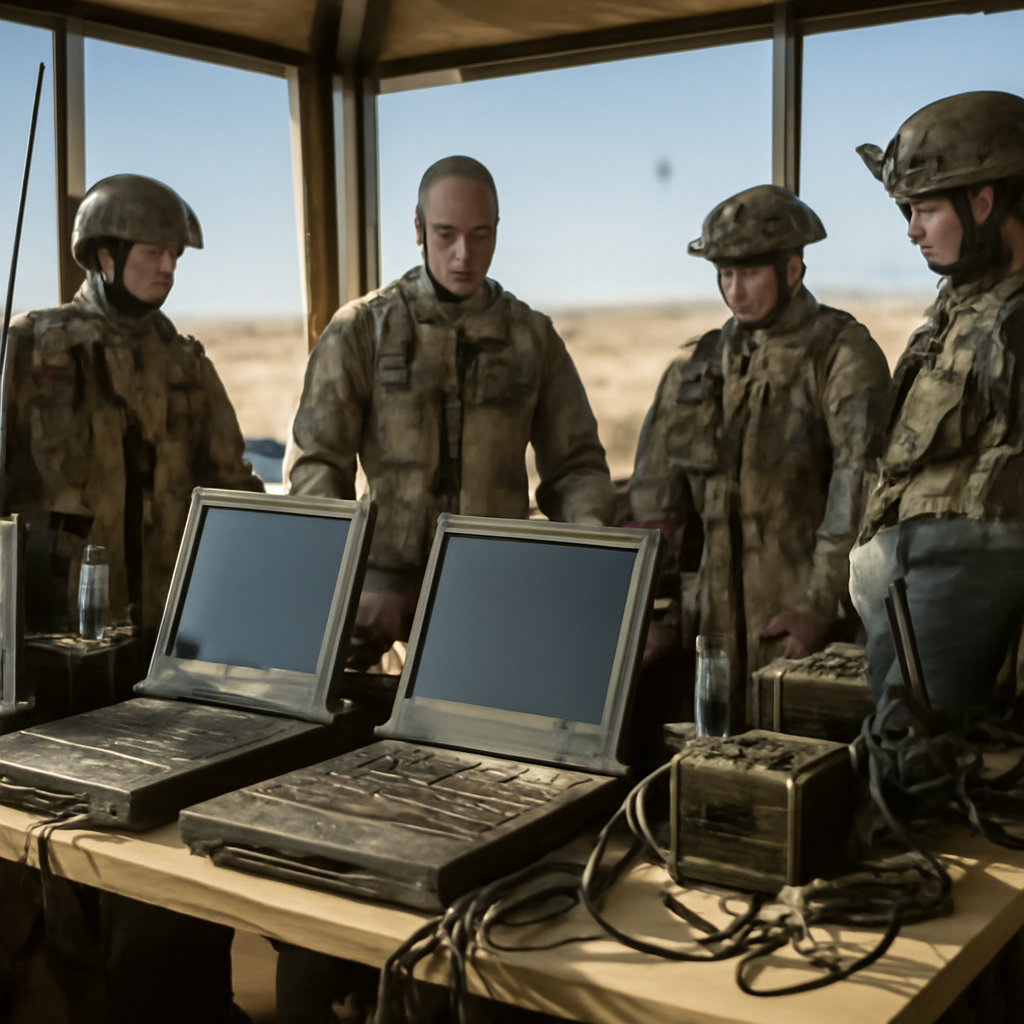
“Removing the order will allow us to better support our customers’ needs for critical munitions and accelerate support for key missile programs as a merchant supplier of SRMs,” Northrop Grumman said in a statement announcing its petition to the Federal Trade Commission.
Northrop’s April 2 petition: undoing a 2018 firewall
On April 2, Northrop Grumman petitioned the Federal Trade Commission to set aside the 2018 consent order that accompanied its acquisition of Orbital ATK. The consent order requires Northrop to supply solid rocket motors (SRMs) to competitors on a non‑discriminatory basis and to firewall its SRM business from its other operations. The FTC imposed the remedy in 2018 because Northrop was a prime contractor and Orbital ATK was one of only two American makers of SRMs.
Northrop argues the order now imposes an administrative burden and is an obstacle to meeting the Pentagon’s accelerating demand for SRMs. The petition states, “Not only is the Order no longer necessary to preserve competition, keeping it in place for the next twelve years would run counter to DoW priorities,” and contends that market changes have eliminated any incentive for Northrop to discriminate in SRM provision.
Lockheed Martin’s May 4 filing: fears of restricted access
Lockheed Martin filed a formal comment on May 4 opposing Northrop’s petition. The company warned that removing the consent order would “significantly limit affordable access to SRMs,” potentially jeopardizing readiness and weakening the defense industrial base. Lockheed said the deletion of the firewall could allow Northrop to vertically integrate SRM production with any munitions it designs, “potentially prioritizing SRM supplies for Northrop over competitors.”
Lockheed also argued market fundamentals “have not materially changed,” noting that new entrants and small suppliers cited by Northrop are not yet producing large SRMs at scale. The company pointed out that Anduril, X‑Bow and Ursa Major have received development or prototyping funds from the Defense Department but not full‑scale production contracts, while firms such as Firehawk Aerospace and Prometheus Energetics have only recently broken ground on production facilities.
Lockheed added that Northrop remains the sole supplier in some cases for large SRMs required by strategic missiles and hypersonic weapons, and cited specific programs relying on those motors, including Lockheed’s Conventional Prompt Strike and the Trident D5.

The cyber insurance questionnaire just landed. Now what?
SOC 2, HIPAA, insurance renewals - someone has to own security strategy. Nubivance provides fractional CISO leadership without the full-time salary.
Get a security leadThe Pentagon’s posture and the FTC’s potential leverage
A Pentagon official declined to say whether the department supports Northrop’s petition but told Breaking Defense: “The Department is aware of Northrop Grumman’s petition to reopen and set aside its 2018 Consent Order, which was a condition of its acquisition of Orbital ATK, Inc. The Department of War will work with [the] FTC as appropriate during their review.” The FTC’s eventual decision could affect the department’s efforts to ramp up missile production and rebuild munitions stockpiles, which in turn depends on scaling SRM manufacture.
How Northrop, Lockheed, and the Pentagon are responding
- Northrop Grumman: Framing the petition as a way to reduce administrative constraints and speed SRM deliveries, Northrop emphasizes its role as a merchant supplier and says it “depends more on other primes for its business than other primes depend on Northrop Grumman.”
- Lockheed Martin: Filing a formal opposition, Lockheed stresses production realities for large SRMs and warns that dropping the order would risk affordable access and enable discriminatory prioritization of SRM supply.
- The Department of Defense: Remaining noncommittal publicly, the department signaled it will “work with [the] FTC as appropriate” while the commission reviews the petition, leaving the agency in a consultative role rather than a declarative one.
Industry voices and recent transaction history
Analysts and advocates are split. Roman Schweizer of TD Cowen said it is not surprising Northrop sought to set aside the order given market growth, noting other firms do not operate under similar constraints and suggesting Northrop may wish to offer fully integrated systems. Rebecca Grant of the Lexington Institute argued the FTC should remove the order, calling the solid rocket motor market “healthy and highly competitive” in 2026 and asserting multiple suppliers now serve tactical missile SRM needs—even while she acknowledged Northrop will still be sole supplier for larger SRMs.
The dispute arrives against a recent backdrop of consolidation and contested deals: Lockheed attempted to acquire Aerojet Rocketdyne in 2022 and the FTC opposed that bid; Aerojet was purchased by L3Harris in 2023, a transaction Lockheed also opposed. Politico previously reported the FTC in 2022 considered legal action against Northrop for alleged consent‑order violations.
The FTC must now weigh whether the 2018 remedy remains necessary to prevent discrimination in SRM supply or whether market entrants, prototyping funds, and new production starts have reduced that risk—while the Pentagon seeks faster, larger production runs to replenish munitions stockpiles. The agency’s ruling will determine whether Northrop may vertically integrate SRM production with future munitions designs or remain bound by the firewall intended to preserve access for competitors.