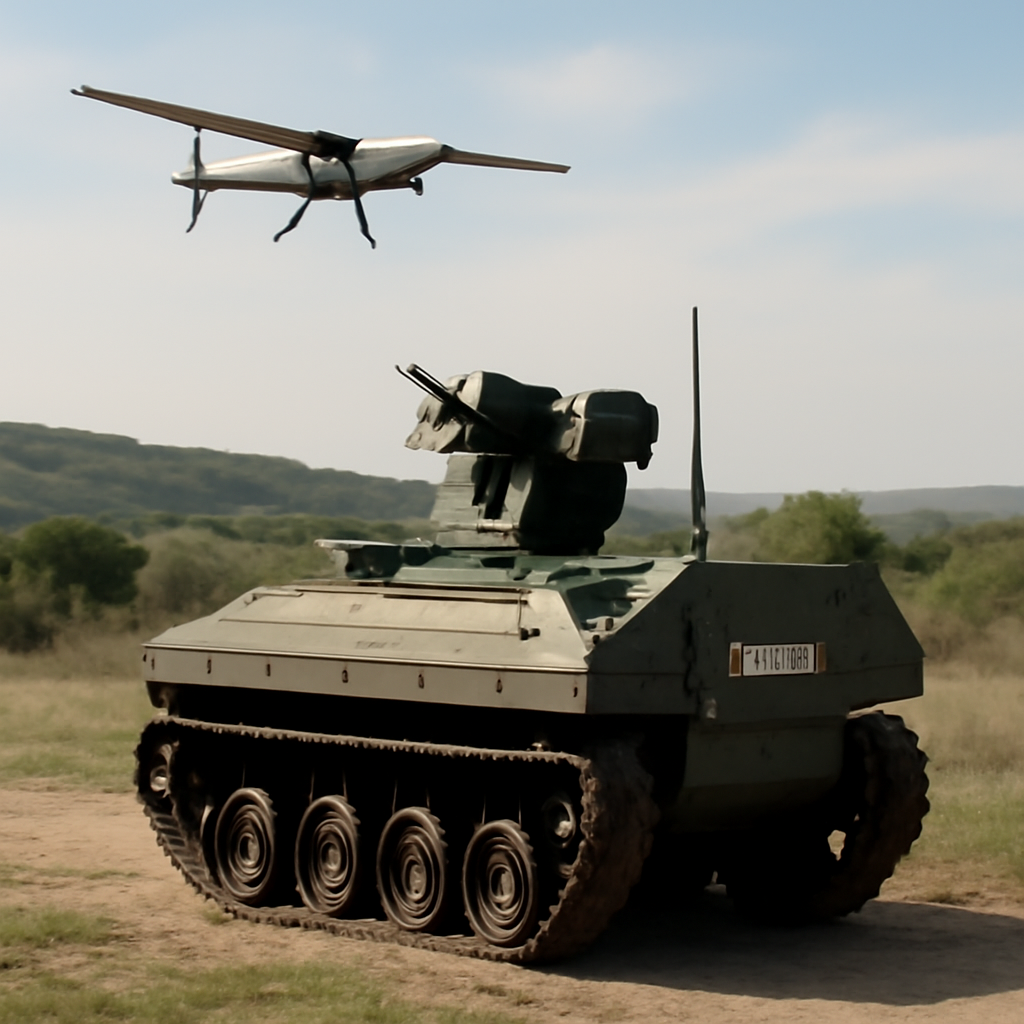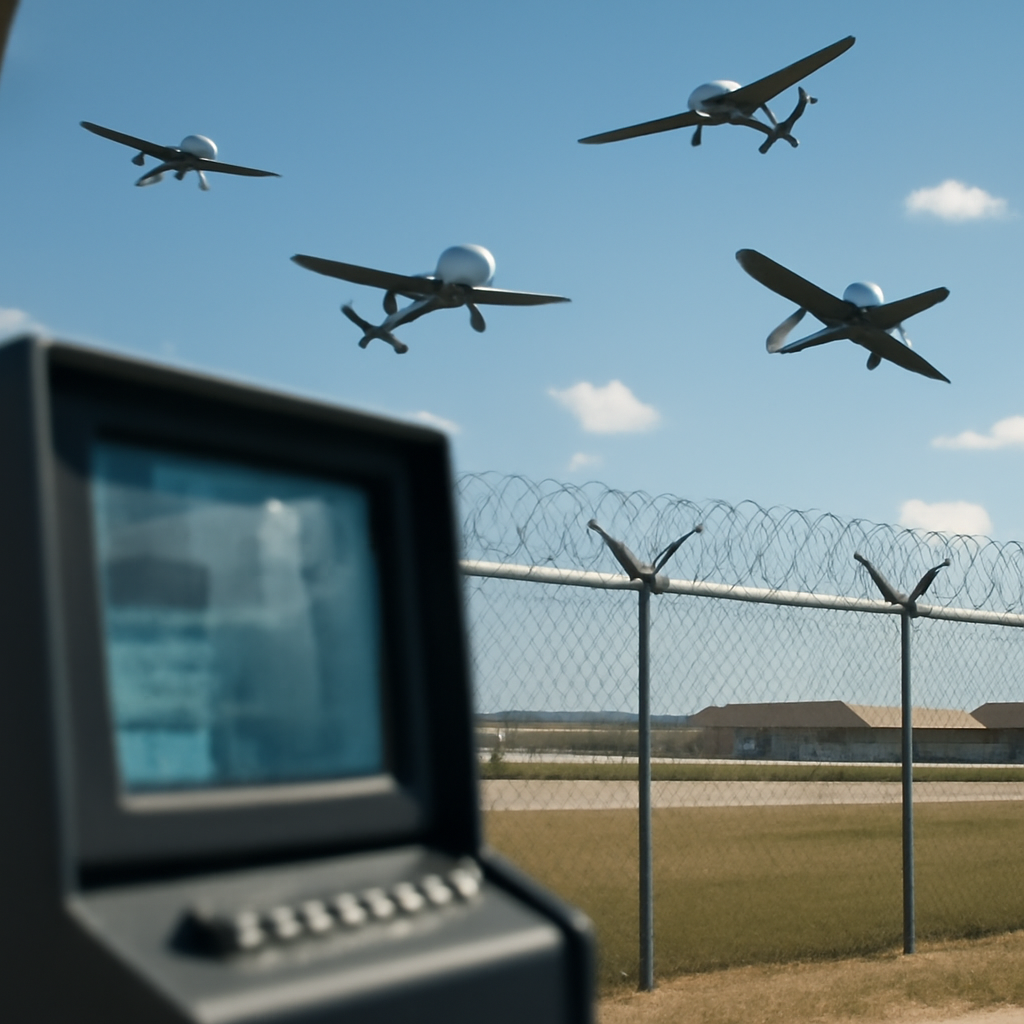
"We’ve been articulating — my predecessors had been articulating — that this threat was here, it was real, it was now, and we weren’t ready for it,” U.S. Air Force Gen. Glen VanHerck told a panel at the Space and Missile Defense Symposium in Huntsville, Alabama, describing a problem that manifested most publicly on the evening of Dec. 6, 2023, when multiple uncrewed aerial systems began flying over Langley Air Force Base.
Langley incursions began Dec. 6, 2023 — and they were not a surprise
TWZ reported that Langley Air Force Base, a site that hosts F-22 Raptors and supports NORTHCOM and NORAD missions, “first observed UAS activities the evening of December 6 [2023] and experienced multiple incursions throughout the month of December.” A base official told TWZ the number of UASs fluctuated and they “ranged in size/configuration,” and that “none of the incursions appeared to exhibit hostile intent but anything flying in our restricted airspace can pose a threat to flight safety.” The FAA was notified, TWZ reported.
Domain awareness: warnings to the Pentagon two years earlier
VanHerck, who was then the commander of NORAD and NORTHCOM and is now retired, said he had warned Defense Secretary Lloyd Austin on Dec. 16, 2021 that he “lacked the domain awareness to really do my mission.” VanHerck told the secretary that the commands lacked “access to capabilities and capacity, timely access in the homeland to do the mission,” and that the U.S. was “not set up to fight in and from our own land.” Those prior warnings framed his reaction to the Langley events: a problem long articulated but not yet solved.

This site is the portfolio.
OSINTSights runs on Cloudflare Workers, D1, R2, and Vectorize, with an AI pipeline on Hetzner ARM. Nubivance designed, built, and operates it. We do the same for clients.
See what we buildAuthority gaps: where responsibility stopped at the fence line
Beyond detection shortfalls, VanHerck described a legal and organizational gap. He said it “was not NORAD/NORTHCOM’s mission” to act on incursions at installations; that responsibility and authority for defensive actions often “stopped at the fence line at the base,” and that “immediately thereafter, it was really unclear to everybody whose responsibility and authority was it just outside the base.” Installation commanders, he said, “didn’t feel empowered” and “felt a lack of trust” about whether they would be covered legally if they shot down an aircraft that might be civilian.
Options, limitations, and recent policy shifts
VanHerck recalled that his operational options were constrained. After public pressure following the so-called Jersey Drone incidents — a prolonged series of reports beginning in November 2024 that TWZ said were largely misidentifications — there were calls to “just shoot them down.” VanHerck noted the impracticality of using high-speed missiles with explosive warheads over populated areas, saying “shooting missiles that accelerate to four times the speed of sound or more, that have exploding warheads with fragmentation devices that explode titanium rods at thousands of feet per second over Langley or New Jersey is probably not where we needed to be.”
Still, VanHerck acknowledged changes under the current Defense Secretary Pete Hegseth, who he said “has cleared up a lot of the responsibility [and] authority [issues] with some of his actions.” The military has used directed energy lasers against cartel drones along the border and is working to expand that capability, he said. He also cited the federal Safer Skies law, which gives DHS and DOJ and certain state, local and tribal agencies limited authority to mitigate drone threats domestically, and said it “really helps clarify things.”
What this means for installation commanders, DHS/DOJ, and NORAD/NORTHCOM
- Installation commanders: remain constrained by rules of engagement and legal coverage; their reluctance to act without clear authority influenced operational risk calculations during the Langley incursions.
- DHS and DOJ: now carry limited authority under the Safer Skies law to mitigate domestic drone threats, a change VanHerck called helpful in clarifying responsibilities.
- NORAD/NORTHCOM: historically lacked authority and domain awareness to operate inside the homeland boundary, though NORAD/NORTHCOM’s role in synchronizing military response has evolved under successive leadership transitions, including moves by Gen. Gregory Guillot to change authorities.
VanHerck closed his panel comments by stressing the remaining work: “We still have gaps and seams, and we need an integrated, layered approach driven by specific policy on what you must defend.” The Langley incursions, along with overflights reported at Wright-Patterson Air Force Base, Picatinny Arsenal, and other installations, showed both the operational risks of unclear authorities and the practical limits of the kinetic options once available to defense commanders. Whether new directed-energy deployments and statutory clarifications will fully close those gaps is the immediate policy and operational test left on the table.