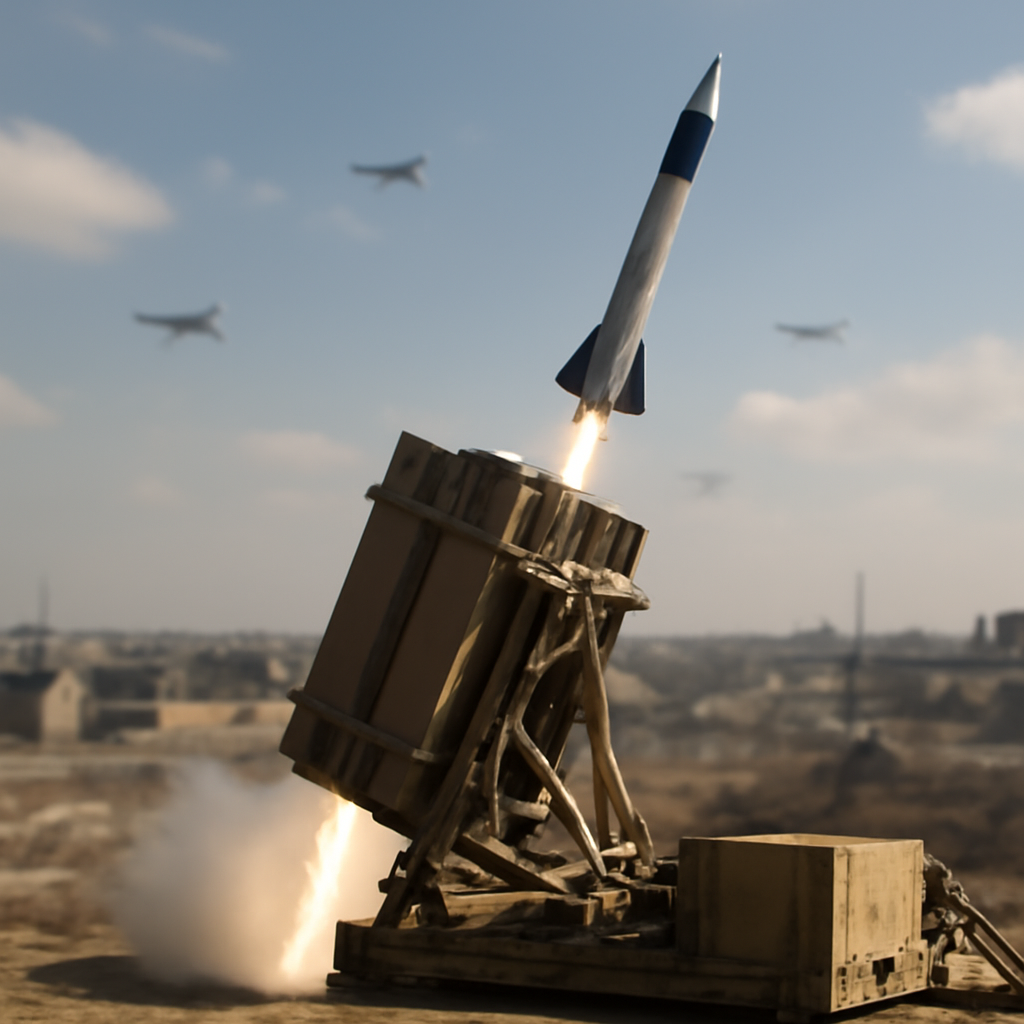
Armed for the Future: Precision Strike Missile Sets Course for Full-Scale Production
The U.S. military’s latest leap in weapons technology took shape on an arid test range in New Mexico on April 24. Lockheed Martin’s Precision Strike Missile (PrSM) program successfully cleared a rigorous round of Production Qualification Tests (PQTs) at White Sands Missile Range, an achievement that now positions the system for full operational evaluation by the U.S. Army. In an era when rapid technological evolution and tactical superiority are paramount, the PrSM milestone underscores a renewed focus on precision and adaptability in modern warfare.
At a time when global defense strategies are rapidly evolving, the advanced capabilities demonstrated by the PrSM provide a glimpse into the future of battlefield dynamics. Military planners and defense analysts observe that the production qualification process does more than validate hardware—it confirms that the missile’s design, performance characteristics, and integration potential are ready to meet the ever-increasing demands of an unpredictable strategic landscape.
The tests were conducted under controlled yet challenging conditions, simulating operational environments to assess the missile’s accuracy, reliability, and system resilience. According to official statements from both Lockheed Martin and U.S. Army representatives, the PQTs were designed to validate every aspect of the missile’s performance, from guidance precision to environmental durability. White Sands Missile Range, with its long legacy in testing high-performance munitions, provided the ideal proving ground for these critical evaluations.
Historically, the development of cutting-edge missile systems has been punctuated by steep learning curves and significant technological challenges. The PrSM is designed to replace or supplement older, less agile munitions, offering enhanced range and precision to effectively counter emerging threats. This transition reflects a broader doctrinal shift within the U.S. military, emphasizing rapid deployment and accuracy over sheer explosive power—a trend that has been evolving over the past two decades.
In today’s multifaceted security environment, the PrSM’s entry into full-scale production signals a substantial investment in next-generation capabilities. The missile is engineered to operate seamlessly with integrated command-and-control systems, thereby enhancing joint operational effectiveness. According to a Lockheed Martin spokesperson, the recent tests are a clear indicator that “we are on track to deliver a system that meets and exceeds the stringent performance criteria demanded by modern operational theaters.” Such endorsements from industry leaders provide crucial validation, although the full operational evaluation will ultimately determine its combat-readiness.
The precision strike capability of the PrSM is particularly noteworthy given the contemporary emphasis on minimizing collateral damage and maximizing mission effectiveness. At a time when public scrutiny and international norms stress accountability in armed conflict, precision munitions such as the PrSM offer potential benefits in terms of both tactical efficiency and adherence to evolving rules of engagement. Defense analysts highlight that when a missile can reliably hit its target with pinpoint accuracy, the strategic implications extend beyond improved kill ratios—they contribute to a more measured and ethically constrained use of force.
Experts have noted that the successful POQT phase is not an endpoint but rather a critical waypoint. A senior U.S. Army official, speaking on condition of anonymity, emphasized that “while the recent test results are promising, the missile’s performance in real-world scenarios remains to be fully demonstrated during extended operational evaluations.” This cautious optimism reflects a broader understanding within defense circles that even the most advanced systems require iterative improvements fueled by operational feedback.
Beyond the immediate tactical improvements, the PrSM represents a strategic investment in technology integration across multiple domains. Analyzing the test data, experts have pointed out that the missile’s advanced guidance algorithms and high-speed propulsion are designed to counter the challenges posed by modern air defense systems. In an operational environment where adversaries are rapidly upgrading their countermeasures, such technological advances may offer a decisive edge, contributing to the overall agility of U.S. military operations.
The PrSM program is also a compelling case study in the evolving partnership between the defense industry and the military. Lockheed Martin, a longtime stalwart of American defense innovation, has often worked closely with U.S. Army laboratories and testing facilities. This collaborative model ensures that cutting-edge research translates into field-ready technology. Recent comments from a Department of Defense representative reiterated that “collaborative efforts between industry and the military are vital in maintaining U.S. technological superiority and operational readiness in the face of emerging global threats.”
Key features of the PrSM include:
- High precision: Engineered with state-of-the-art guidance systems to ensure a reduced margin of error in diverse and complex operational environments.
- Enhanced range: Designed to engage targets from extended distances, offering tactical flexibility that can redefine engagement envelopes on the modern battlefield.
- Operational resilience: With rigorous testing conducted under harsh environmental conditions, the PrSM stands as a testament to robust engineering and reliability.
Looking ahead, defense strategists and military planners are already discussing how systems like the PrSM will be integrated into broader combat doctrines. With full operational evaluation on the horizon, there is vigorous debate about the program’s implications for future engagement strategies. Security experts believe that the new missile will not only refine precision strike capabilities but also act as a catalyst for further investments in related technologies, including next-generation sensor systems and enhanced communication networks.
This breakthrough comes at a time when discussions surrounding the modernization of the U.S. military are more intense than ever. As governments worldwide grapple with rapid shifts in military technology and geopolitical power, every new development in weapons technology serves as a reminder of the delicate balance between deterrence and escalation. The PrSM’s progress, while still subject to the rigors of operational evaluation, hints at a future where precision and efficiency dictate the tempo of warfare.
Some defense analysts caution that reliance on any single technological solution could introduce unforeseen vulnerabilities. Observers note that while precision munitions have clear tactical advantages, they must also be complemented with other capabilities to ensure holistic battlefield superiority. A former Pentagon analyst commented in a published report that “modern warfare is inherently multifaceted; technological excellence in one domain should not lead to complacency in others.” This perspective is echoed across the defense community, emphasizing the need for balanced, multifaceted advancements in military capability.
The broader implications of the PrSM’s journey toward full production are being closely monitored by lawmakers, international allies, and strategic analysts alike. With the next phase of testing imminent, questions remain about how the new missile will perform in extended operational contexts, where variables such as countermeasures, network-centered warfare, and evolving enemy tactics come into play. These considerations will determine the weapon system’s overall impact on both U.S. defense strategy as well as on broader international security dynamics.
Ultimately, the successful completion of PQTs by the Precision Strike Missile program marks a moment of measured triumph in the continuum of U.S. defense innovation. It is a milestone that not only validates years of research and engineering but also sets the stage for the next phase of operational testing and eventual deployment. In an environment where technological prowess is a linchpin of national security, the PrSM is emblematic of the rigorous, practical steps required to maintain a competitive edge on the modern battlefield.
As the landscape of global military engagement continues to evolve, the path forward for systems like the PrSM will be closely scrutinized by both supporters and critics of high-tech warfare. Will these innovations prove decisive in complex, multifaceted combat scenarios? Or will unforeseen challenges necessitate further adaptations? In the final analysis, the journey from test range to battlefield deployment is a testament to the enduring pursuit of technological excellence—a pursuit that is as much about strategic foresight as it is about engineering precision.
In the annals of defense history, this moment stands as a reminder that innovation is an ongoing process, challenging the military and its industry partners to continuously improve. For the U.S. Army, the evaluation and potential adoption of the PrSM will be a key indicator of the future direction of missile technology, and possibly, the broader nature of armed conflict in the 21st century.