"With great respect for the Navy and PMA-273, SNC could not responsibly bid the UJTS program under the current contract structure.” —Sierra Nevada Corporation, statement to Breaking Defense
The field narrows to the Beechcraft M-346N
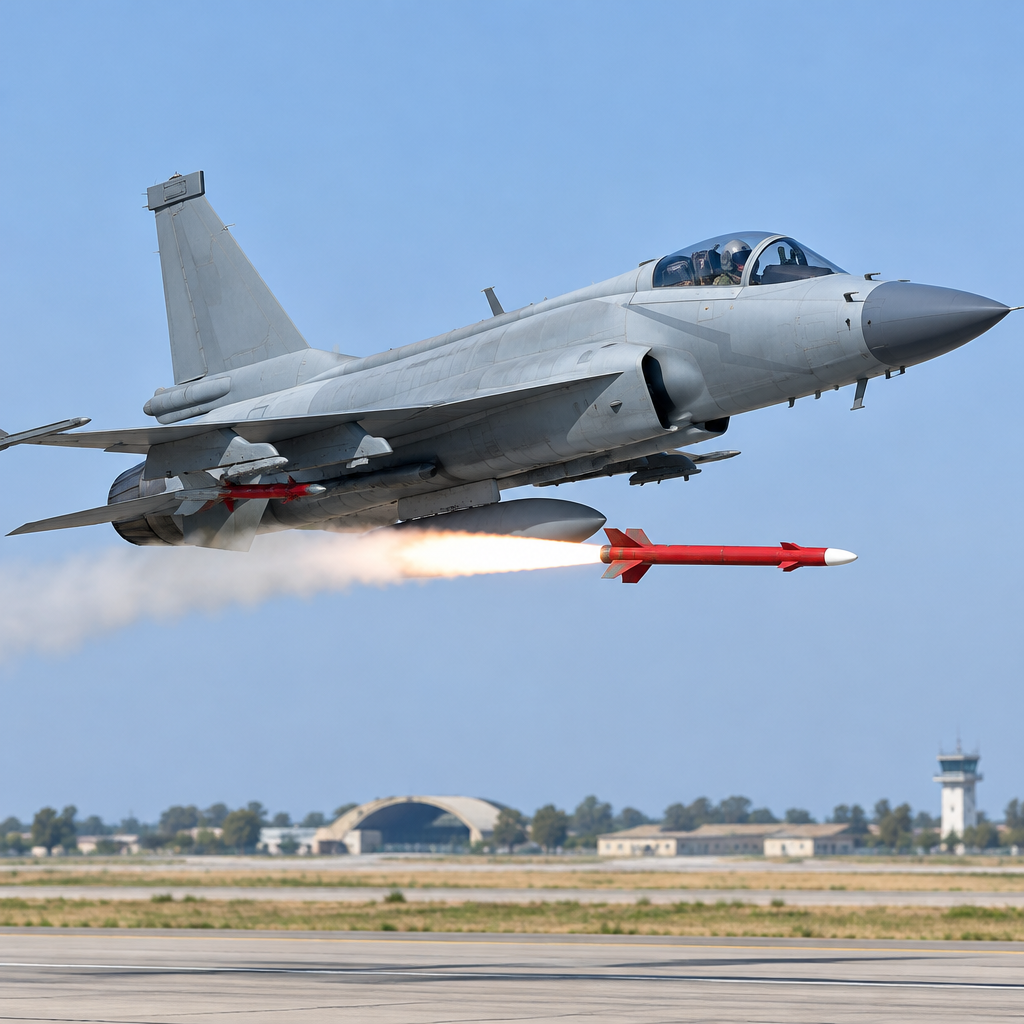
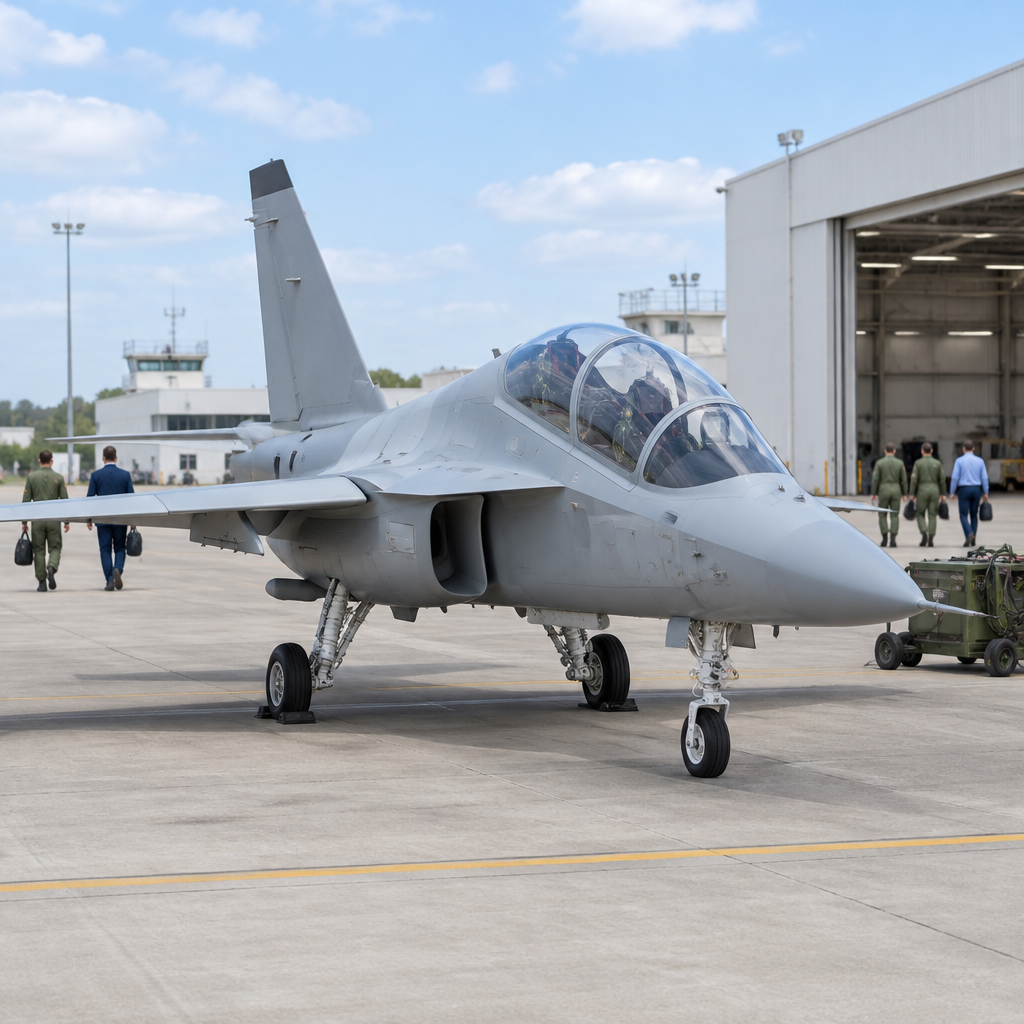
The U.S. Navy’s Undergraduate Jet Training System (UJTS) competition has effectively narrowed to a single known major design: the Beechcraft M-346N, offered by Textron Aviation Defense in partnership with Italy’s Leonardo. Textron confirmed to Breaking Defense that it submitted the M-346N, a navalized version of the Leonardo-developed M-346 Master, and said it was “ready to support the U.S. Navy and its future training needs.” TWZ previously flew aboard the M-346, providing a firsthand look at the aircraft Textron is pitching to the service.
Sierra Nevada Corporation withdraws its Freedom Jet proposal
Sierra Nevada Corporation (SNC) announced it would not submit its Freedom Jet design for UJTS, saying it “could not responsibly bid the UJTS program under the current contract structure,” in remarks reported to Breaking Defense and confirmed by Aviation Week. SNC noted it remains “committed to naval jet training and stand[s] ready to re-engage if the approach is revisited.” Earlier this year Northrop Grumman had exited its partnership with SNC on the Freedom Jet; General Atomics has been named in the past as part of the team.

The cyber insurance questionnaire just landed. Now what?
SOC 2, HIPAA, insurance renewals - someone has to own security strategy. Nubivance provides fractional CISO leadership without the full-time salary.
Get a security leadOther major teams dropped out for technical and programmatic reasons
The competition had already thinned before SNC’s decision. Lockheed Martin announced in April that it would not submit a proposal for UJTS and had previously planned to propose the TF-50N—a navalized T-50 developed with Korea Aerospace Industries. Boeing said in June it would not bid, citing issues tied to the General Electric F404 turbofan and UJTS engine qualification requirements; Boeing had been expected to offer a version of the T-7A Red Hawk, which is powered by a single F404.
Program timing, costs, and altered training requirements
The Navy set proposals due on 30 October 2026; the UJTS program office told TWZ that “Proposals were due on 30 October 2026” and that “The Government is in source selection with the intent to award the UJTS procurement in 4QFY27.” The program has slipped repeatedly: the Navy had hoped new trainers would begin entering service in 2028 and earlier planned to award by March 2027. The service also increased the total contract cost ceiling from approximately $1.8 billion to $2.7 billion. Aviation Week noted concerns about the cost structure, citing an initial award cost of $52.8 million in fiscal 2027 and $181 million for fiscal 2028.
The UJTS program reflects broader changes to naval aviation training. The Navy has eliminated carrier qualification requirements—touch-and-goes and full landings—from the tactical air aviator training pipeline, though those students can still earn carrier qualifications in T-45s if time and space permit. Carrier qualification remains a graduation requirement for future E-2 Hawkeye pilots and for foreign student aviators. Field Carrier Landing Practice (FCLP) ashore still simulates carrier landing operations, but future jet trainers procured under UJTS are not required to support full carrier-based operations, touch-and-goes, or FCLP.
SNC had designed the Freedom Jet specifically with carrier qualification and FCLP capability intact to preserve flexibility for the Navy if training plans change. By contrast, the M-346N leverages an established supply chain: other M-346 variants are in service with multiple air forces and the design option offered for UJTS can be powered by Honeywell F124 turbofan engines, according to TWZ’s reporting.
What this means for the Navy, Textron/Leonardo, and SNC
- The Navy: Faces a procurement with at least one known major entrant and lingering schedule and cost pressures—award intent is set for 4QFY27, but the service could reopen or restructure the competition if needed.
- Textron and Leonardo: Stand to be the sole widely publicized team in source selection; Textron has stated readiness to support the Navy and can point to existing M-346 operators and supply chains to argue maturity and reduced risk.
- Sierra Nevada Corporation: Will remain on the sidelines unless the Navy revises the contract structure; SNC framed its withdrawal as a responsible decision constrained by current contracting terms and left open the possibility to re-engage.
The Navy’s need to replace an aging T-45 fleet—driven by physiological episodes that led to a new oxygen system, and several recent crashes including one in May whose pilots survived—has made UJTS a pressing priority. Yet the competition’s contraction to a single known major bid, combined with prior schedule slips and a higher cost ceiling, leaves the program at a crossroads: proceed to source selection with the M-346N as the prominent option, or revise the approach to attract additional competition. The Navy’s stated timeline—intent to award in 4QFY27—sets the next formal milestone; beyond that, SNC’s explicit willingness to re-enter under a changed contract structure is the clearest signal that the competition is not necessarily settled.