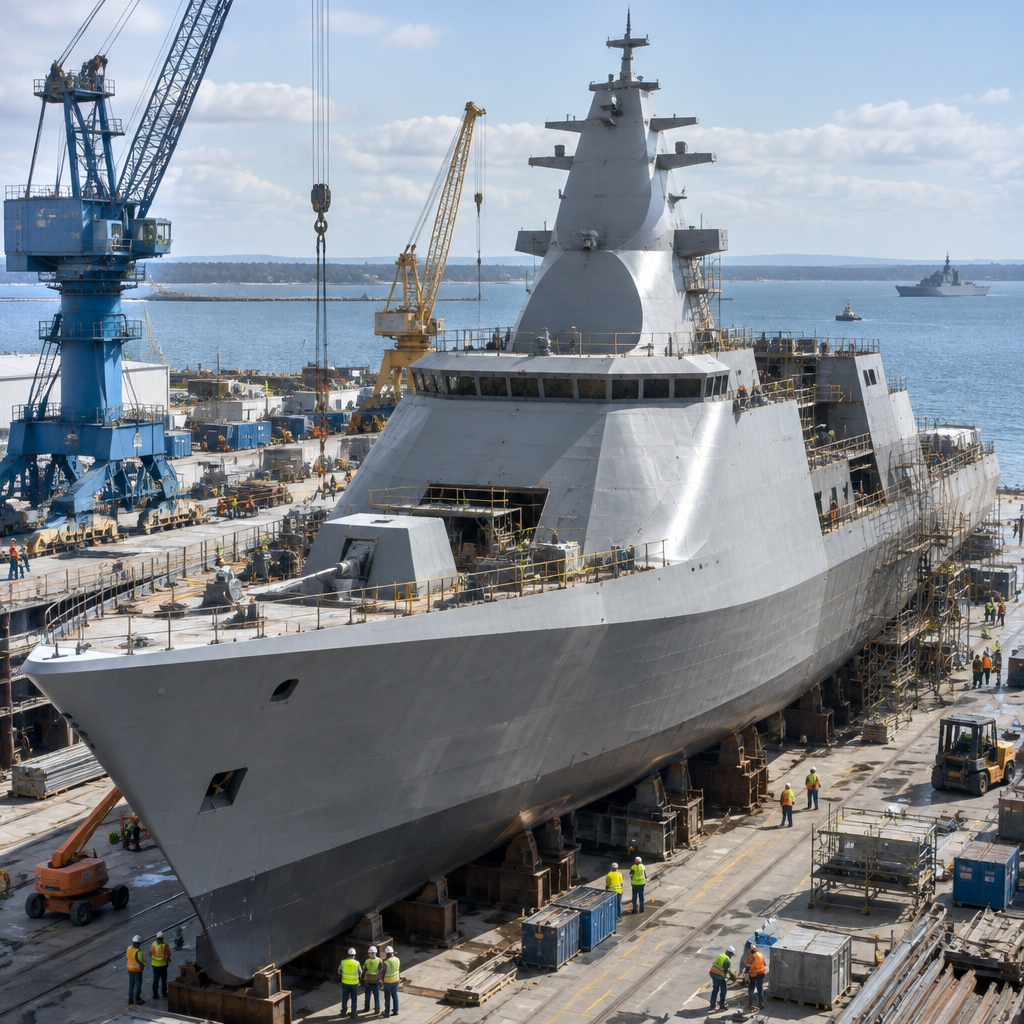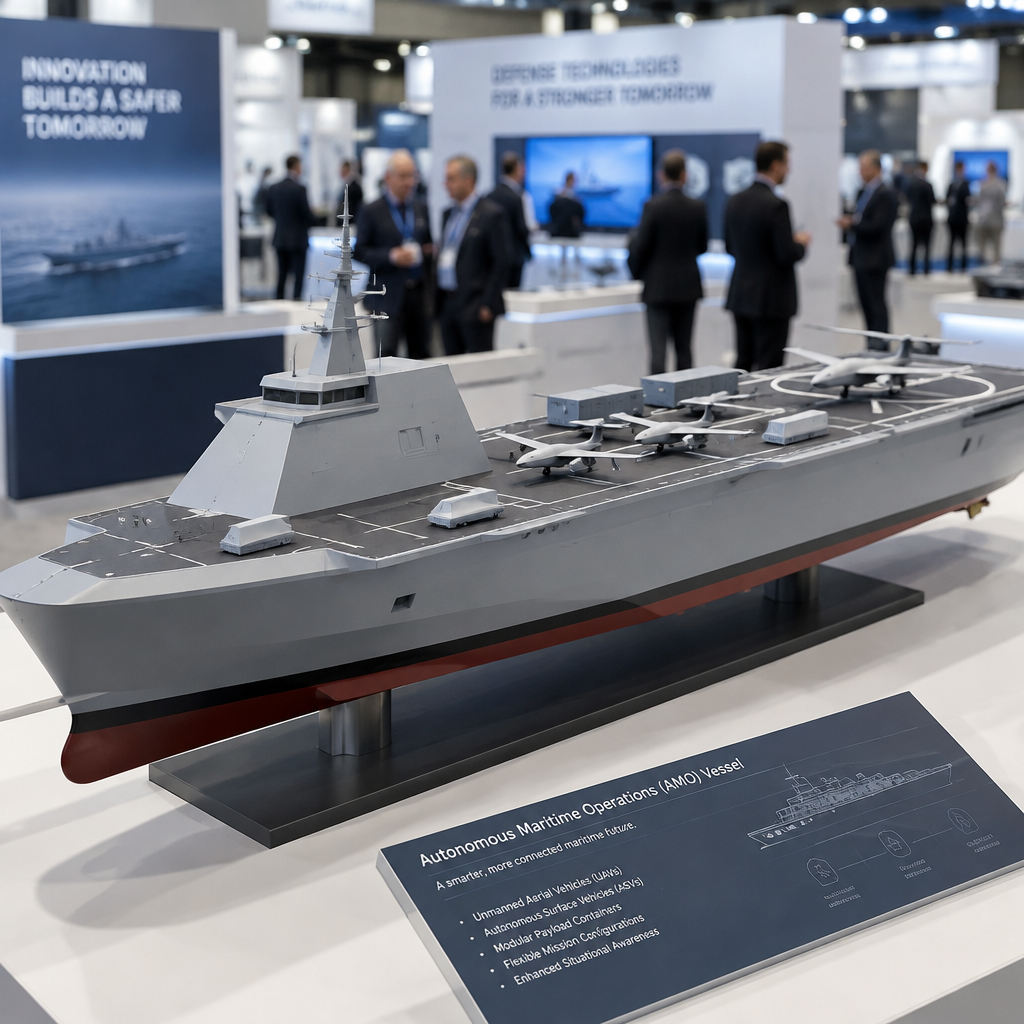
“The return of high-intensity conflict and the emergence of hybrid naval warfare require a new vision. Naval Group answers with a new concept ship: SCX 26,” Naval Group wrote Tuesday in a post on X.
Naval Group unveils the SCX 26 concept at Euronaval in Paris
At the Euronaval defense show in Paris this week, French shipbuilder Naval Group publicly released blueprints for an 8,000-ton drone carrier concept it calls SCX 26. The company framed the design as a response to “new operational requirements, lessons learned from recent wars, and medium- to long-term technological advancements,” saying the vessel would operate as an “operational hub of a hybrid fleet.”
Design basics: size, crew, speed and endurance
According to the theoretical specifications Naval Group provided, SCX 26 would measure 170 meters in length and weigh 8,000 tons. The concept calls for a crew of 150, a maximum speed of 30 knots and a sailing endurance of more than 8,000 nautical miles. Naval Group described the design as still being at the blueprint stage.

This site is the portfolio.
OSINTSights runs on Cloudflare Workers, D1, R2, and Vectorize, with an AI pipeline on Hetzner ARM. Nubivance designed, built, and operates it. We do the same for clients.
See what we buildPayloads and weapons: drones plus substantial onboard firepower
Naval Group positions the carrier first and foremost as a launch and control platform for unmanned systems. The company’s materials describe the ship as capable of deploying surface, aerial and underwater drones for missions ranging “from intelligence gathering to anti-submarine warfare.”
Alongside that unmanned-payload role, Naval Group says the ship’s core onboard weapon system would include “over 100 vertical launching system silos of various classes and an electromagnetic gun capable of rapid fire.” Those elements are presented as part of the SCX 26’s built-in defensive and offensive architecture in addition to its drone-operations role.
UCUV demonstrator: contract with the DGA and autonomy testing
Separately from the SCX 26 concept, Naval Group confirmed a contract signed Tuesday with the French Armament General Directorate (DGA) to begin manufacturing an unmanned combat underwater vehicle (UCUV) demonstrator intended for the French Navy. Naval Group said the demonstrator project was officially launched in 2023 but that the company has self-funded development of the extra-large underwater drone since 2016.
During a nine-month study in 2023, the company reported it tested a Controlled Decision-Making Autonomy algorithm — described by Naval Group as an “onboard brain” — that coordinates mission parameters and enables unmanned systems to autonomously execute challenging operations while adhering to human-defined mission boundaries. Naval Group said the UCUV demonstrator’s first at-sea testing is slotted for 2028 to “validate a mid-term operational response” to new areas of conflict.
What this means for the French Navy, the DGA, and Naval Group
- French Navy: The navy is the intended recipient for the UCUV demonstrator; the planned 2028 at-sea test is a concrete near-term milestone for validating unmanned underwater capabilities.
- French Armament General Directorate (DGA): By signing a manufacturing contract, the DGA has moved the demonstrator from study into production planning with Naval Group, marking an official procurement step on the UCUV timeline.
- Naval Group: The company is balancing a conceptual platform (SCX 26) presented at Euronaval with an active demonstrator program for underwater autonomy, continuing a development track that the firm says stretches back to 2016 for the UCUV work.
Naval Group’s presentation leaves two clear threads to follow: the SCX 26’s progress beyond blueprint form, and the UCUV demonstrator’s at-sea validation, scheduled for 2028. Together they outline a dual pathway — a conceptual large-surface platform designed as a drone hub, and a nearer-term underwater demonstrator intended to test autonomous decision-making at sea.
https://breakingdefense.com/2026/11/naval-group-unveils-new-drone-carrier-concept/