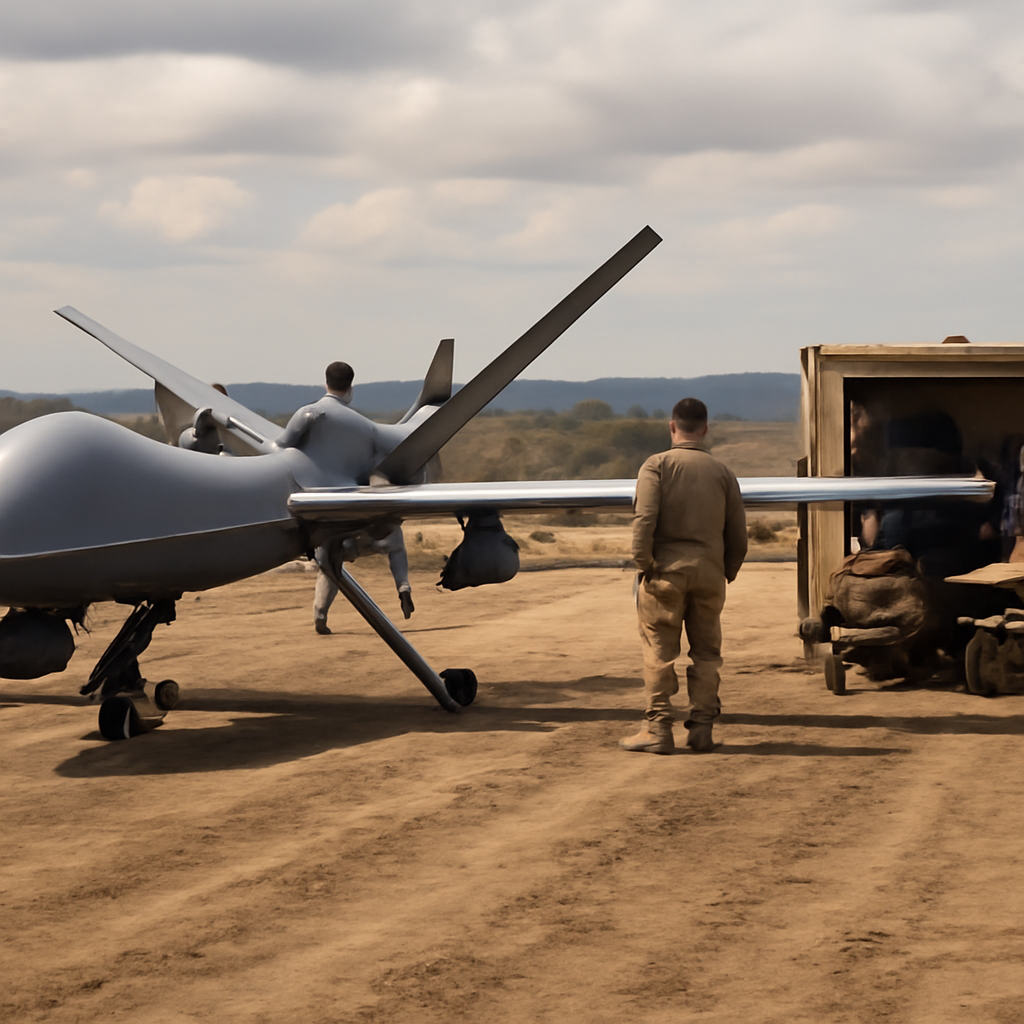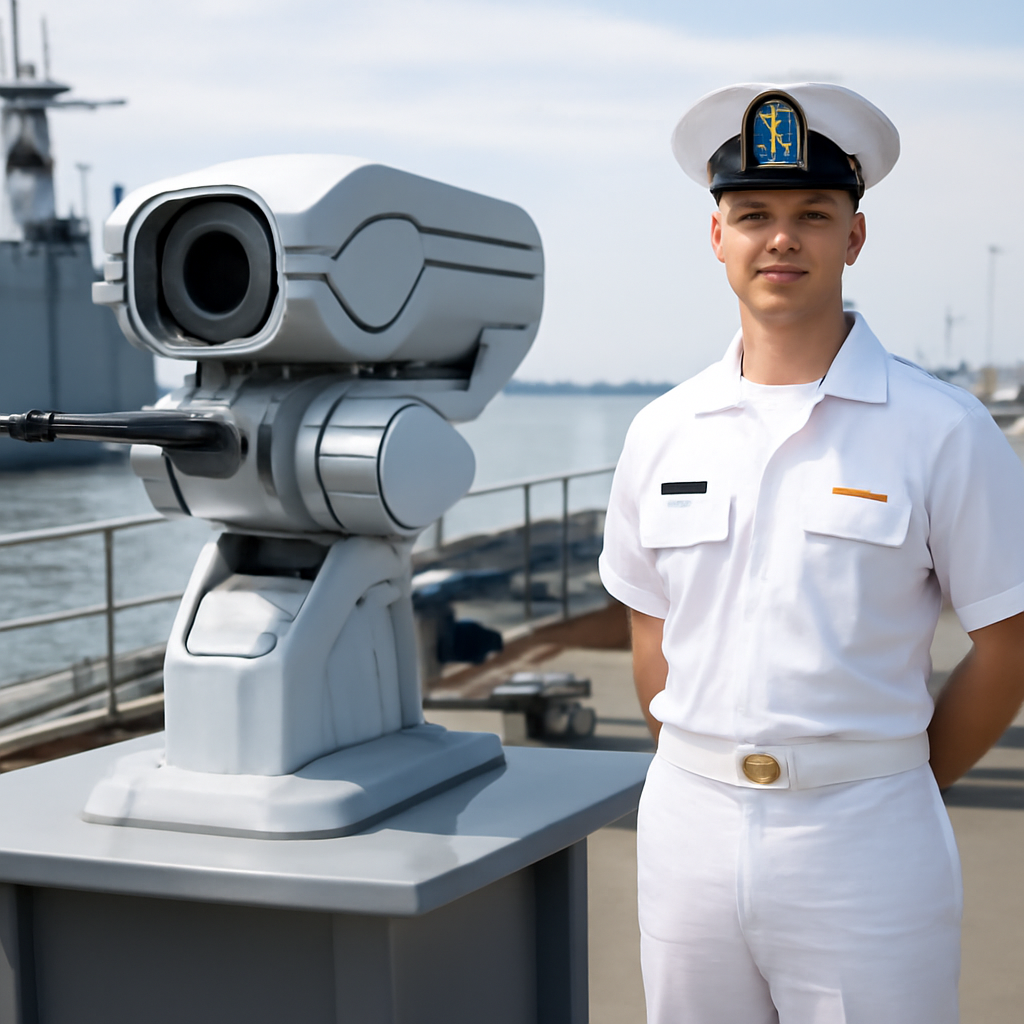
“We are at an inflection point in naval warfare, and the Department has been approaching robotic and autonomous systems through arcane processes that do not deliver capabilities at the speed our Sailors and Marines need,” William Toti said in a Navy news release.
Why the Navy created a Direct Reporting Portfolio Manager for Robotic and Autonomous Systems
The Navy announced on Wednesday that it has established a new Direct Reporting Portfolio Manager for Robotic and Autonomous Systems (DRPM RAS). The service framed the move as an effort to streamline the development and acquisition of robotic and autonomous systems (RAS) across the Navy and Marine Corps, following guidance from Acting Secretary of the Navy Hung Cao. In the Navy's public statement, Toti said Secretary Cao directed the service to replace the existing model with “clear accountability, faster decisions, and a relentless focus on the warfighter.”
Leadership realignment: Chris Miller to lead DRPM RAS and acquisition office changes
Chris Miller, who currently heads the Portfolio Acquisition Executive (PAE) Maritime office, will serve as the acting DRPM RAS and will report to William Toti, who is performing the duties of undersecretary of the Navy, the Navy said. Miller will also serve as acting PAE RAS, taking over acquisition responsibilities for a range of Navy and Marine Corps unmanned programs — explicitly including the Navy’s medium unmanned surface vessel (MUSV) program. Rebecca Gassler, who was selected to head the PAE RAS office in December when it was first established, is being replaced by Miller. The Navy did not immediately respond to a request from Breaking Defense about Gassler’s departure from the PAE RAS post.

This site is the portfolio.
OSINTSights runs on Cloudflare Workers, D1, R2, and Vectorize, with an AI pipeline on Hetzner ARM. Nubivance designed, built, and operates it. We do the same for clients.
See what we buildCoordination with the Department of Defense DRPM for autonomy (DRPM-UxS)
The DRPM RAS will work closely with the Department of Defense’s DRPM for autonomy, commonly referenced as DRPM-UxS. Secretary of Defense Pete Hegseth signed a June memo establishing a DRPM for autonomy, a Breaking Defense report first noted. That DRPM-UxS organization oversees a broad set of unmanned programs — including all ground vehicles, all small air vehicles, and nearly all sea vessels — but the memo and reporting specify that it does not cover the Navy’s MUSV program. DRPM-UxS reports to Deputy Defense Secretary Stephen Feinberg, the same senior deputy to whom other DRPMs (for example, for submarines and the so-called Golden Dome portfolio) report.
Operational posture: moving staff “close to Fleet warfighters” under review
The Navy said it is reviewing whether to transfer DRPM RAS staff from Washington to locations “close to Fleet warfighters.” The service framed the review as an effort to strengthen collaboration with operational forces and to ensure Fleet feedback remains closely connected to capability development and fielding. The announcement did not include details about timelines, candidate locations, or which elements of the new portfolio would relocate.
What this means for the Navy, the Marine Corps, and DRPM-UxS
- The Navy and Marine Corps: The change is presented as an institutional effort to speed decision-making and tighten accountability for RAS capability delivery, with an explicit focus on aligning acquisition and operational feedback.
- Acquisition leaders and program offices: Chris Miller’s dual role as acting DRPM RAS and acting PAE RAS places him over acquisition lines that include the MUSV; program offices may confront new chains of command and closer interaction with fleet operators if staff are moved nearer to the Fleet.
- DRPM-UxS and DoD leadership: The DRPM RAS will need to coordinate with the DRPM-UxS portfolio that already governs many unmanned classes, making delineation of authorities — notably the MUSV exception — an operational and managerial priority.
The Navy’s announcement frames the change as a response to a perceived need for speed and accountability in RAS acquisition, but it leaves concrete implementation details unanswered: the timing and scope of any staff moves, the internal rationale for replacing Rebecca Gassler, and the practical lines of coordination with DRPM-UxS on programs that overlap in function. The service did not provide further specifics when asked by Breaking Defense.
Original reporting: Breaking Defense