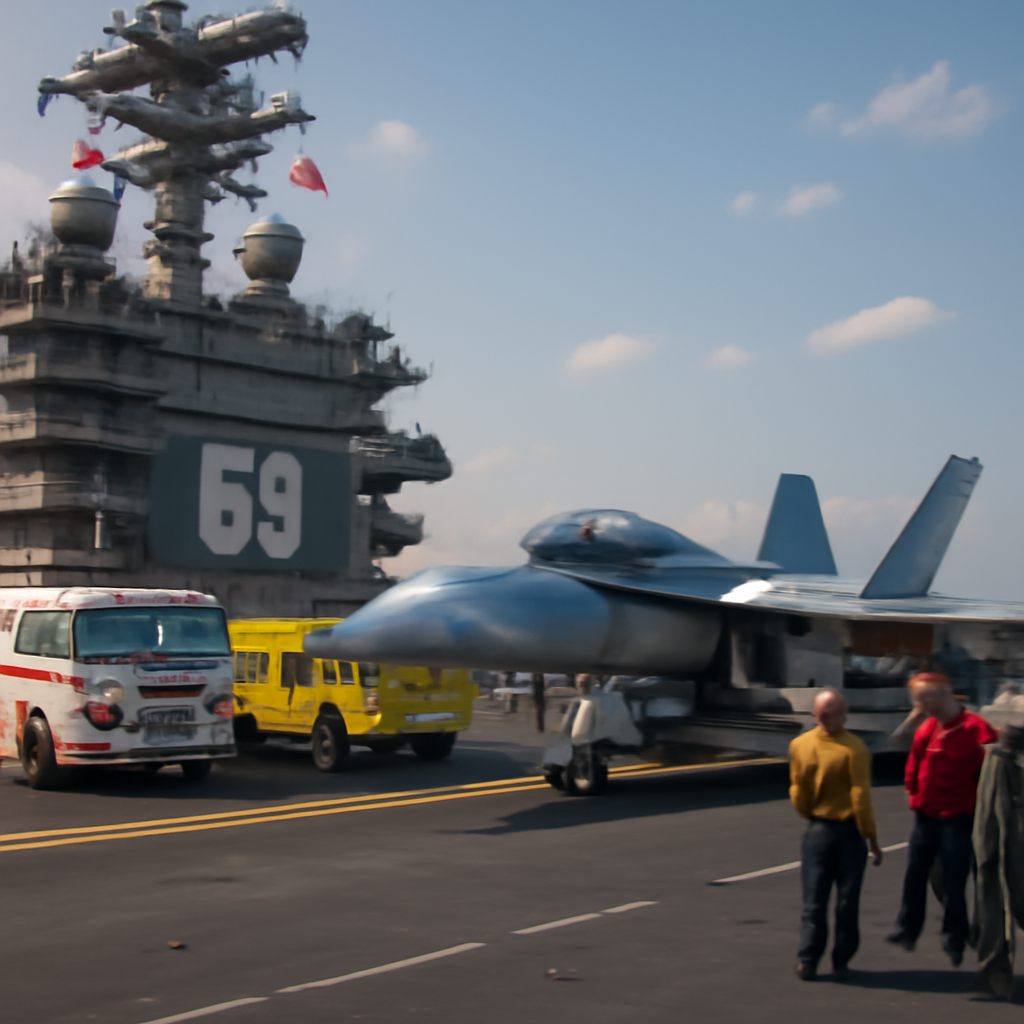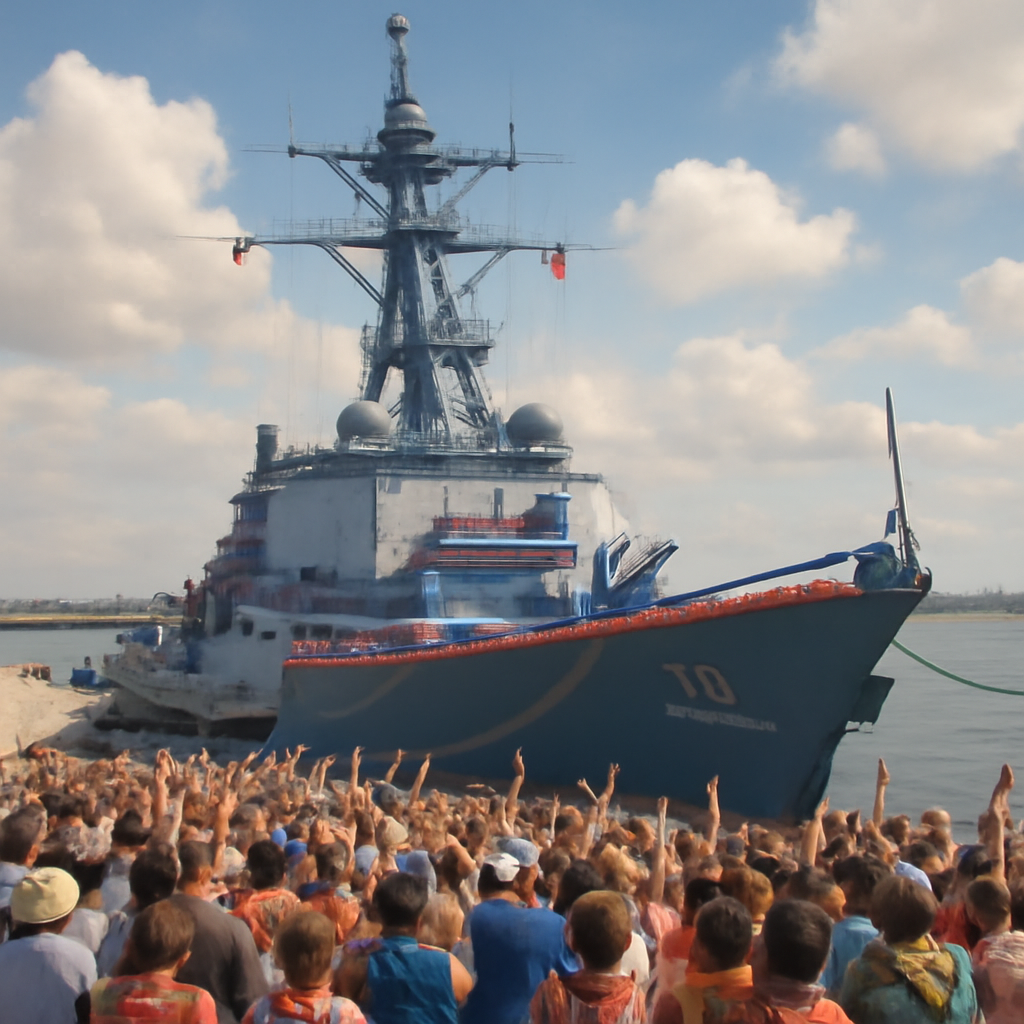
“We made sure that we kept dozens of ships safe against a variety of different attacks—missile attacks, drone attacks,” said Capt. Casey Mahon as the guided‑missile destroyer Frank E. Petersen Jr. returned to Joint Base Pearl Harbor‑Hickam after a 10‑month deployment.
USS Frank E. Petersen Jr.’s deployment profile
Some 300 days after leaving Hawaii, the Petersen sailed back into port Monday to cheers, jangling cowbells, handmade posters and fresh flower leis. The ship completed a roughly 10‑month deployment that officially began in December. During that period the destroyer logged more than 85,000 nautical miles, conducted 45 replenishments at sea, and at one point spent 106 days at sea between port calls. The vessel was commissioned in 2022.
Combat actions and defensive role
Although the Petersen began operations in the South China Sea, it was redirected in late January to the Middle East, shortly before President Donald Trump launched Operation Epic Fury. The ship participated in the initial strikes of that conflict, firing Tomahawk missiles at land targets on Feb. 28.
As the Abraham Lincoln carrier strike group’s air and missile defense commander, the Petersen also engaged in defensive operations. Capt. Mahon said the destroyer “warded off more than 100 Iranian missiles and drones launched against its group and other ships in the region,” a tally the ship’s leadership presented as a core measure of the deployment’s intensity.

Audit-ready is a season. It shouldn't be.
Evidence in spreadsheets, controls drifting between audits, frameworks multiplying on flat headcount. Nubivance runs continuous compliance on Rapid7 Cyber GRC - SOC 2, HIPAA, ISO 27001, PCI, CMMC.
End the scrambleOperational tempo: endurance, adaptation, and lessons
Mahon framed the deployment as both a test of endurance and of adaptability to new threats. He told reporters that while some adversary technologies the crew faced were new, “air defense really hasn’t changed a lot of ways since World War II: You have a radar, you find the thing, you’ve got to track it.” At the same time, he added, “how these things fly, how they do their missions are very different, and so the crew showed a lot of adaptability to that,” and he described the ship’s systems as “very effective in that adaptability.”
The Petersen’s operational lessons included techniques for prolonged time at sea and defensive measures against evolving tactics. Mahon said those lessons have been passed on to other ships that remain in the region.
Crew, reunions and family strain
The human cost of a prolonged, high‑tempo deployment was visible on the pier. Sailors reunited with children, spouses and parents amid leis and handmade signs. Alysha Nishikawa, clutching a ti leaf lei as she waited for her husband with their two children, said she worried at times during the deployment but tried to “throw out positive energy” to reassure him so he could continue his duties.
Petty Officer 1st Class Ryhean Tucker — the recipient of what the report called the ceremonial “first kiss” — described the deployment as “stressful” and challenging. His wife, Taylor Tucker, said caring for their two children while relocating from Virginia to Hawaii was “a big job, but we did it.”
Abraham Lincoln carrier strike group, the Petersen’s crew, and Iranian forces
- Abraham Lincoln carrier strike group — Will be watching how lessons learned on the Petersen about missile and drone defense are integrated across the group; the destroyer served as the group’s air and missile defense commander and reported neutralizing more than 100 incoming threats during the deployment.
- The Petersen’s crew and families — Face the immediate challenges of reintegration after nearly 300 days away, and the ship’s leaders say they have shared operational lessons with other units still at sea.
- Iranian forces — Were the named opponent in the engagements described: more than 100 missiles and drones attributed to Iran were reported as launched against the carrier strike group and other ships, and the Petersen was credited with defending against those attacks and participating in initial strikes on Feb. 28.
As Capt. Mahon put it, “Like any good Navy ship, you know, you’re ready for that next mission.” The Petersen’s return closes one chapter of a deployment that included long stretches at sea, replenishments, frontline defensive work and a direct role in initial strikes — and, by Mahon’s account, leaves a record of hard‑won lessons that have already been passed to other U.S. naval units operating in the region.