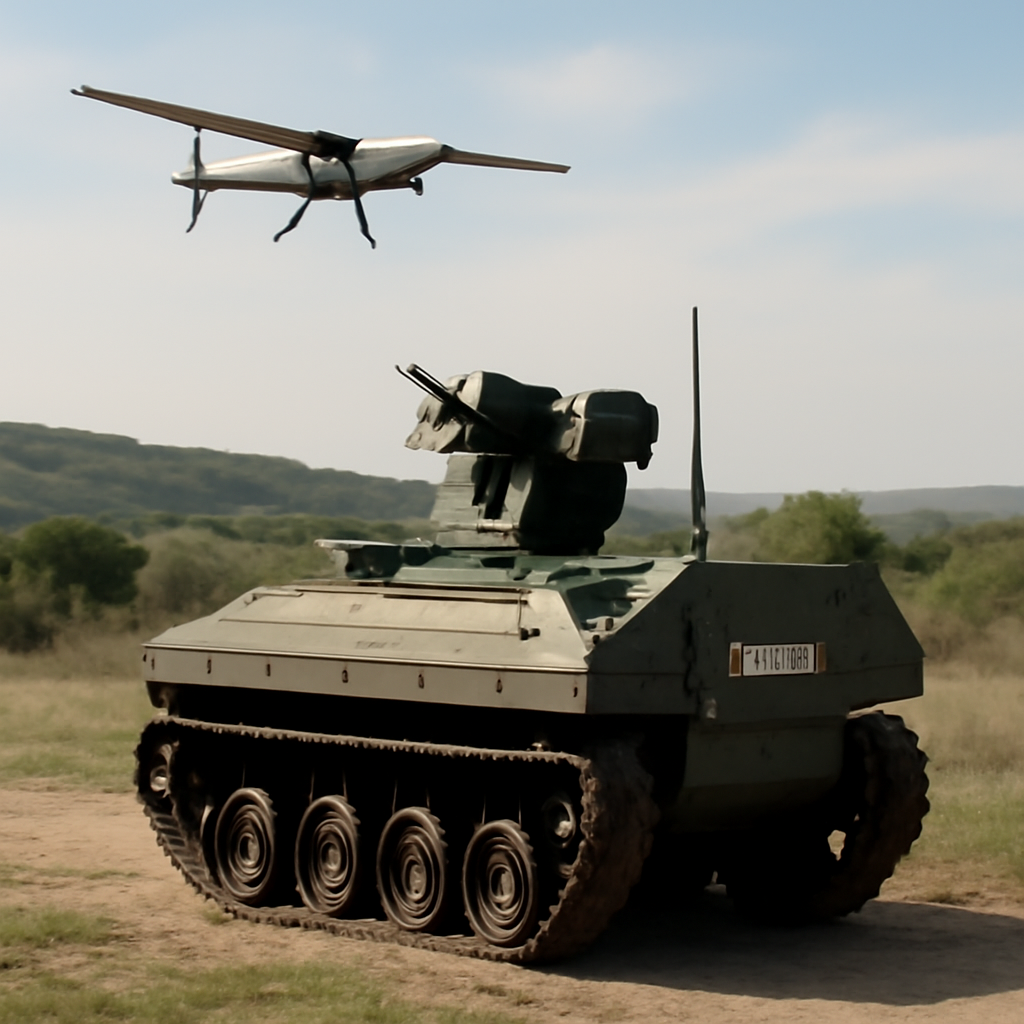
"While NATO can still deter Russian aggression with Article 5, it is losing the initiative on its eastern flank in the grey zone between peace and war." — from the article at aspistrategist.org.au
Russia's maskirovka and drone‑cyber hybrid operations
The article describes a pattern of Russian action that prefers ambiguity to outright force: aviation of unidentified drones into Baltic airspace, cyberoperations that disrupt transport and GPS networks, and other hybrid provocations designed to remain below NATO's Article 5 threshold. The tactic invoked by the author is maskirovka — deception, ambiguity and controlled escalation — whose objective is not immediate conquest but to shape perception, probe allied cohesion, impose costs and normalise higher levels of risk along the eastern flank. Individually these incidents have limited immediate impact; cumulatively, they reroute flights, strain infrastructure and force government protests while NATO opens consultations under Article 4.
NATO's institutional lag and the cost asymmetry
The central problem identified is not military weakness but a lag in allied decision‑making. NATO’s collective responses under Article 4 require consultation and consensus in the North Atlantic Council, which slows collective action even in limited crises. That delay gives Moscow an operational advantage: it can deploy low‑cost systems such as drones frequently with limited risk, while NATO faces costly and politically sensitive options to counter them. The result is a commitment problem — decisions are made in crisis rather than pre‑committed beforehand — and deterrence, the article argues, is strong at the threshold of open war but fragile in the grey zone below it.

This site is the portfolio.
OSINTSights runs on Cloudflare Workers, D1, R2, and Vectorize, with an AI pipeline on Hetzner ARM. Nubivance designed, built, and operates it. We do the same for clients.
See what we buildMechanism design: thresholds, delegation and a permanent hybrid cell
As an alternative to reactive case‑by‑case responses, the article proposes applying mechanism design — a branch of game theory — to NATO decision‑making. The recommended architecture includes pre‑agreed thresholds that automatically trigger proportionate responses, delegated authority to act within those rules, and a permanent hybrid response cell that can assess incidents and initiate responses within hours. Examples in the piece include automatic reinforcement of air policing after repeated airspace violations and automatic cyber‑defence measures after coordinated intrusions. The aim is to convert NATO forces into pre‑committed instruments rather than ad hoc deployments, making responses faster, more predictable and therefore more costly for an adversary that depends on uncertainty.
Burden‑sharing, the 2 percent guideline, and operational readiness
The article links NATO’s speed problem to uneven contributions among members. Uneven spending and capability shortfalls produce uneven readiness and slower collective response times. The familiar guideline of spending 2 percent of GDP on defence is described as a political target rather than a binding rule; because contributions are decoupled from operational outcomes, members may rationally underinvest. The piece argues that tying contributions more closely to specific capabilities and operational roles would better align incentives with NATO’s needs and reduce the time required for collective action in time‑sensitive scenarios on the eastern flank.
What this means for technologists, policymakers, transport operators and NATO planners
- Technologists and security teams: expect attribution to remain slow and contested; coordinated cyber intrusions and GPS disruptions are key levers the article highlights, and a permanent assessment cell would need rapid forensic and attribution capabilities.
- Policymakers and NATO ministers: the article says they must confront political reluctance to delegate authority and accept predefined triggers, balancing speed against escalation risk and committing to sustained political backing and credible capability.
- Transport operators and aviation authorities: cumulative effects described include rerouted flights and strained infrastructure; predictable, pre‑agreed responses could reduce short‑term disruption but will require clearer civil‑military coordination.
- NATO planners: converting ad hoc deployments into pre‑committed instruments will demand new rules, rapid decision systems and a reorientation of burden‑sharing to fund deployable capabilities rather than symbolic spending targets.
The article’s diagnosis is succinct: NATO retains the means to deter overt aggression under Article 5, but current procedures are ill‑suited to a security environment defined by speed, ambiguity and hybrid pressure. Its prescription is equally direct — clear thresholds, delegated authority and predefined responses — while acknowledging political and escalation risks. The unresolved question posed by the piece is concrete and institutional: will allies accept the political cost of pre‑committed rules that constrain deliberation in order to deny Moscow the operational advantage of uncertainty?