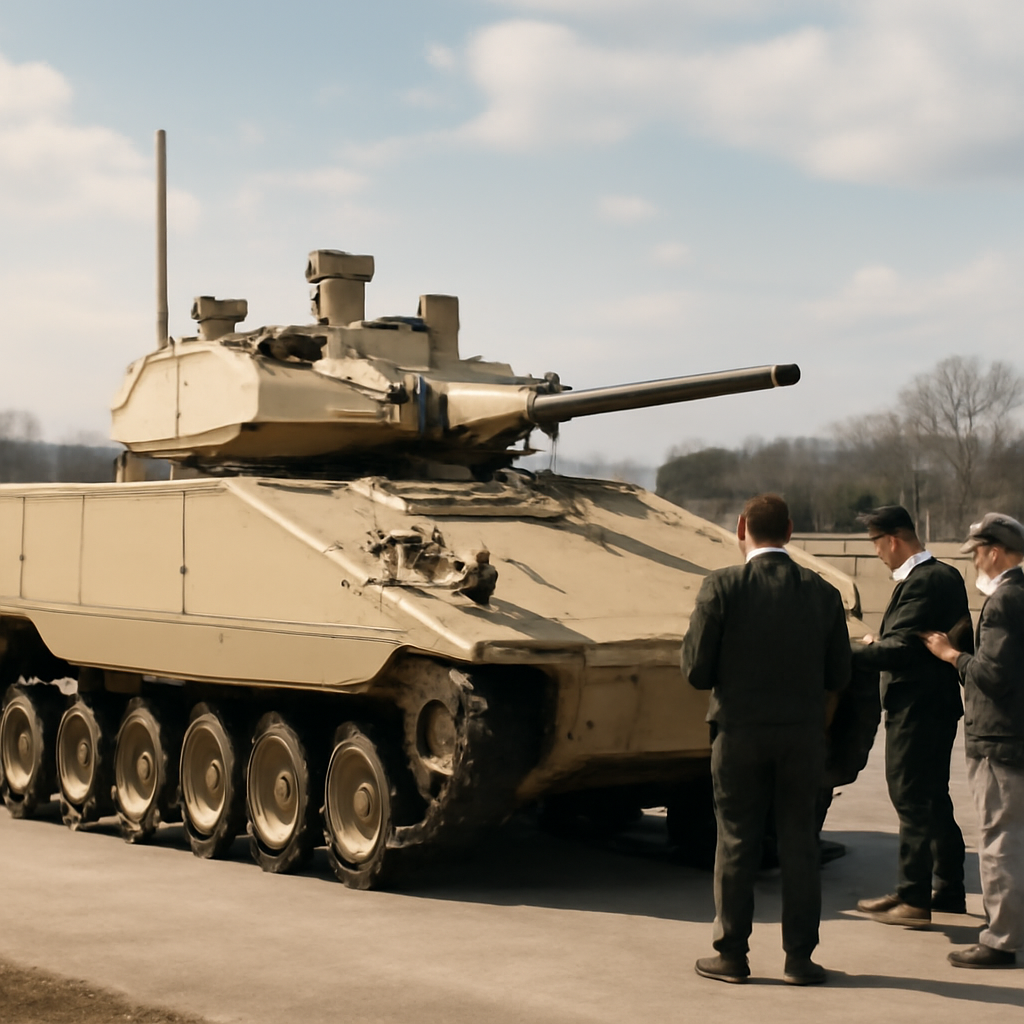
“I went into the forests of Latvia to observe unmanned ground vehicles put to the test during NATO’s Crystal Arrow 2026 exercise.”
Elisabeth Gosselin-Malo’s on-the-ground account from Latvia
Breaking Defense Europe reporter Elisabeth Gosselin-Malo visited the forests of Latvia and reported what she witnessed as unmanned ground vehicles were exercised as part of NATO’s Crystal Arrow 2026. Her account, presented on this week’s episode of the Break Out, is grounded in direct observation: she was on site and relayed impressions from that visit. The reporting places the machines squarely inside a NATO exercise context rather than in a lab or demonstration venue.
Unmanned ground vehicles inside NATO’s Crystal Arrow 2026
The machines Gosselin-Malo observed were described in the program as unmanned ground vehicles being “put to the test” during Crystal Arrow 2026. The framing in the episode ties the presence of these systems to NATO’s exercise activities in Latvia, indicating that the exercise included live demonstrations or trials involving robotic ground platforms. Beyond noting their presence and that they were tested as part of the exercise, the reporting does not catalogue specific platforms, manufacturers, or test outcomes in the segment described.

Audit-ready is a season. It shouldn't be.
Evidence in spreadsheets, controls drifting between audits, frameworks multiplying on flat headcount. Nubivance runs continuous compliance on Rapid7 Cyber GRC - SOC 2, HIPAA, ISO 27001, PCI, CMMC.
End the scrambleCaitlin Lee of the RAND Corporation links a Pentagon initiative to the Cold War
In the same Break Out episode, Caitlin Lee of the RAND Corporation discusses the historical roots of a recent Pentagon drone initiative. Lee argues that those roots “arguably stretch back at least to the Kennedy administration during the Cold War.” Her line connects contemporary Pentagon work on drones to extended institutional developments over decades, framing the initiative as part of a longer continuum rather than an isolated, recent programmatic change. The episode presents Lee’s perspective as a context-setting thread that accompanies the on-site reporting from Latvia.
The Break Out video series: a two-part look at unmanned systems’ benefits and risks
The episode in which Gosselin-Malo and Lee appear is the second part of a new Break Out video series that focuses on the benefits and risks of relying on unmanned systems. The program pairs on-the-ground observation from Latvia with a historical and analytical interview to present both immediate, observable uses of unmanned ground vehicles and broader institutional perspectives on drone initiatives. Listeners and viewers are invited to hear the fuller conversation—this installment is part two of that series.
What this means for NATO forces, the Pentagon, and researchers at the RAND Corporation
- NATO forces: The episode places unmanned ground vehicles in the operational setting of Crystal Arrow 2026, underscoring that NATO exercises are a venue where such systems are being trialed and observed in terrain like the forests of Latvia.
- The Pentagon: The discussion by Caitlin Lee frames a recent Pentagon drone initiative as one with historical antecedents reaching back to the Kennedy administration during the Cold War, suggesting the initiative can be viewed in continuity with longer-term institutional developments.
- Researchers at the RAND Corporation: Lee’s contribution to the episode positions RAND analysis as part of the conversation about how contemporary drone policy connects to historical programmatic trends, offering a historical lens alongside field reporting.
The Break Out episode stitches together an eyewitness visit and a historical framing: field observation from Latvia’s forests on the one hand, and a claim that contemporary Pentagon drone work draws on Cold War-era roots on the other. The program presents both elements within a single two-part video series devoted to the benefits and risks of unmanned systems, inviting viewers to weigh immediate demonstrations against longer institutional histories.
Read the original episode summary and watch the series at Breaking Defense: https://breakingdefense.com/2026/05/ground-robots-in-latvia-and-the-history-of-manned-unmanned-teaming/