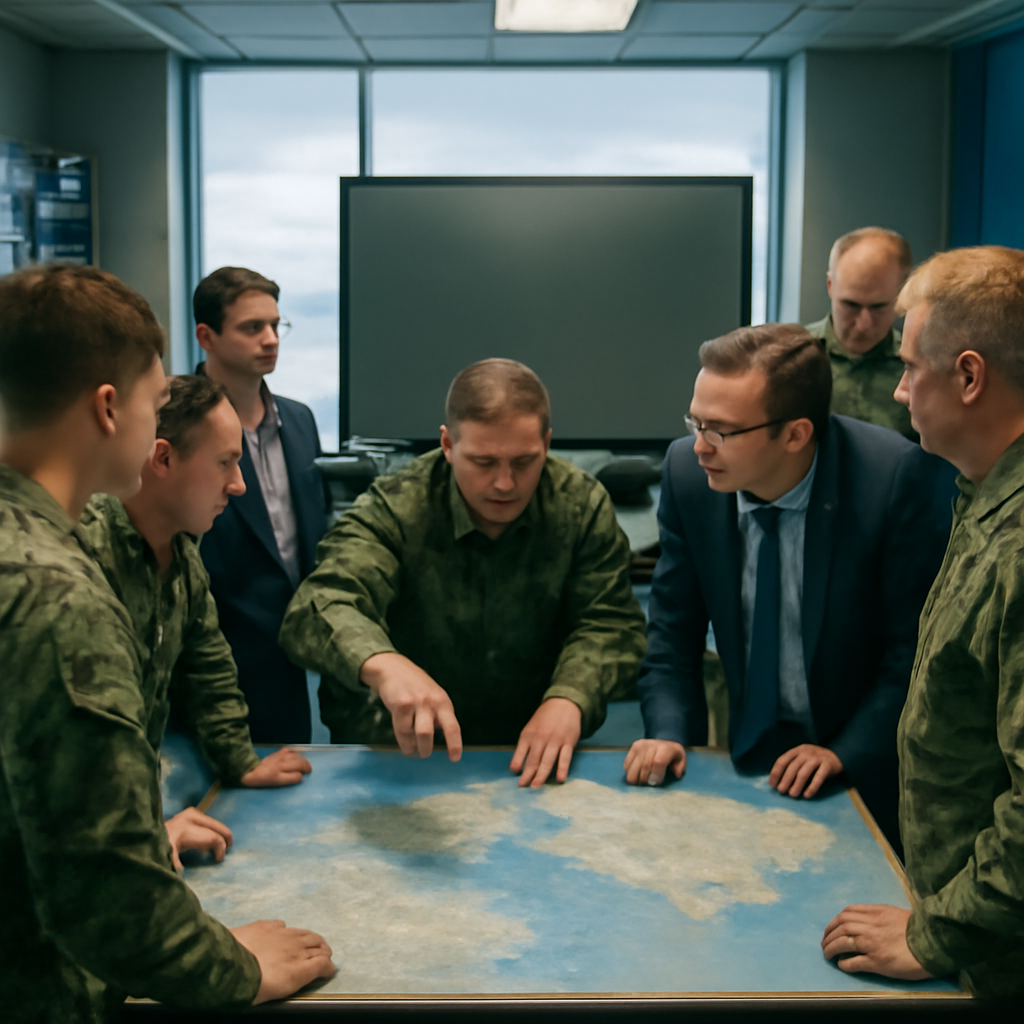
"The war is a stark reminder that global challenges require global cooperation, but also of how closely the Euro-Atlantic and Indo-Pacific are connected," Ambassador Kevin Hamilton, NATO deputy assistant secretary general for partnerships, told the Indo‑Pacific and Euro‑Atlantic Hub for Shared Security Challenges when the group met on 5 August to assess NATO’s Ankara summit.
Ambassador Kevin Hamilton on NATO’s priorities
Hamilton framed Ankara as a moment that reinforced ties rather than expanded NATO’s geographic remit. The summit declaration, he said, underscored that strengthening NATO’s industrial base has become a key area for cooperation and that the Alliance seeks to leverage partnerships to "maximise defence industrial cooperation." Quoting Secretary General Mark Rutte, Hamilton summarised the summit’s headline: "NATO is delivering. Defence investments continue to increase, new capabilities are being delivered, industry is expanding production, and European Allies and Canada are taking greater responsibility for our shared security. This is what NATO 3.0 means: a stronger Europe in a stronger NATO."
Australia: industry engagement over broad political gains
Stephan Fruehling of the Australian National University judged Ankara less transformational for Australia than earlier summits. He flagged four motivations behind Australia’s long-standing engagement with NATO — access to political discussions on operations, technical access to Partnership for Peace activities, strategic dialogue on China and links between theatres, and defence‑industry and supply‑chain cooperation — and concluded the last of those remains the active focus. Accordingly, Australia sent Defence Industry Minister Pat Conroy to Ankara, signalling interest in NATO’s emerging platforms for industry and supply‑chain coordination, including work under NATO’s Conference of National Armaments Directors.

Audit-ready is a season. It shouldn't be.
Evidence in spreadsheets, controls drifting between audits, frameworks multiplying on flat headcount. Nubivance runs continuous compliance on Rapid7 Cyber GRC - SOC 2, HIPAA, ISO 27001, PCI, CMMC.
End the scrambleJapan and New Zealand: political backing and industry showcases
For Japan, Akira Igata of the University of Tokyo described Ankara as consolidating a direction rather than producing a watershed. Ministerial participation — including Japan’s first attendance at the NATO Defence Industry Forum — provided political backing that Igata said should allow bureaucracies to move NATO‑Japan cooperation "further towards practical implementation," notably in defence‑industrial cooperation aligned with Japan’s security policy revision.
New Zealand’s Serena Kelly emphasised the summit’s value for a geographically remote, small state: summits help cement relationships and shape international norms. Kelly noted that New Zealand’s defence spending was already politically sensitive; in 2025 then‑defence minister Judith Collins announced "an increase in defence spending by 12 billion dollars over four years." She also highlighted the Defence Industry Forum as a chance to showcase firms such as Starboard and Syos Aerospace and to learn from international industry leaders.
South Korea and Germany: partnership proposals and strategic ambiguity
South Korea’s Euichan Shin said Ankara sharpened the question from whether the Euro‑Atlantic and Indo‑Pacific are connected to how to turn that understanding into institutional cooperation. President Lee Jae Myung’s proposal for a Korea–NATO Defence Industry Partnership 2.0 aims to go beyond arms sales toward joint research, production and operation. Shin pointed to negotiations on a procurement framework agreement, South Korea’s participation in NATO’s Science and Technology Organization via the Science and Technology Enhanced Partnership, and South Korea’s association with Pillar Two of Horizon Europe as foundations for cooperation in AI, cybersecurity, space and advanced materials.
Germany’s Aylin Matle read Ankara as clear on Russia — the summit declaration named Russia more explicitly as a long‑term threat than the 2025 document did, she observed, cementing former chancellor Olaf Scholz’s Zeitenwende speech as a baseline for defence planning. By contrast, Matle noted the declaration treated China in vaguer language, referring to "strategic competition" rather than naming Beijing directly. That vagueness, she warned, could steer cooperation toward technical areas — defence industry, interoperability and supply‑chain resilience — rather than political‑strategic coordination on China, a trajectory Germany may prefer given resources stretched by Russia and Ukraine.
What this means for defence industry, policymakers, and research institutions
- Defence industry and procurement leaders: expect expanded opportunities for joint research, testing, certification and supply‑chain integration — South Korea’s bid to enable firms to participate in NATO procurement and New Zealand’s industry showcases are concrete examples.
- Policymakers and defence ministers: will need to translate ministerial political signals into procurement frameworks and practical cooperation. The summit’s emphasis on increased defence investment and NATO 3.0 gives a policy steer but leaves implementation to follow‑on negotiations and working‑level activity.
- Research institutions and think tanks: the Indo‑Pacific and Euro‑Atlantic Hub for Shared Security Challenges — a virtual network of more than 40 institutions launched in February and supported by a public engagement grant from NATO Headquarters — is positioned to nurture the technical, doctrinal and myth‑debunking work necessary to move from statements to standards and joint programmes.
The Ankara summit, and the hub’s 5 August review of it, did not rewrite alliances so much as deepen a practical lane for cooperation: defence industry, research links and supply‑chain resilience. The explicit naming of Russia as a long‑term threat narrows immediate priorities; the reticence to name China explicitly leaves political coordination open and makes the next stage — converting ministerial presence into procurement agreements, joint projects and technical standards — the decisive test. Interested parties can contact Pietro De Matteis, engagement officer for the Indo‑Pacific at NATO Headquarters, and follow the hub on LinkedIn for the next steps.