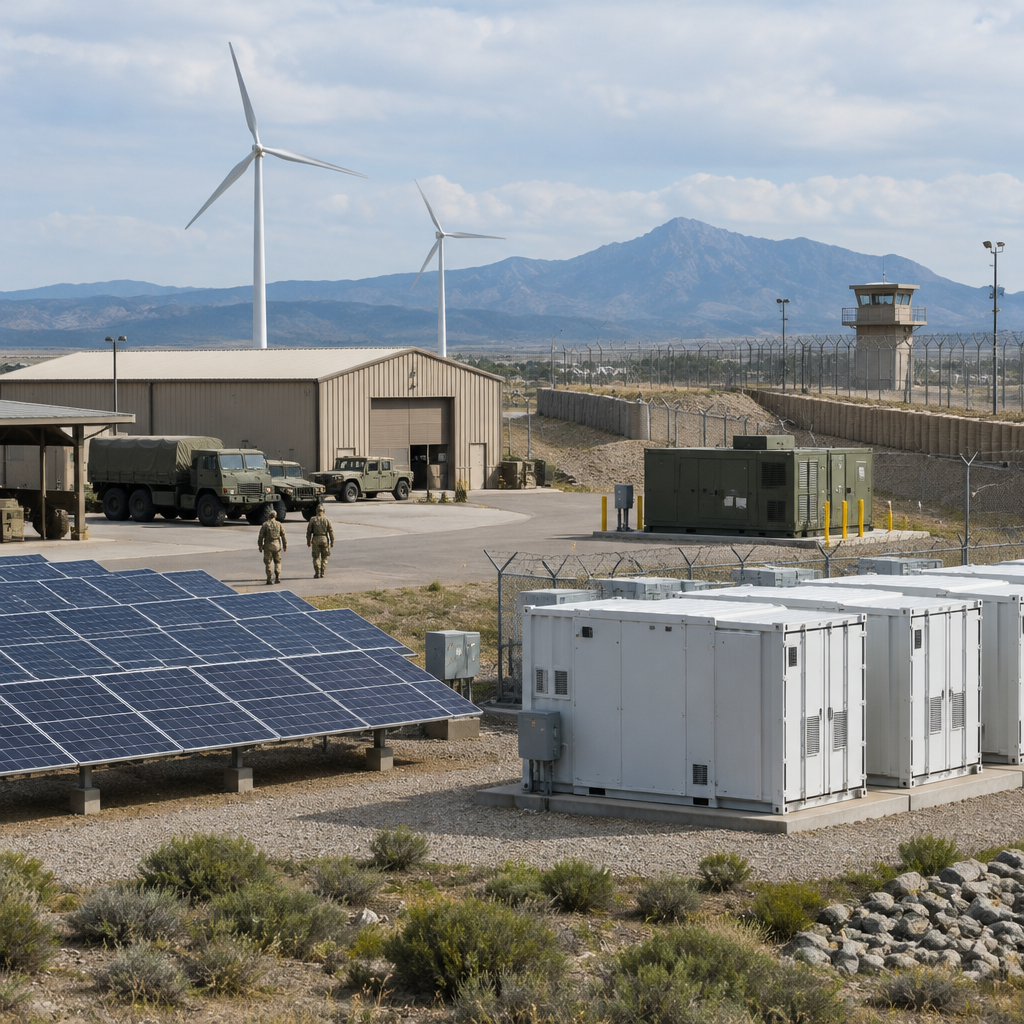
Can a small nuclear plant tucked inside an Army base make that installation safer — or simply invite a new set of risks? That is the central dilemma behind the service’s push to break ground on a microreactor by 2027: an apparent solution to fragile energy chains that raises questions about fuel, safety, regulation and strategic signaling.
The Army’s effort to field a compact, transportable nuclear reactor is part of a broader drive to make forward installations and large garrisons less dependent on commercial grids and long supply lines. Microreactors — factory-built nuclear units that can produce on-site electricity and heat for months or years without refueling — promise continuous power for command-and-control nodes, communications equipment, and critical mission systems when the grid is contested or disrupted.
Microreactors are, in concept, smaller and simpler than conventional commercial reactors. They are designed for rapid deployment, modular construction and shorter on-site installation timelines. Proponents argue those attributes make them well suited to military use: they can be sited near mission-critical loads, require fewer resupply convoys, and reduce the vulnerability that comes from relying on fuel trucks and external power providers.
The Army’s stated timeline — aiming to break ground by 2027 — signals institutional urgency. That timetable pushes the project into the near term and forces a reckoning with several practical constraints that do not vanish simply because the reactor footprint is small.
Key challenges are already on the table and will shape whether the Army can meet its target.
/
/
/
/
Technologists and industry see opportunity. Engineers point out that microreactors could deliver long-duration, high-quality power that batteries and diesel generators struggle to match at scale. Factory fabrication could reduce construction risk and cost overruns that have plagued larger nuclear projects, and modern designs emphasize passive safety features that rely on physics, not pumps or human action, to shut down safely in emergencies.
From the policy and budget perspective, the attraction is resilience. U.S. defense strategy increasingly assumes operations will occur in contested environments where logistics and bases will be under pressure. Energy-autonomous bases complicate an adversary’s calculus and could let commanders maintain operations despite attacks on regional infrastructure. That strategic logic helps explain strong intra-service interest in moving quickly.
But users on the ground — base commanders, installation safety officers, and local communities — emphasize trade-offs. A microreactor can reduce the need for fuel convoys but adds complexity in radiological safety training, emergency planning, waste handling and long-term stewardship. Local acceptance cannot be taken for granted, especially when installations are near civilian populations, and any misstep in communication can become a political problem.
There are also geopolitical and adversary considerations. Decentralized and resilient U.S. energy on forward bases would blunt some tactics aimed at crippling American operations. At the same time, signaling that U.S. forces are embedding nuclear-capable infrastructure on soil abroad or near borders could be framed by rivals as escalatory or provocative, even if the reactors are strictly for power and not weapons support. That perception management will require careful diplomacy and transparency.
Environmental and safety advocates raise additional objections that may slow or alter plans. Concerns include long-term spent-fuel management, the risk of radiological release under accident or attack, and the precedent of expanding military nuclear footprints in the United States and overseas. Those voices have leverage through regulatory processes and public comment periods that could delay construction schedules.
Practically speaking, the Army’s ability to meet a 2027 groundbreaking hinges on several moving parts: a reliable fuel supply chain for whatever fuel type is selected; clear interagency arrangements for licensing and oversight; demonstrable safety cases that pass environmental review; and successful community outreach to secure buy-in. Achieving those elements in compressed timelines will require both technical progress and political dexterity.
The economics also matter. Microreactors are not cheap. Even if unit costs fall with serial production, the initial fielding will be expensive and must compete for funding against other readiness priorities. Decision-makers will need a clear cost-benefit case showing that resilience gains and reduced logistics risk justify the investment over alternatives such as hardened microgrids, renewables with storage, or expanded distribution redundancies.
One useful way to think about the program is as an experiment in strategic independence: can the Army pair advanced energy technologies with rigorous safety and regulatory processes to deliver a capability that reduces vulnerability without creating new hazards? The answer is not preordained. Success will depend on honest accounting of risks, transparent engagement with regulators and communities, and a willingness to adapt timelines if technical or policy hurdles demand it.
There is also a broader implication for U.S. energy-industrial policy. If the military demonstrates a credible microreactor deployment, it could spur commercial markets for small modular reactors and accelerate domestic fuel production, but it could equally expose bottlenecks — such as HALEU supply — that require national-level responses beyond individual service budgets.
The Army’s microreactor push is, at its core, a test of institutional agility: can a large bureaucracy move fast enough to leverage a promising technology, while still doing the hard work of safety, oversight and public engagement? The program’s defenders will point to resilience and operational benefit; its critics will insist that safety and strategic signaling cannot be shortchanged for expedience.
As the service seeks to break ground by 2027, the questions that remain are straightforward and consequential: will fuel be available, will regulators and local stakeholders be satisfied, and will the benefits in reduced vulnerability exceed the new obligations of safety and security? Those questions cannot be answered by engineering alone — they require policy, diplomacy and, above all, honest public conversation.
In the end, the microreactor effort is as much about judgment as it is about kilowatts. Will the Army choose a path that strengthens hard-earned resilience without eroding public trust, or will haste amplify new vulnerabilities under the banner of preparedness? The coming months will tell whether this technological promise becomes a pragmatic asset or a cautionary tale.
Source: https://www.defenseone.com/technology/2025/10/army-wants-break-ground-microreactor-us-base-2027/408795/