Program timeline and where development stands
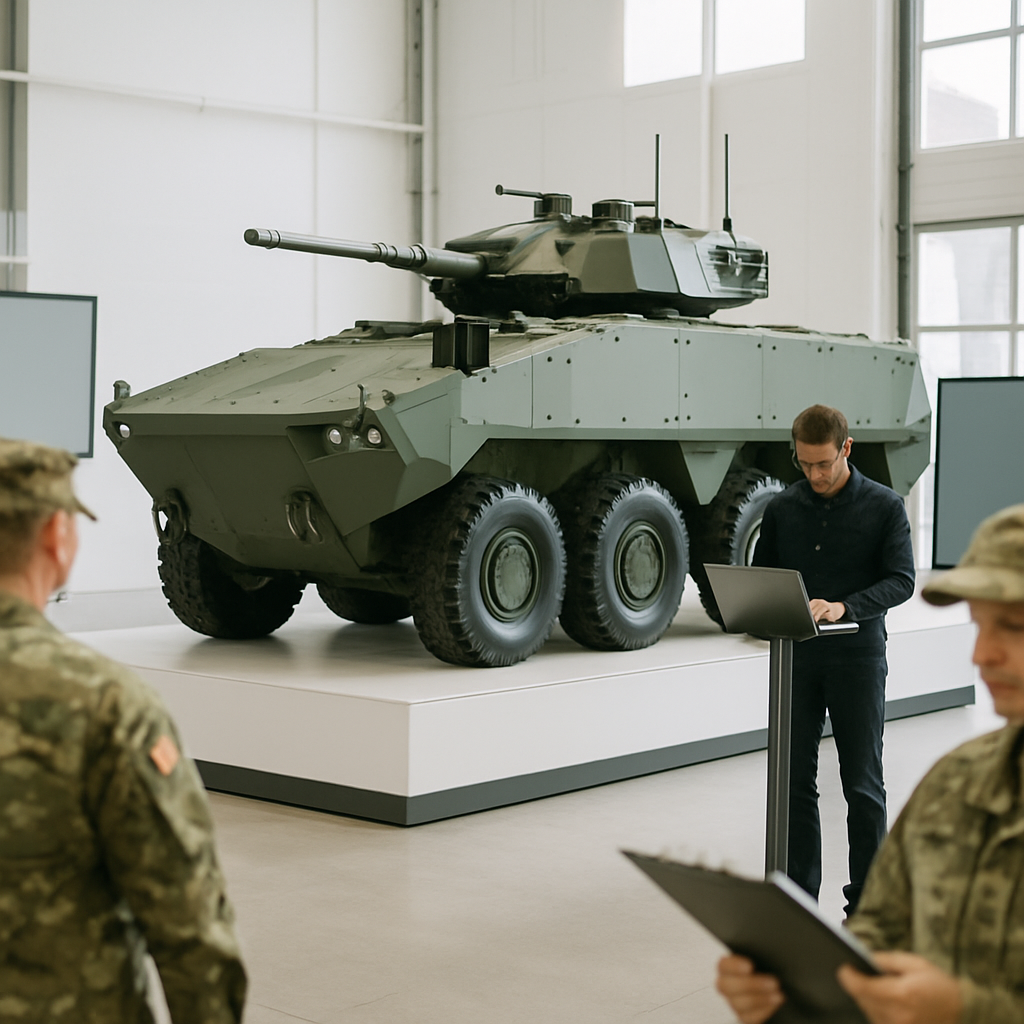
The Marine Corps plans to begin formal development for Advanced Reconnaissance Vehicle (ARV) Increment 2 in 2029, according to Col. Christopher Stephenson, the service’s program manager for Vehicle Systems. Increment 1 is currently in pre-production development. General Dynamics Land Systems (GDLS) and Textron are on contract to deliver 16 vehicles each to the Marines by 2028 as part of Increment 1. A down-select decision for the first increment is scheduled for 2029, with a production award expected in late 2030.
Increment 1: three variants and short-term contracting
For Increment 1, the Marines have defined three vehicle variants under the current contracts with GDLS and Textron. Those variants are a command, control, communications and computers-unmanned aerial system (C4/UAS) model, a logistics model, and a model equipped with a 30-mm autocannon. The two contractors are each delivering prototype or pre-production vehicles under the existing arrangement, with initial deliveries due by 2028.

The cyber insurance questionnaire just landed. Now what?
SOC 2, HIPAA, insurance renewals - someone has to own security strategy. Nubivance provides fractional CISO leadership without the full-time salary.
Get a security leadIncrement 2: new variants and mission sets
According to a slide deck shared with the Modern Day Marine audience, the Marines envision Increment 2 to include three distinct variants: a counter unmanned aerial system (c-UAS) model, a recovery model, and a precision fires model. The c-UAS variant is to provide both kinetic and non-kinetic capabilities, be “optimized” for a “24-hour c-UAS threat,” and also be able to “detect and engage ground threats as well.”
Slides describing the recovery variant identified the “design driver for this variant is the crane and winch,” and added that the capability should have a fuel foraging system and a “metal wielding and cutting capability.” The precision fires variant is listed as providing beyond-line-of-sight fire support to formations out to 40 kilometers and being equipped with reconnaissance, electronic attack and surface attack capabilities.
Planned buys and production run
Stephenson disclosed that the Marines plan to acquire a total of 654 ARVs, split between 426 for Increment 1 and 228 for Increment 2. He cautioned that these numbers may change as the service continues to adjust priorities to align with the evolving threat environment. He also noted that, taken together, Increment 1 and Increment 2 production “will be building these vehicles for 10 years,” signaling a long production window and multiple opportunities to revise requirements.
What this means for General Dynamics, Textron, and Marine units
- General Dynamics Land Systems and Textron: Both companies are engaged in the current Increment 1 contracts and are under schedule to deliver 16 vehicles apiece by 2028; they will be contenders in the 2029 down-select for Increment 1 and will face a production award decision in late 2030.
- The Marine Corps program office: The office intends to continue refining requirements as development progresses, balancing fielding of Increment 1 with initiation of Increment 2 work in 2029 and allowing for requirement changes over a roughly decade-long production period.
- Marine operational units: Units awaiting initial fieldings of Increment 1 platforms will see a phased approach—initial deliveries by 2028, a down-select in 2029, and broader production starting after the 2030 award—while future doctrine and tactics will need to account for new Increment 2 capabilities such as persistent c-UAS coverage, recovery with crane/winch capability, and beyond-line-of-sight precision fires to 40 km.
Col. Stephenson framed the program as iterative: “The experimentation that’s inherently part of force design, as I always say, is a journey. Things are going to change,” he said, underscoring that both quantities and requirements are subject to adjustment as the Marines balance immediate needs against future threats.
Original story: https://breakingdefense.com/2026/04/marines-to-start-development-on-advanced-reconnaissance-vehicle-increment-2-in-2029/