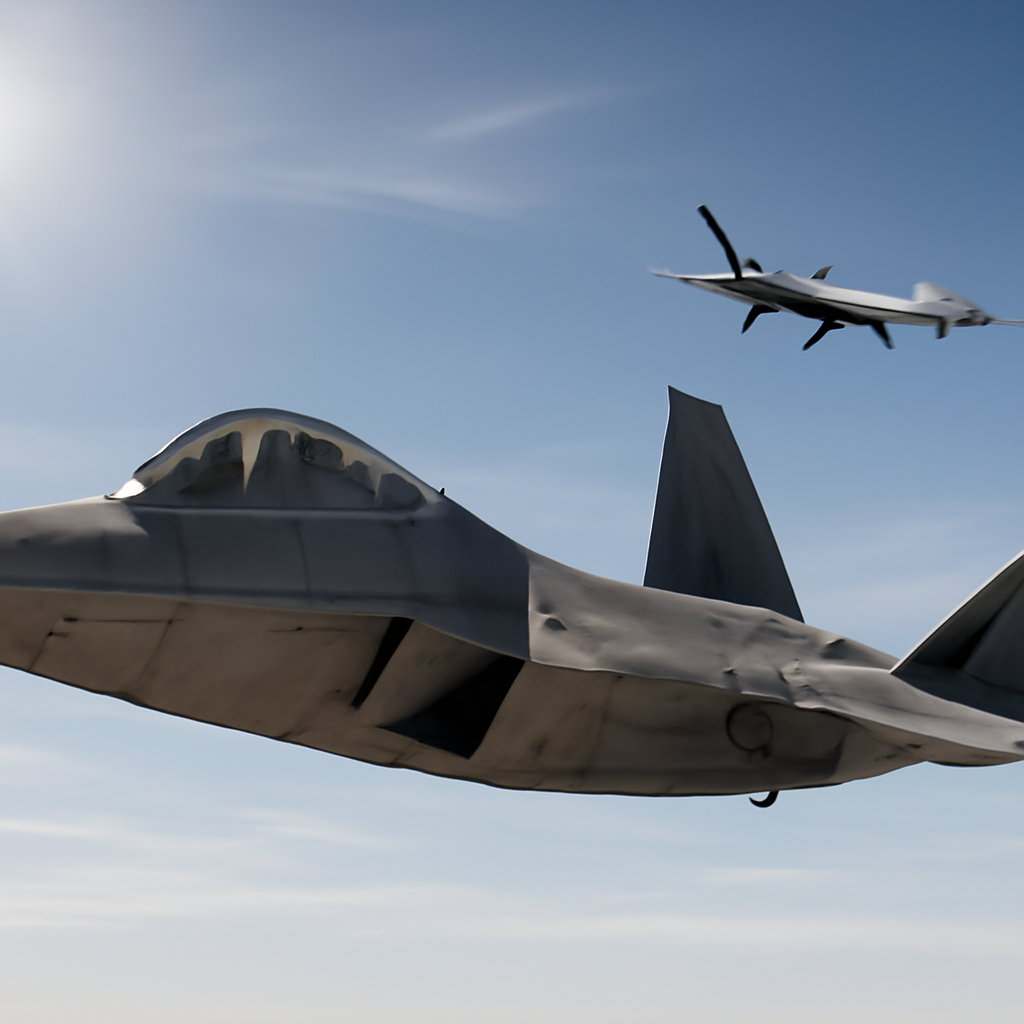
“If GPS fails, what then?” This is no longer a theoretical concern but a pressing reality for the United States military as it fields its most advanced stealth fighter, the F-35 Lightning II. With adversaries increasingly developing and deploying sophisticated GPS jamming and spoofing technologies, maintaining the combat readiness of the F-35 under GPS denial scenarios is both a strategic imperative and a technical challenge. Collins Aerospace’s recent announcement that it has delivered its 1,000th anti-jam GPS receiver for the F-35 signals a key step in this ongoing battle to keep America’s premier fighter jet operational in contested environments.
Global Positioning System (GPS) technology underpins much of modern military operations. From navigation and targeting to timing and communications, GPS is often regarded as the backbone of precision warfare. However, GPS signals are inherently weak, making them vulnerable to disruption. Adversaries such as Russia and China have invested heavily in electronic warfare capabilities that can jam or spoof GPS signals, effectively blinding satellites and the platforms that rely on them. This vulnerability could degrade the F-35’s ability to navigate complex battle spaces, deliver precision munitions, or coordinate with allied forces.
The F-35 program is a marvel of modern engineering, featuring advanced stealth, sensors, and avionics designed to operate in heavily contested environments. Yet the very sophistication of the F-35 demands resilient and redundant navigation capabilities. To that end, Collins Aerospace’s anti-jam GPS receiver integrates cutting-edge technologies that enable the F-35 to maintain accurate positioning despite intentional interference. These receivers employ adaptive filtering, null-steering antennas, and cryptographic authentication to differentiate genuine signals from deceptive ones. According to Collins Aerospace, the delivery of this 1,000th unit marks a critical milestone in equipping the entire fleet with this enhanced capability.
But technology alone cannot address the entire problem. Retired Air Force Colonel Brian “Gator” Green, an expert in electronic warfare, emphasizes the complexity of the challenge: “It’s not just about having a receiver that can resist jamming. The F-35 needs an integrated suite of sensors and alternative navigation aids—such as inertial navigation systems and terrain mapping—to function when GPS is denied.” This multifaceted approach is essential because even the most advanced anti-jam receivers face limits in extreme electronic warfare scenarios.
From a policy perspective, the Department of Defense recognizes GPS denial as a growing threat that transcends the battlefield. The Pentagon’s 2022 Electronic Warfare Strategy highlights the need to “invest in technologies and tactics that ensure resilient positioning, navigation, and timing (PNT) capabilities.” This extends beyond aviation to ground forces, naval vessels, and missile guidance systems. Given the strategic reliance on GPS by both military and civilian infrastructure, safeguarding this capability has national security implications that reach far beyond the cockpit of the F-35.
Meanwhile, adversaries continue to refine their tactics. In 2020, NATO forces reported significant GPS jamming incidents near the Black Sea, attributed to Russian forces. Similarly, China’s expanding electronic warfare arsenal has raised alarms within U.S. Indo-Pacific Command. These examples underscore the evolving nature of GPS denial as a tool of hybrid warfare—one that seeks to sow confusion and degrade operational tempo without resorting to kinetic conflict.
Users of the F-35 platform, including pilots and maintenance crews, stress the importance of training and procedural adaptation to cope with GPS denial. Lt. Col. Sarah Jenkins, a current F-35 pilot, observes: “We train rigorously for GPS outages, practicing navigation using onboard sensors and allied data links. But the margin for error shrinks in high-threat environments, and every advance in enemy jamming demands an upgrade in our tactics and technology.”
Ultimately, the drive to maintain F-35 combat readiness amid GPS denial highlights a broader military axiom: no technology is invulnerable, and resilience comes from layered defenses and adaptive strategies. As Collins Aerospace and the wider defense community push forward with anti-jam capabilities, inertial navigation improvements, and electronic warfare countermeasures, the stakes could not be higher.
Will the balance of electronic warfare tilt in favor of those who can deny, or those who can endure? In a conflict increasingly defined by invisible signals and unseen disruptions, the answer may determine the future of air dominance itself.